Maoming People's Hospital of Guangdong Province, No. 101 Weimin Road, Maonan District, Maoming City, Guangdong 525000, China.
Biosci Rep. 2020 Oct 30;40(10). doi: 10.1042/BSR20201349.
Tongxinluo (TXL) capsule, a polypharmacy derived from traditional Chinese medicine (TCM), has been widely used in coronary heart disease (CHD), while the underlying mechanism of TXL capsule is still unclear. The present study aimed at investigating the underlying mechanism of TXL acting on CHD patients and providing substantial evidence in molecular evidence by means of a network pharmacological analysis.
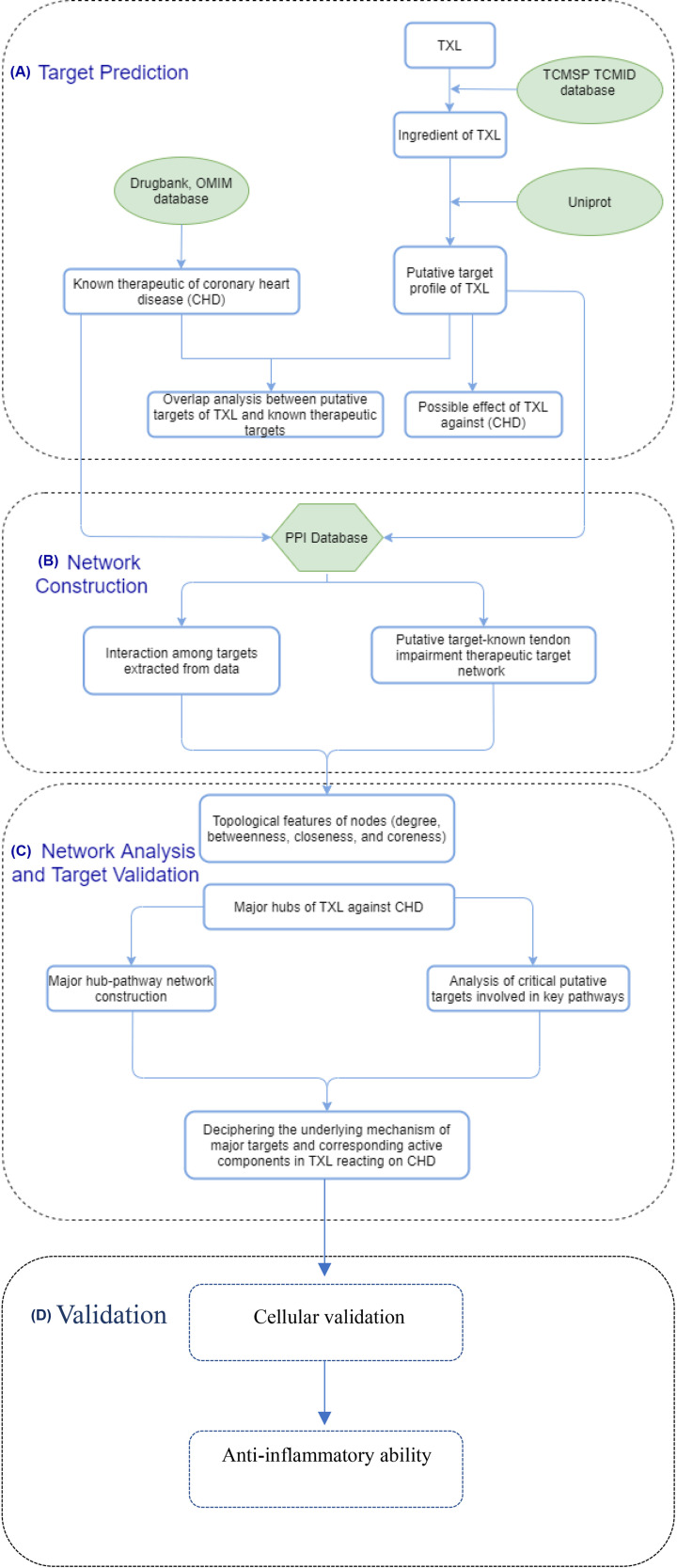
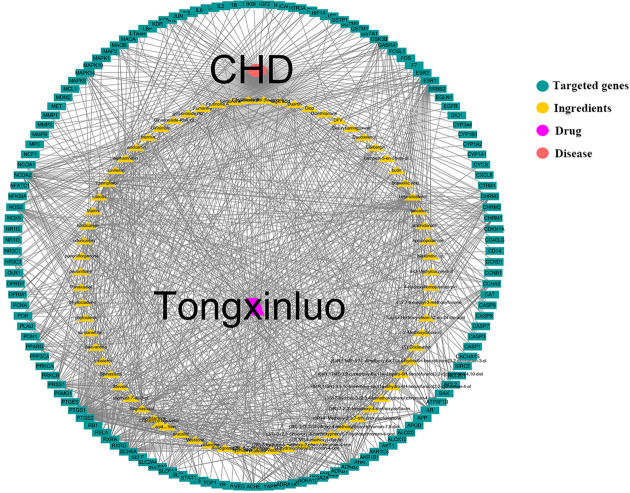
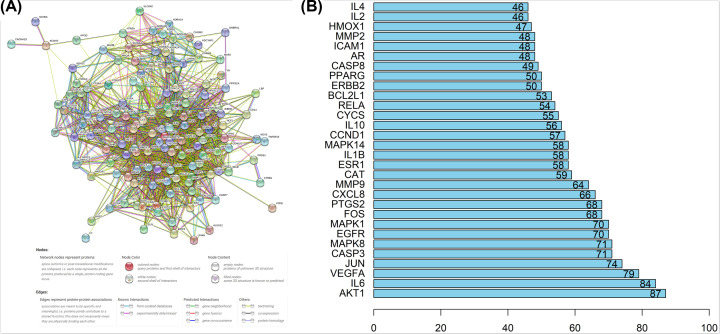
Active compounds and targeted genes of TXL were retrieved from TCM systems pharmacology (TCMSP) and TCM integrative database (TCMID). CHD and coronary artery disease were treated as search queries in GeneCards and Online Mendelian Inheritance in Man (OMIM) databases to obtain disease-related genes. Visualization of disease-targets network was performed under administration of Cytoscape software. Besides, Gene Ontology (GO) and Kyoto Encyclopedia of Genes and Genomes (KEGG) enrichment analyses were administered. H9c2 cells were used to validate the predicted results in cardiomyocytes/reoxygenation model, and anti-inflammatory ability was examined.
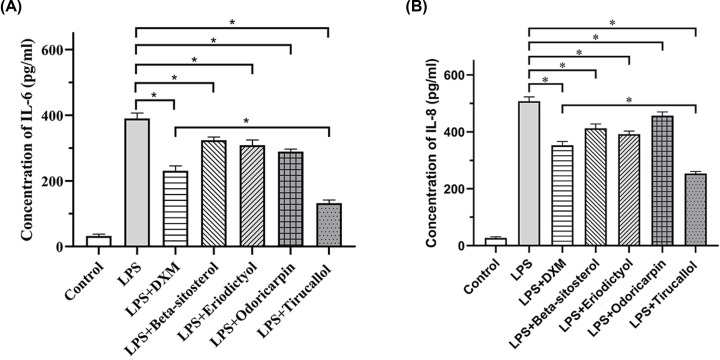
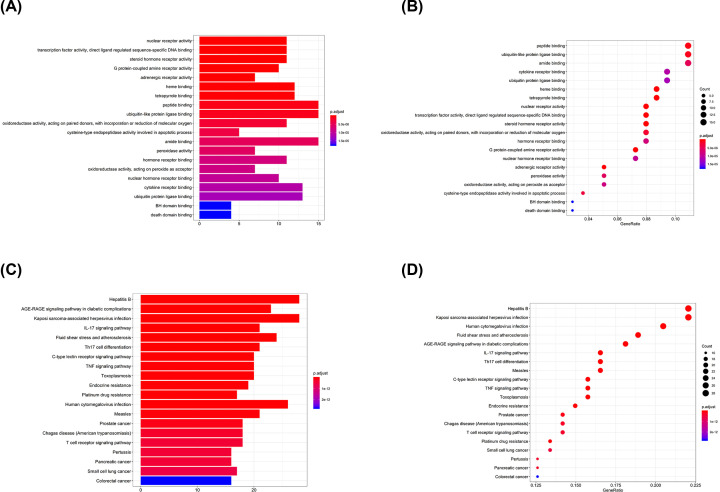
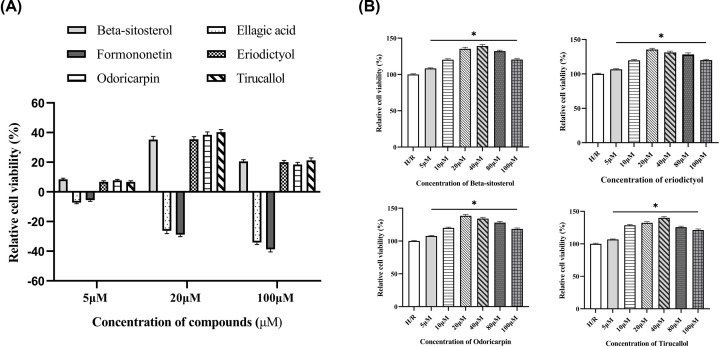
A network of a total of 212 nodes and 1016 edges was obtained. Peptide and ubiquitin-like protein ligase binding occupied a leading position of GO enrichment. For KEGG analysis, fluid shear stress and atherosclerosis, as well as inflammation-related pathways were enriched. Cellular validation revealed the anti-inflammatory effect of β-sitosterol, eriodictyol, odoricarpin, and tirucallol as active compounds of TXL.
Our study provided substantial molecular evidence that TXL capsule possessed the characteristics of multitargets with safe profile, and the main component is capable of regulating cytokine level in CHD patients.
通心络胶囊是一种源自中药的复方药物,已广泛用于冠心病治疗,但作用机制尚不清楚。本研究旨在通过网络药理学分析,探讨通心络胶囊作用于冠心病的潜在机制,为其提供分子证据。
从中药系统药理学(TCMSP)和中药整合数据库(TCMID)中检索通心络胶囊的活性化合物和靶基因。在基因卡片(GeneCards)和在线孟德尔遗传数据库(OMIM)中以冠心病和冠状动脉疾病为检索词,获取疾病相关基因。使用 Cytoscape 软件可视化疾病靶点网络,并进行基因本体(GO)和京都基因与基因组百科全书(KEGG)富集分析。在心肌细胞/复氧模型中验证预测结果,并检测抗炎能力。
构建了一个包含 212 个节点和 1016 条边的网络。GO 富集分析中,肽和泛素样蛋白连接酶结合占据主导地位。KEGG 分析显示,流体剪切力和动脉粥样硬化以及炎症相关途径被富集。细胞验证显示,β-谷甾醇、橙皮苷、奥多利卡因和芫花醇等通心络胶囊的活性化合物具有抗炎作用。
本研究为通心络胶囊多靶点、安全性的特点提供了实质性的分子证据,其主要成分能够调节冠心病患者的细胞因子水平。