Cheng Yanfen, Xiao Meng, Chen Jiamei, Wang Di, Hu Yichen, Zhang Chenfeng, Wang Tuanjie, Fu Chaomei, Wu Yihan, Zhang Jinming
State Key Laboratory of Southwestern Chinese Medicine Resources, School of Pharmacy, Chengdu University of Traditional Chinese Medicine, Chengdu, 611137, China.
Key Laboratory of Coarse Cereal Processing, Ministry of Agriculture and Rural Affairs, Chengdu University, Chengdu, 610106, Sichuan, China.
Chin Med. 2022 Sep 2;17(1):103. doi: 10.1186/s13020-022-00658-9.
The limited therapeutic outcomes of atherosclerosis (AS) have allowed, traditional Chinese medicine has been well established as an alternative approach in ameliorating AS and associated clinical syndromes. Clinically, Tongsaimai tablet (TSMT), a commercial Chinese patent medicine approved by CFDA, shows an obvious therapeutic effect on AS treatment. However, its effective mechanism and quality control still need thorough and urgent exploration.
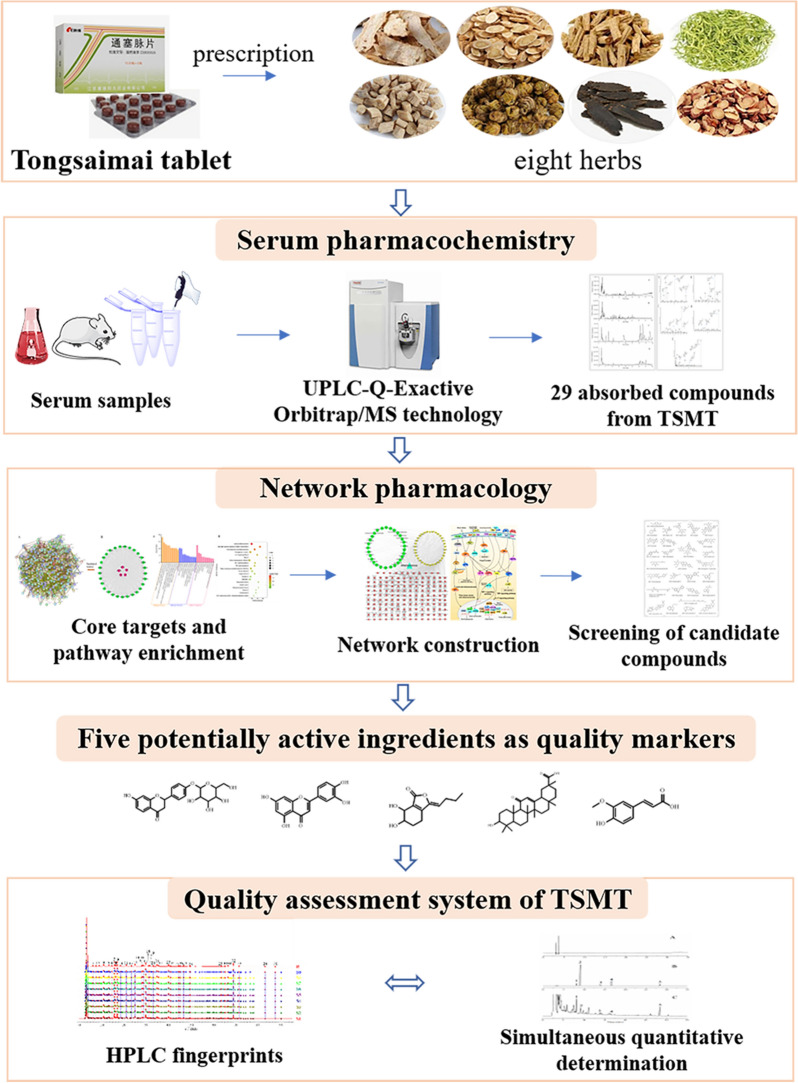
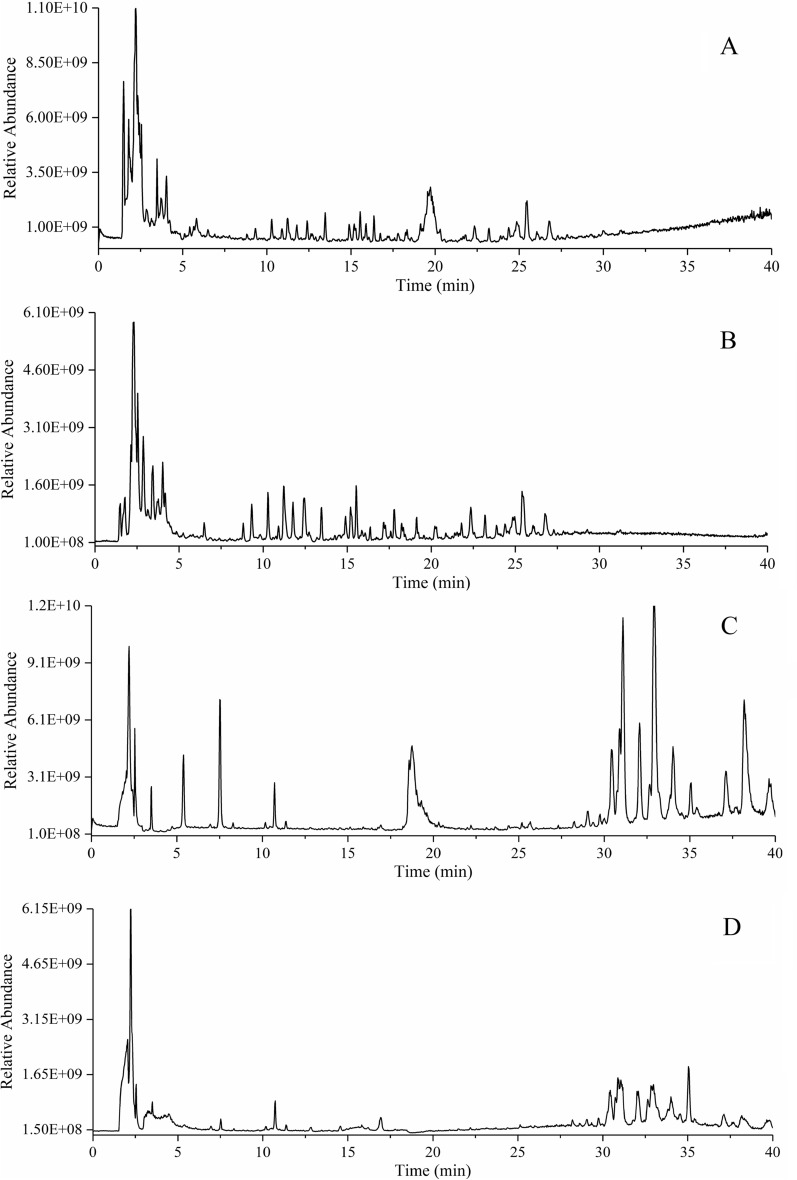
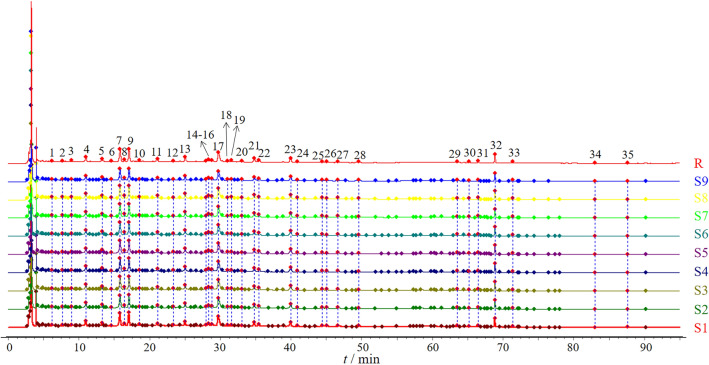
The mice were orally administered with TSMT and their serum was investigated for the absorbed compounds using serum pharmacochemistry via the UPLC-Q-Exactive Orbitrap/MS analysis was employed to investigate these absorbed compounds in serum of mice orally administrated with TSMT. Based on these absorbed prototype compounds in serum derived from TSMT, a component-target-disease network was constructed using network pharmacology strategy, which elucidated the potential bioactive components, effective targets, and molecular mechanisms of TSMT against AS. Further, the screened compounds from the component-target network were utilized as the quality control (QC) markers, determining multi-component content determination and HPLC fingerprint to assess quality of nine batches of TSMT samples.
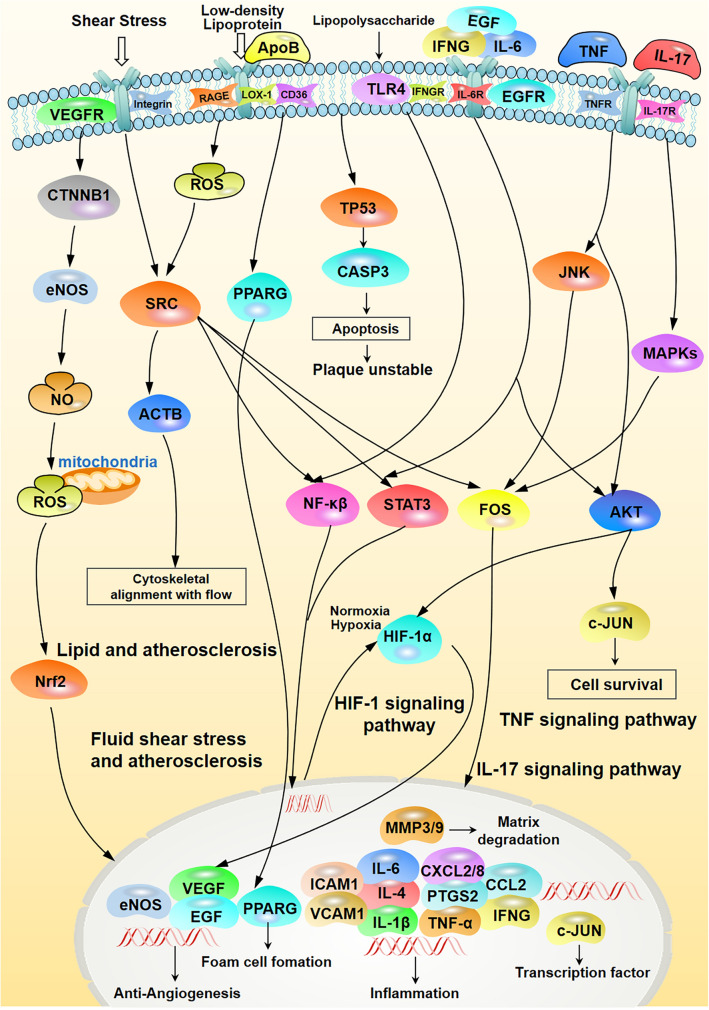
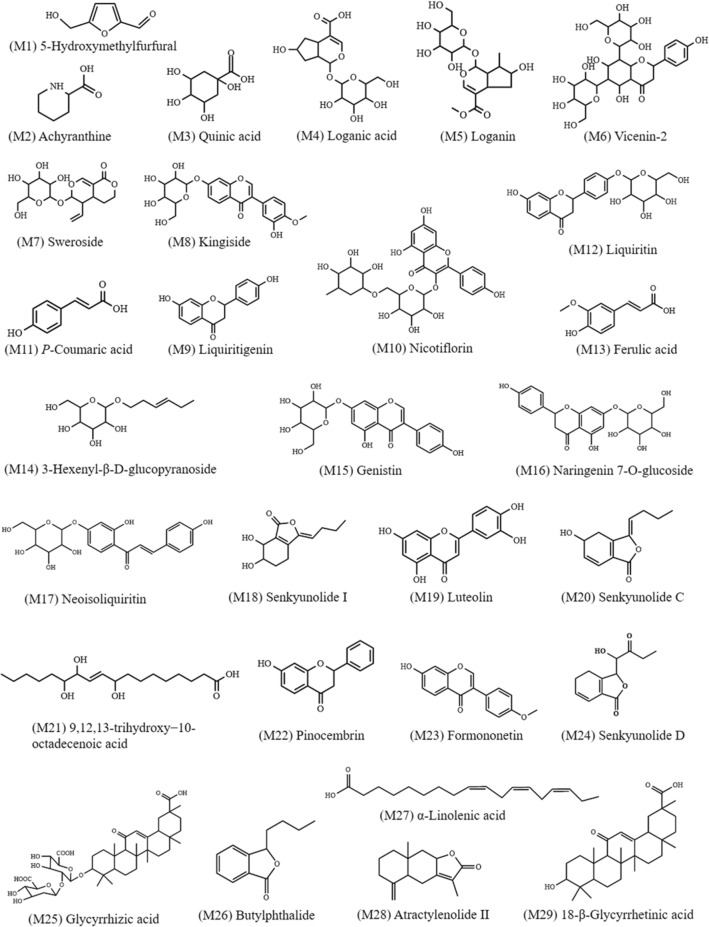
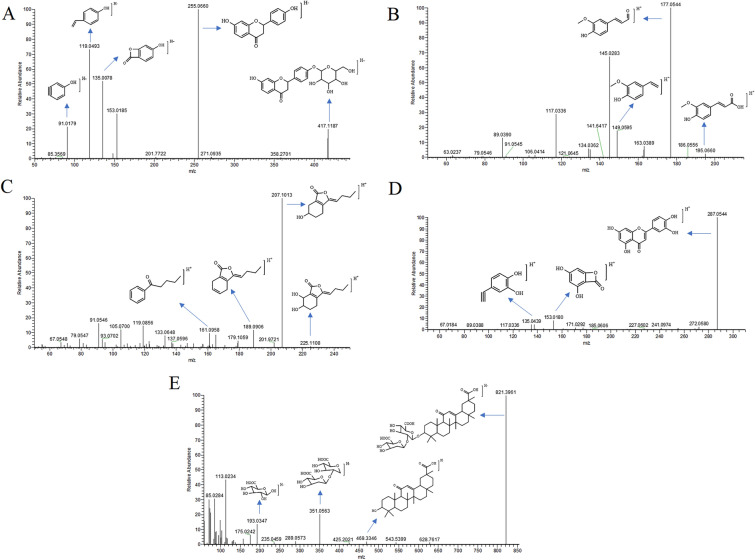
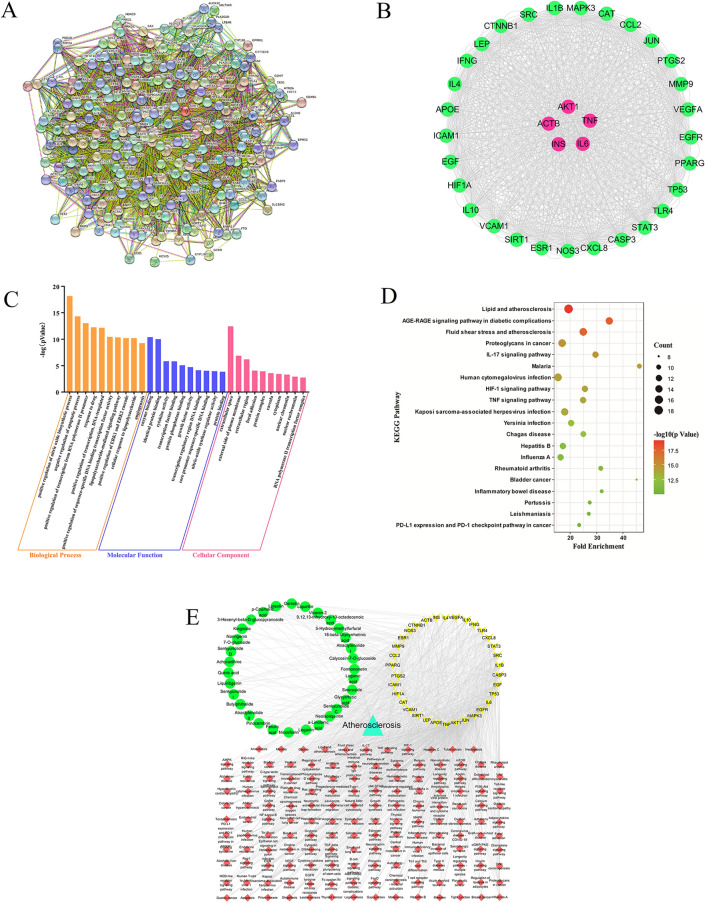
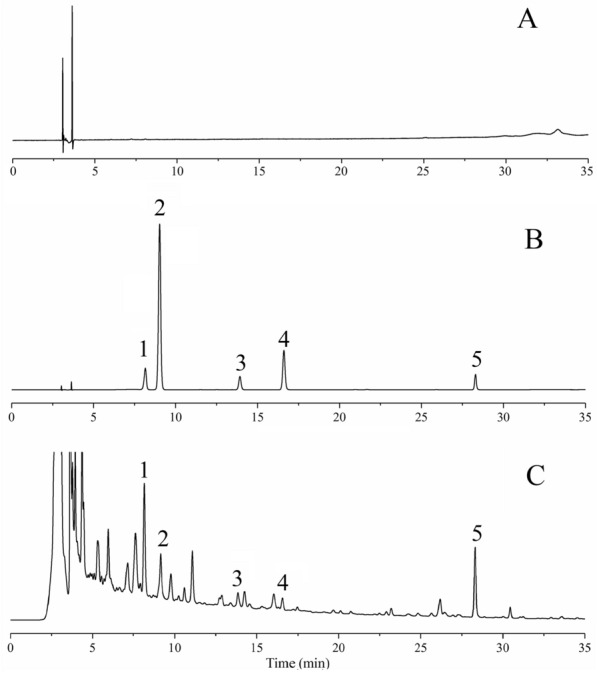
A total of 164 individual components were identified in TSMT. Among them, 29 prototype compounds were found in serum of mice administrated with TSMT. Based on these candidate prototype components, 34 protein targets and 151 pathways related to AS were predicted, and they might significantly exhibit potential anti-AS mechanisms via synergistic regulations of lipid regulation, shear stress, and anti-inflammation, etc. Five potentially bioactive ingredients in TSMT, including Ferulic acid, Liquiritin, Senkyunolide I, Luteolin and Glycyrrhizic acid in quantity not less than 1.2798, 0.4716, 0.5419, 0.1349, 4.0386 mg/g, respectively, screened from the component-target-pathway network. Thereby, these indicated that these five compounds of TMST which played vital roles in the attenuation of AS could serve as crucial marker compounds for quality control.
Overall, based on the combination of serum pharmacochemistry and network pharmacology, the present study firstly provided a useful strategy to establish a quality assessment approach for TSMT by screening out the potential anti-AS mechanisms and chemical quality markers.
动脉粥样硬化(AS)的治疗效果有限,传统中药已成为改善AS及其相关临床症状的一种替代方法。临床上,通塞脉片(TSMT)是一种经中国食品药品监督管理总局批准的中成药,在AS治疗中显示出明显的治疗效果。然而,其作用机制和质量控制仍需深入且迫切地探索。
给小鼠口服TSMT,采用血清药物化学方法,通过超高效液相色谱-四极杆-静电场轨道阱质谱联用(UPLC-Q-Exactive Orbitrap/MS)分析研究其血清中吸收的化合物。基于TSMT血清中这些吸收的原型化合物,利用网络药理学策略构建成分-靶点-疾病网络,阐明TSMT抗AS的潜在生物活性成分、有效靶点和分子机制。此外,从成分-靶点网络中筛选出的化合物用作质量控制(QC)标志物,进行多成分含量测定和高效液相色谱指纹图谱分析,以评估九批TSMT样品的质量。
在TSMT中总共鉴定出164种单体成分。其中,在给予TSMT的小鼠血清中发现了29种原型化合物。基于这些候选原型成分,预测了34个与AS相关的蛋白质靶点和151条通路,它们可能通过脂质调节、剪切应力和抗炎等协同调节作用显著发挥潜在的抗AS机制。从成分-靶点-通路网络中筛选出TSMT中五种潜在的生物活性成分,包括阿魏酸、甘草苷、藁本内酯、木犀草素和甘草酸,其含量分别不少于1.2798、0.4716、0.5419、0.1349、4.0386mg/g。因此,这些表明TSMT的这五种化合物在减轻AS中起重要作用,可作为质量控制的关键标志物化合物。
总体而言,基于血清药物化学和网络药理学的结合,本研究首次提供了一种有用的策略,通过筛选潜在的抗AS机制和化学质量标志物来建立TSMT的质量评估方法。