School of Chemical Engineering and Technology, Hebei University of Technology, Tianjin, 300130, P. R. China.
van't Hoff Institute for Molecular Sciences, Universiteit van Amsterdam, Science Park 904, 1098 XH, Amsterdam, The Netherlands.
ChemSusChem. 2021 Jan 7;14(1):234-250. doi: 10.1002/cssc.202001876. Epub 2020 Oct 16.
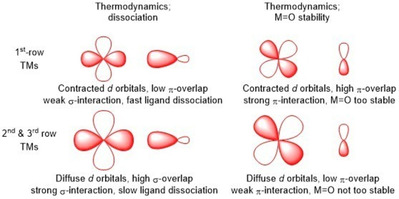
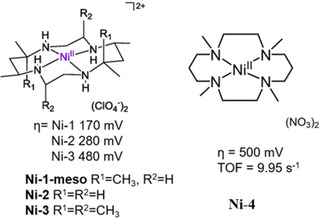
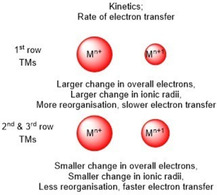
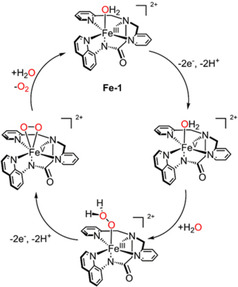
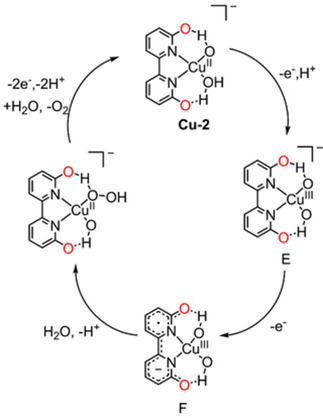
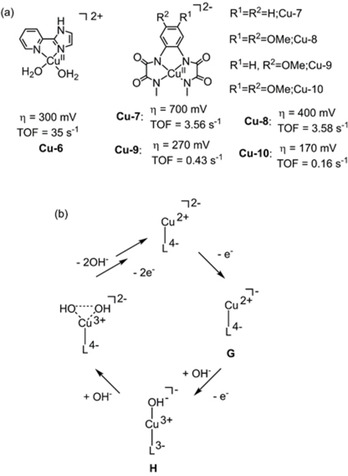
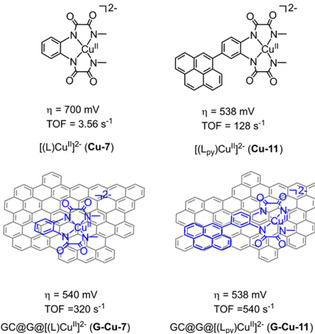
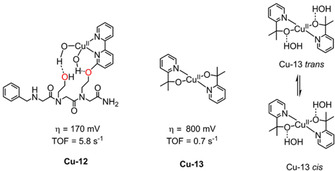
Strategies that enable the renewable production of storable fuels (i. e. hydrogen or hydrocarbons) through electrocatalysis continue to generate interest in the scientific community. Of central importance to this pursuit is obtaining the requisite chemical (H ) and electronic (e ) inputs for fuel-forming reduction reactions, which can be met sustainably by water oxidation catalysis. Further possibility exists to couple these redox transformations to renewable energy sources (i. e. solar), thus creating a carbon neutral solution for long-term energy storage. Nature uses a Mn-Ca cluster for water oxidation catalysis via multiple proton-coupled electron-transfers (PCETs) with a photogenerated bias to perform this process with TOF 100∼300 s . Synthetic molecular catalysts that efficiently perform this conversion commonly utilize rare metals (e. g., Ru, Ir), whose low abundance are associated to higher costs and scalability limitations. Inspired by nature's use of 1 row transition metal (TM) complexes for water oxidation catalysts (WOCs), attempts to use these abundant metals have been intensively explored but met with limited success. The smaller atomic size of 1 row TM ions lowers its ability to accommodate the oxidative equivalents required in the 4e /4H water oxidation catalysis process, unlike noble metal catalysts that perform single-site electrocatalysis at lower overpotentials (η). Overcoming the limitations of 1 row TMs requires developing molecular catalysts that exploit biomimetic phenomena - multiple-metal redox-cooperativity, PCET and second-sphere interactions - to lower the overpotential, preorganize substrates and maintain stability. Thus, the ultimate goal of developing efficient, robust and scalable WOCs remains a challenge. This Review provides a summary of previous research works highlighting 1 row TM-based homogeneous WOCs, catalytic mechanisms, followed by strategies for catalytic activity improvements, before closing with a future outlook for this field.
通过电催化可再生生产可储存燃料(即氢气或碳氢化合物)的策略继续引起科学界的兴趣。这一追求的核心是获得燃料形成还原反应所需的化学(H)和电子(e)输入,这可以通过水氧化催化来可持续地满足。进一步的可能性是将这些氧化还原转化与可再生能源(例如太阳能)耦合,从而为长期储能创造碳中性解决方案。自然界通过多个质子耦合电子转移(PCET)和光生偏压利用 Mn-Ca 簇进行水氧化催化,以 100∼300 s 的时间因子(TOF)进行此过程。高效执行此转换的合成分子催化剂通常使用稀有金属(例如 Ru、Ir),其稀缺性与其较高的成本和可扩展性限制有关。受自然界使用 1 族过渡金属(TM)配合物作为水氧化催化剂(WOC)的启发,人们积极探索使用这些丰富金属的方法,但取得的成功有限。1 族 TM 离子的原子尺寸较小,降低了其容纳 4e /4H 水氧化催化所需的氧化当量的能力,与在较低过电势(η)下进行单位点电催化的贵金属催化剂不同。克服 1 族 TM 的限制需要开发利用仿生现象的分子催化剂——多金属氧化还原协同作用、PCET 和第二壳层相互作用——以降低过电势、预组织底物并保持稳定性。因此,开发高效、稳健和可扩展的 WOC 仍然是一个挑战。本综述提供了以前研究工作的摘要,重点介绍了基于 1 族 TM 的均相 WOC、催化机制,以及随后的提高催化活性的策略,最后对该领域的未来展望进行了总结。