Dioguardi Mario, Caloro Giorgia Apollonia, Laino Luigi, Alovisi Mario, Sovereto Diego, Crincoli Vito, Aiuto Riccardo, Dioguardi Antonio, De Lillo Alfredo, Troiano Giuseppe, Lo Muzio Lorenzo
Department of Clinical and Experimental Medicine, University of Foggia, Via Rovelli 50, 71122 Foggia, Italy.
Department of Emergency and Organ Transplantation, Nephrology, Dialysis and Transplantation Unit, University of Bari, Via Piazza Giulio Cesare, 70124 Bari, Italy.
Biomedicines. 2020 Sep 27;8(10):382. doi: 10.3390/biomedicines8100382.
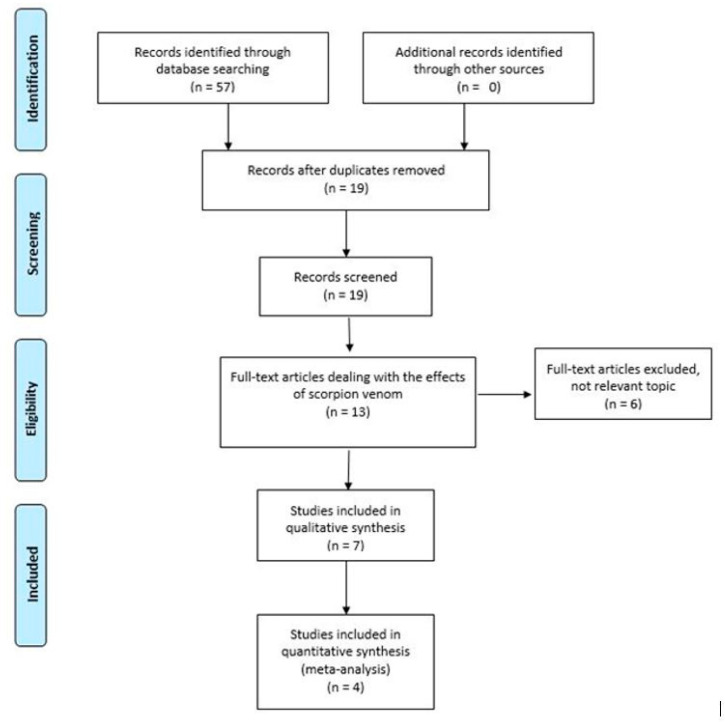
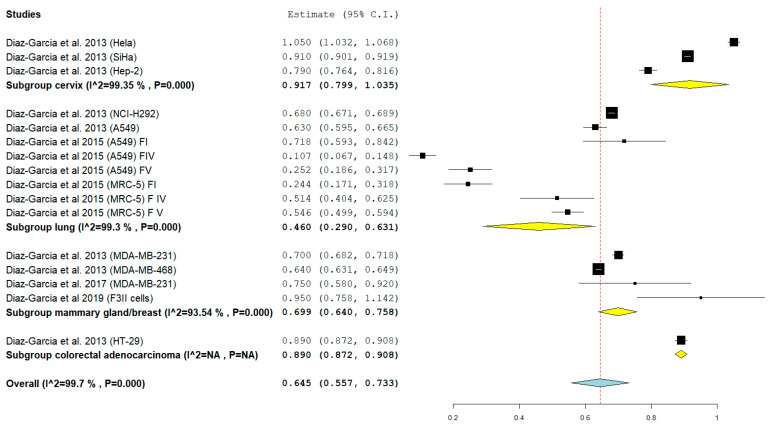
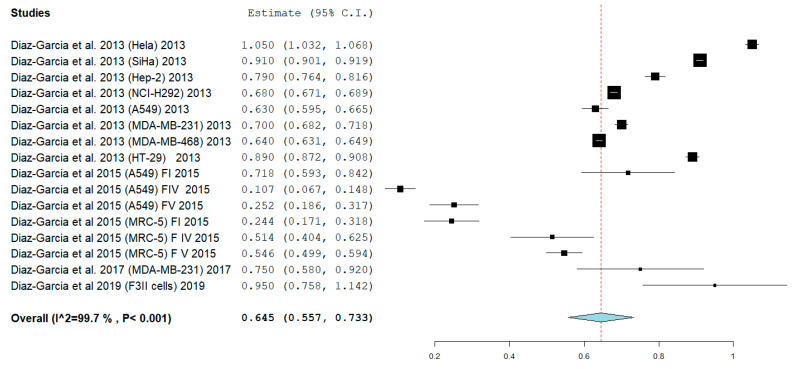
The is a scorpion belonging to the Buthidae family that finds its habitat in Cuba. This scorpion is known by the common name of "Blue Scorpion". The venom is used on the island of Cuba as an alternative cure for cancer and, more recently, in the research of active components for biomedicine. Recently, the venom has been tested in several studies to investigate its effects on cancer cell lines, and the initial results of in vitro studies demonstrated how this poison can be effective on certain carcinoma cell lines (Hela, SiHa, Hep-2, NCI-H292, A549, MDA-MB-231, MDA-MB-468, and HT-29). The aim of this review is, therefore, to describe the effects of the venom on carcinoma lines and to investigate all anti-cancer properties studied in the literature. The research was conducted using four databases, Pub Med, Scopus, EBSCO, and Web of Science, through the use of keywords, by two independent reviewers following the PRISMA protocol, identifying 57 records. The results led to a total of 13 articles that met the eligibility criteria. The data extracted for the purpose of meta-analysis included the IC of the venom on carcinoma cell lines. The results of the meta-analysis provided a pooled mean of the IC of 0.645 mg/mL (95% CI: 0.557, 0.733), with a standard error (SE) = 0.045, < 0.001. The analysis of the subgroups, differentiated by the type of cell line used, provided insight regarding how the scorpion venom was effective on the cell lines of lung origin (NCI-H292, A549, and MRC-5) with a pooled mean of IC50 0.460 mg/mL (95% CI: 0.290, 0.631) SE (0.087) < 0.001. The results described in the literature for in vitro studies are encouraging, and further investigations should be carried out and deepened.
这种蝎子属于钳蝎科,栖息于古巴。这种蝎子的俗名是“蓝蝎子”。在古巴岛,其毒液被用作癌症的替代疗法,最近还用于生物医学活性成分的研究。最近,毒液在多项研究中进行了测试,以研究其对癌细胞系的影响,体外研究的初步结果表明,这种毒液对某些癌细胞系(海拉细胞、SiHa细胞、Hep-2细胞、NCI-H292细胞、A549细胞、MDA-MB-231细胞、MDA-MB-468细胞和HT-29细胞)可能有效。因此,本综述的目的是描述毒液对癌细胞系的影响,并研究文献中所研究的所有抗癌特性。该研究通过使用关键词,利用四个数据库(PubMed、Scopus、EBSCO和Web of Science),由两名独立评审员按照PRISMA协议进行,共识别出57条记录。结果得到了13篇符合入选标准的文章。为进行荟萃分析而提取的数据包括毒液对癌细胞系的半数抑制浓度(IC)。荟萃分析的结果提供了毒液半数抑制浓度的合并均值为0.645 mg/mL(95%置信区间:0.557, 0.733),标准误差(SE)= 0.045,P < 0.001。按所用细胞系类型区分的亚组分析,揭示了蝎子毒液对肺源性细胞系(NCI-H292细胞、A549细胞和MRC-5细胞)的有效性,其半数抑制浓度合并均值为0.460 mg/mL(95%置信区间:0.290, 0.631),标准误差(SE)(0.087),P < 0.001。文献中描述的体外研究结果令人鼓舞,应进一步开展并深入研究。