Population Health Unit "Salus in Apulia Study"-National Institute of Gastroenterology "Saverio de Bellis", Research Hospital, 70013 Bari, Italy.
Interdisciplinary Department of Medicine-Section of Internal Medicine, Geriatrics, Endocrinology and Rare Diseases, School of Medicine, University of Bari "Aldo Moro", 70121 Bari, Italy.
Int J Environ Res Public Health. 2020 Sep 27;17(19):7073. doi: 10.3390/ijerph17197073.
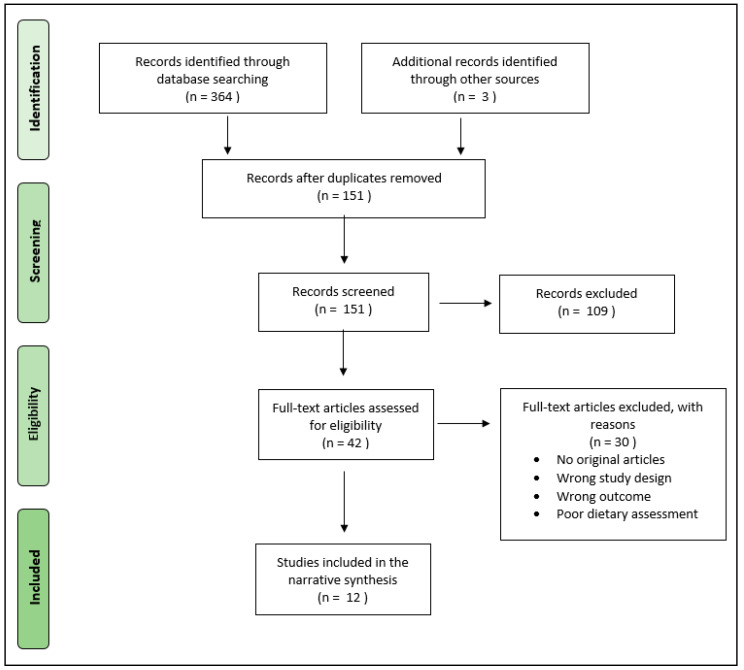
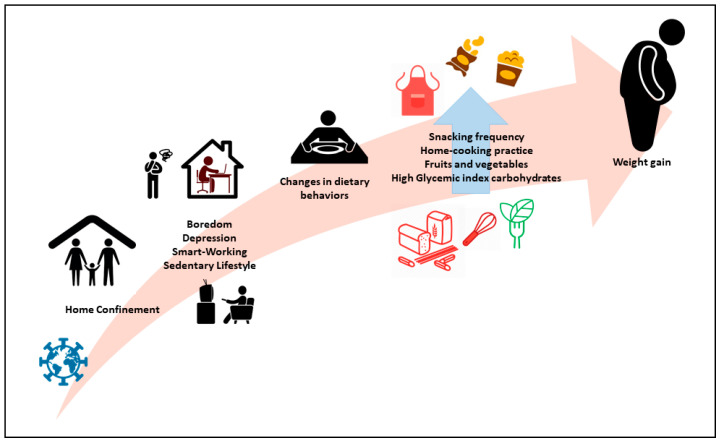
The world is currently struggling to face the coronavirus pandemic (COVID-19), and many countries have imposed lockdowns and recommended quarantine to limit both the spread of the virus and overwhelming demands for medical care. Direct implications include the disruption of work routines, boredom, depression, increased calorie consumption, and other similar harmful effects. The present narrative review article briefly analyzes the preliminary effects of the quarantine lifestyle from the standpoint of dietary habits. In six different databases, we searched for original articles up to 10 August 2020, assessing eating habits among populations during the COVID-19 pandemic, and recorded any change in the intake of major food categories, as well as changes in body weight. The research strategy yielded 364 articles, from which we selected 12 articles that fitted our goal. Our preliminary findings revealed a sharp rise of carbohydrates sources consumption, especially those with a high glycemic index (i.e., homemade pizza, bread, cake, and pastries), as well as more frequent snacks. A high consumption of fruits and vegetables, and protein sources, particularly pulses, was also recorded, although there was no clear peak of increase in the latter. Data concerning the consumption of junk foods lacked consistency, while there was a decreased alcohol intake and fresh fish/seafood consumption. As a possible connection, people gained body weight. Therefore, in the realistic perspective of a continuing global health emergency situation, timely preventive measures are needed to counteract obesity-related behaviors in the long-term, so as to prevent further health complications.
目前,世界正努力应对冠状病毒大流行(COVID-19),许多国家已经实施了封锁和隔离措施,以限制病毒的传播和医疗需求的激增。直接的影响包括打乱工作节奏、无聊、抑郁、卡路里摄入量增加以及其他类似的有害影响。本叙事性综述文章简要分析了从饮食习惯角度来看隔离生活方式的初步影响。我们在六个不同的数据库中搜索了截至 2020 年 8 月 10 日的原始文章,评估了 COVID-19 大流行期间人群的饮食习惯,并记录了主要食物类别的摄入量变化以及体重变化。该研究策略产生了 364 篇文章,从中我们选择了 12 篇符合我们目标的文章。我们的初步发现显示,碳水化合物来源的消费急剧上升,尤其是那些血糖指数较高的食物(即自制比萨、面包、蛋糕和糕点),以及更频繁的零食消费。水果和蔬菜以及蛋白质来源(特别是豆类)的消费也有所增加,尽管后者没有明显的增加高峰。关于垃圾食品消费的数据缺乏一致性,而酒精和新鲜鱼类/海鲜的摄入量则有所下降。可能的原因是人们体重增加了。因此,在全球卫生紧急情况持续的现实情况下,需要及时采取预防措施,以对抗长期的肥胖相关行为,从而防止进一步的健康并发症。