Hussan Raeesa H, Dubery Ian A, Piater Lizelle A
Department of Biochemistry, University of Johannesburg, Auckland Park 2006, South Africa.
Pathogens. 2020 Sep 25;9(10):787. doi: 10.3390/pathogens9100787.
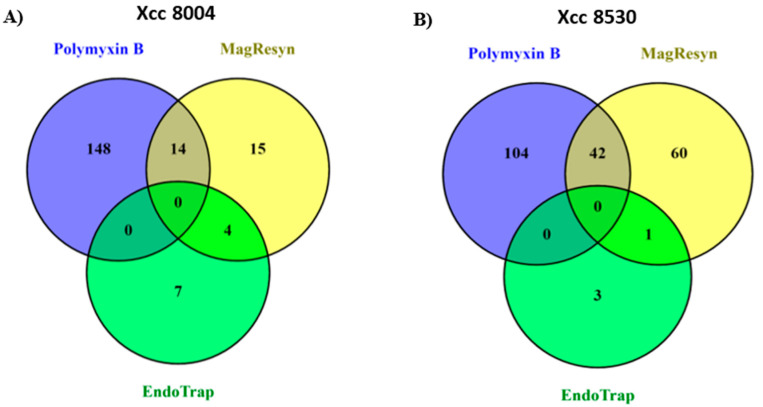
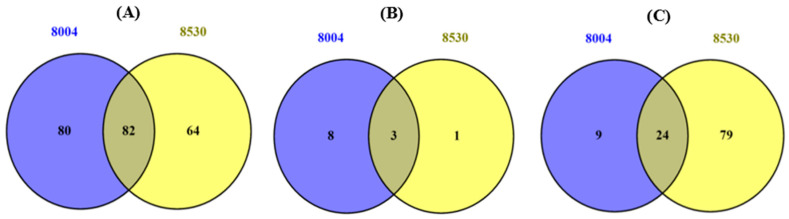
Lipopolysaccharides (LPS) are recognized as microbe-associated molecular patterns (MAMPs) responsible for eliciting defense-related responses and while the effects have been well-documented in mammals, there is a lack of knowledge regarding the mechanism of perception in plant systems and recognized structural moieties within the macromolecular lipoglycan structure. Thus, identification of the LPS plasma membrane (PM) receptor(s)/receptor complex in through proteomics will contribute to a deeper understanding of induced defense responses. As such, structurally characterized LPS chemotypes from pv. () wild-type 8004 (prototypical smooth-type LPS) and mutant 8530 (truncated core with no O-chain) strains were utilized to pre-treat plants. The associated proteomic response/changes within the PM were compared over a 24 h period using mass spectrometry-based methodologies following three variants of LPS-immobilized affinity chromatography. This resulted in the identification of proteins from several functional categories, but importantly, those involved in perception and defense. The distinct structural features between wild-type and mutant LPS are likely responsible for the differential changes to the proteome profiles, and many of the significant proteins were identified in response to the wild-type LPS where it is suggested that the core oligosaccharide and O-chain participate in recognition by receptor-like kinases (RLKs) in a multiprotein complex and, notably, varied from that of the mutant chemotype.
脂多糖(LPS)被认为是引发防御相关反应的微生物相关分子模式(MAMPs)。虽然其在哺乳动物中的作用已有充分记录,但对于植物系统中的感知机制以及大分子脂多糖结构中公认的结构部分仍缺乏了解。因此,通过蛋白质组学鉴定LPS质膜(PM)受体/受体复合物将有助于更深入地理解诱导的防御反应。为此,利用来自丁香假单胞菌丁香致病变种(Pseudomonas syringae pv. syringae)野生型8004(典型的光滑型LPS)和突变体8530(无O链的截短核心)菌株的结构特征明确的LPS化学型对拟南芥(Arabidopsis thaliana)植物进行预处理。在基于LPS固定化亲和色谱的三种变体之后,使用基于质谱的方法在24小时内比较了PM内相关的蛋白质组反应/变化。这导致鉴定出了几个功能类别的蛋白质,但重要的是,鉴定出了参与感知和防御的蛋白质。野生型和突变型LPS之间不同的结构特征可能是蛋白质组图谱差异变化的原因,许多重要蛋白质是在对野生型LPS的反应中鉴定出来的,这表明核心寡糖和O链通过多蛋白复合物中的类受体激酶(RLK)参与识别,并且明显不同于突变型化学型。