Maksimov Pavlo, Bergmann Hannes, Wassermann Marion, Romig Thomas, Gottstein Bruno, Casulli Adriano, Conraths Franz J
Friedrich-Loeffler-Institut, Federal Research Institute for Animal Health, Institute of Epidemiology, National Reference Centre for Echinococcosis, 17493 Greifswald-Insel Riems, Germany.
Parasitology Unit, University of Hohenheim, Emil-Wolff-Str. 34, 70599 Stuttgart, Germany.
Pathogens. 2020 Sep 26;9(10):791. doi: 10.3390/pathogens9100791.
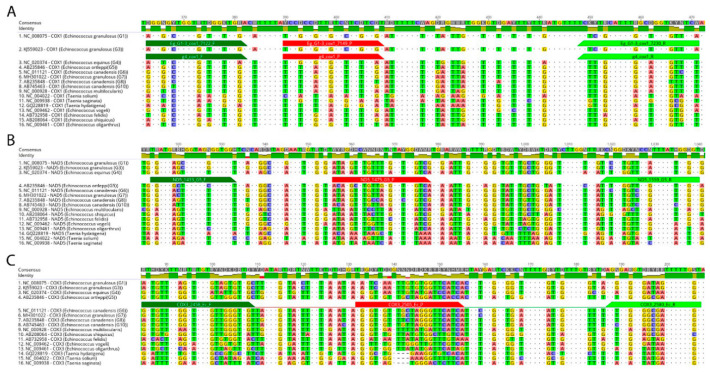
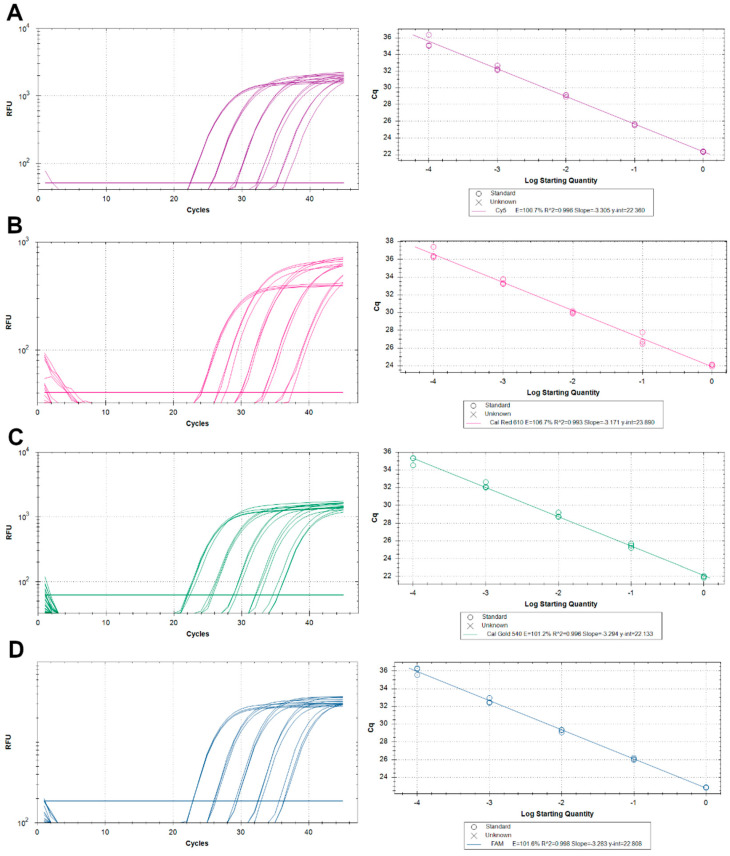
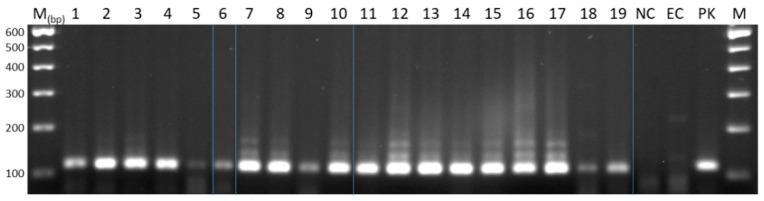
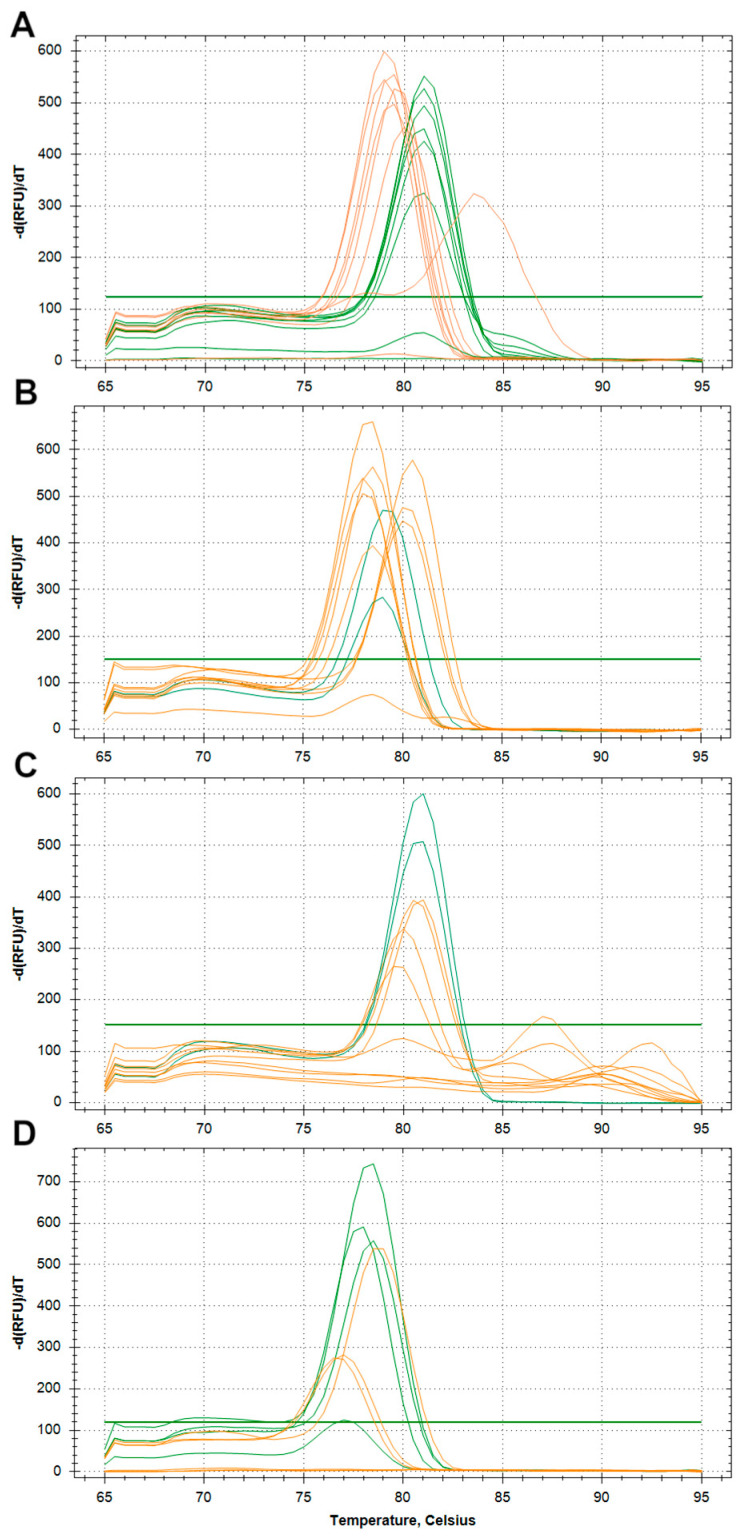
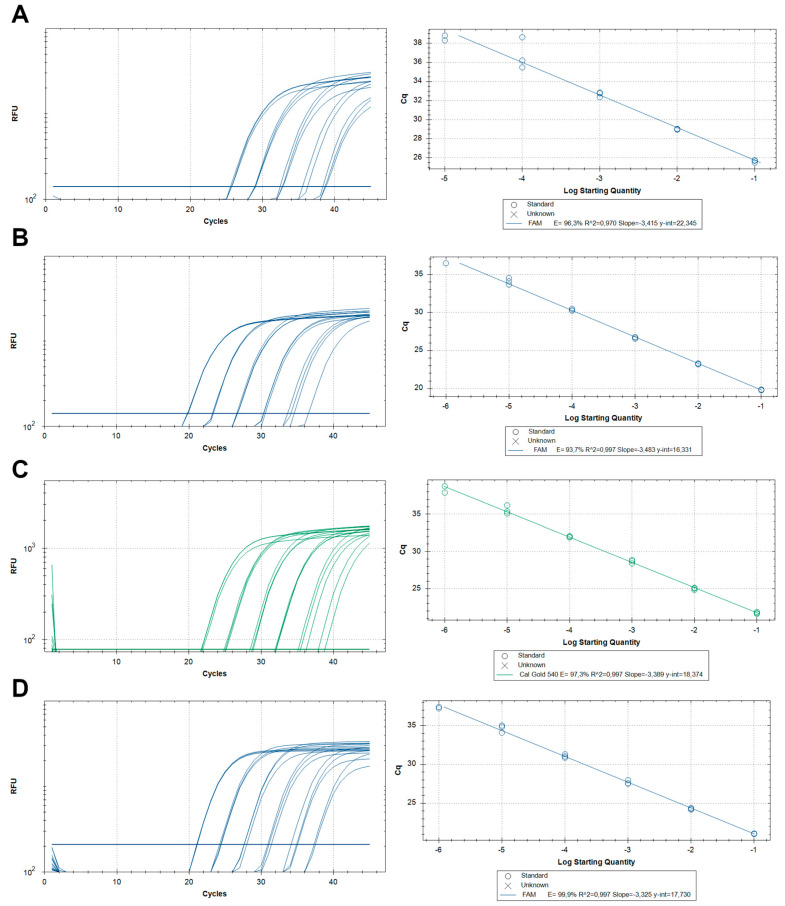
Infections with eggs of () can cause cystic echinococcosis in intermediate host animals and humans. Upon ingestion of viable eggs, oncospheres hatch from the eggs and subsequently develop into fluid-filled larval cysts, most frequently in the liver or the lungs. The slowly growing cysts progressively interfere with organ function. The risk of infection is determined by the host range of the parasite, its pathogenicity and other epidemiologically relevant parameters, which differ significantly among the five species within the complex. It is therefore essential to diagnose the correct species within to help understand specific disease epidemiology and to facilitate effective implementation of control measures. For this purpose, simple, fast and cost-effective typing techniques are needed. We developed quantitative real-time polymerase chain reactions (qPCRs) to target polymorphic regions in the mitochondrial genome of In a single-step typing approach, we distinguished members in four epidemiologically relevant subgroups. These were , , and the cluster. The technique also allowed identification and differentiation of these species from other Echinococcus or Taenia taxa for samples isolated from cysts or faeces.
感染()的虫卵可在中间宿主动物和人类中引起囊型包虫病。摄入活虫卵后,六钩蚴从卵中孵出,随后发育成充满液体的幼虫囊肿,最常见于肝脏或肺部。缓慢生长的囊肿会逐渐干扰器官功能。感染风险取决于寄生虫的宿主范围、致病性以及其他与流行病学相关的参数,在 复合体的五个物种中这些参数差异显著。因此,准确诊断 内的正确物种对于了解特定疾病的流行病学以及促进控制措施的有效实施至关重要。为此,需要简单、快速且经济高效的分型技术。我们开发了定量实时聚合酶链反应(qPCR)来靶向 线粒体基因组中的多态性区域。在单步分型方法中,我们区分了四个与流行病学相关的亚组中的 成员。这些亚组分别是 、 、 以及 簇。该技术还能够从囊肿或粪便中分离的样本中识别和区分这些物种与其他棘球绦虫或带绦虫分类群。