Department of General Surgery, Shanghai Pudong Hospital, Fudan University Pudong Medical Center, 2800 Gongwei Road, Huinan Town, Pudong, Shanghai, 201399, China.
Department of Vascular Surgery, Huashan Hospital, Fudan University, Shanghai, 200040, China.
J Exp Clin Cancer Res. 2020 Sep 29;39(1):203. doi: 10.1186/s13046-020-01714-8.
N6-Methyladenosine (m6A) modification has been implicated in multiple processes for colon cancer development. IGF2BP3 was a newly reported m6A reader, whereas its role in colon cancer remains unclear.
The expression of m6A associated enzymes and total m6A level were measured by Western Blotting analysis and m6A RNA Methylation Quantification Kit respectively. Cell cycle was analyzed by flowcytometry. The interaction of IGF2BP3 and related targets was analyzed by RNA immunoprecipitation (RIP) and m6A RNA immunoprecipitation (MeRIP) assays.
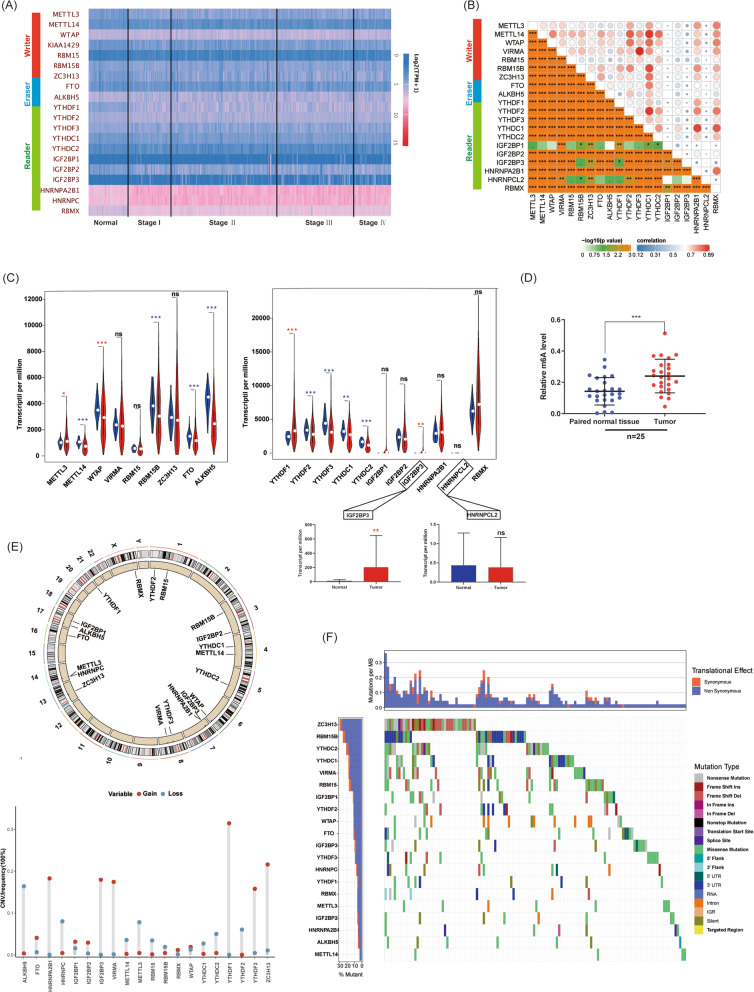
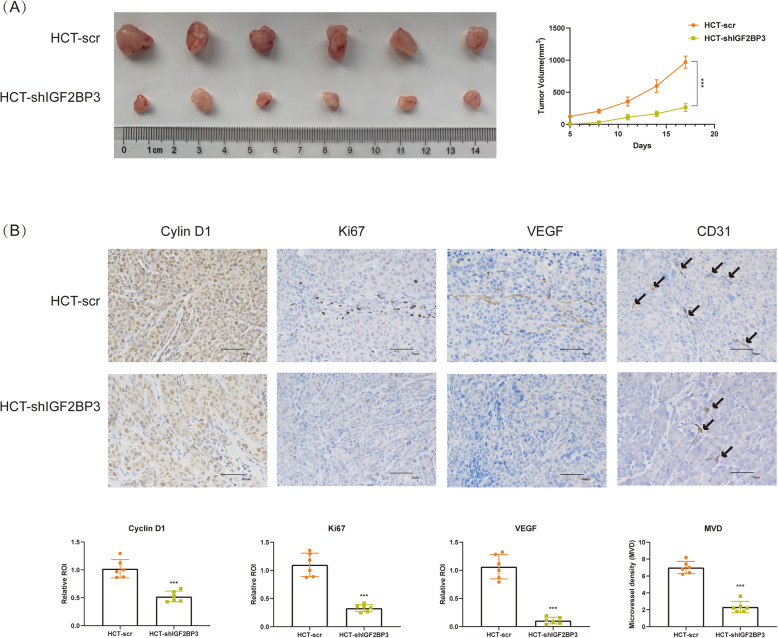
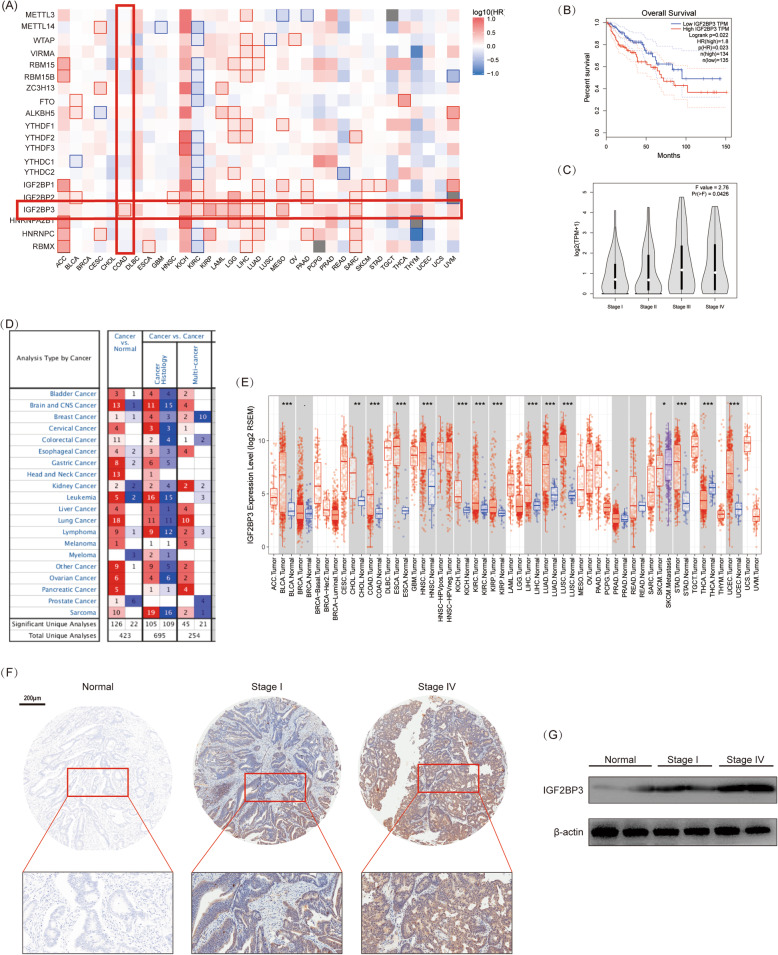
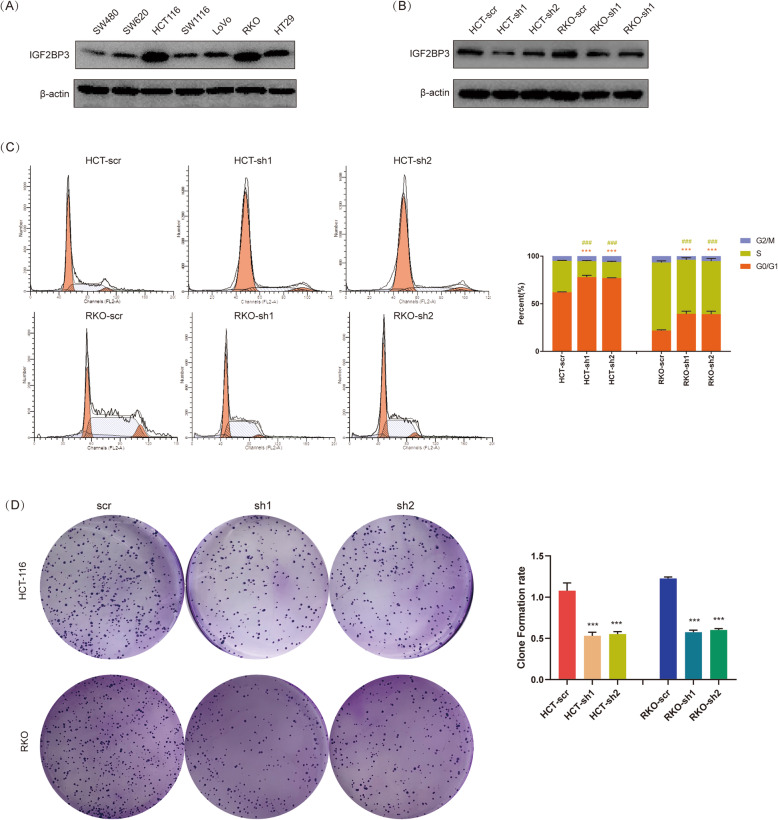
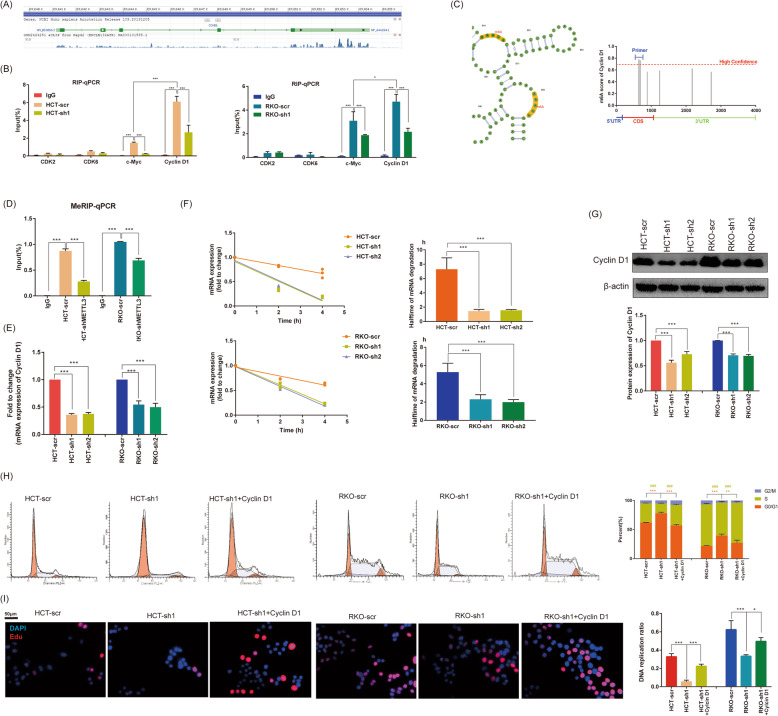
We investigated all m6A regulated enzymes in colon cancer and found only the overexpression of IGF2BP3 was associated with cancer progression and survival based on The Cancer Genome Atlas (TCGA) databases. Additionally, we also demonstrated IGF2BP3 was associated with DNA replication in the cell cycle. Knockdown of IGF2BP3 significantly repressed percentage of S phase of cell cycle as well as cell proliferation. Further research demonstrated IGF2BP3 bound to the mRNA of Cyclin D1 (CCND1, checkpoint of G1/S phase of cell cycle) and reduced its mRNA stability via reading m6A modification in the CDS region. Overexpression of Cyclin D1 in IGF2BP3 down-regulated cells completely rescued the inhibited percentage of S phase in cell cycle as well as cell proliferation. Additionally, we also demonstrated a similar role of IGF2BP3 at VEGF. IGF2BP3 bound to the mRNA of VEGF and reads m6A modification, thus regulated both expression and stability of VEGF mRNA. Knockdown of IGF2BP3 repressed angiogenesis in colon cancer via regulating VEGF.
Knockdown of IGF2BP3 repressed DNA replication in the S phase of cell cycle and angiogenesis via reading m6A modification of CCND1 and VEGF respectively. IGF2BP3 was a possible prognosis marker and potential therapeutic target of colon cancer.
N6-甲基腺苷(m6A)修饰参与了结肠癌发生发展的多个过程。IGF2BP3 是一种新报道的 m6A 读码器,但其在结肠癌中的作用尚不清楚。
通过 Western Blotting 分析和 m6A RNA 甲基化定量试剂盒分别测量 m6A 相关酶和总 m6A 水平。通过流式细胞术分析细胞周期。通过 RNA 免疫沉淀(RIP)和 m6A RNA 免疫沉淀(MeRIP)实验分析 IGF2BP3 与相关靶标的相互作用。
我们研究了结肠癌中所有的 m6A 调节酶,发现只有 IGF2BP3 的过度表达与癌症进展和生存有关,这是基于癌症基因组图谱(TCGA)数据库的。此外,我们还证明 IGF2BP3 与细胞周期中的 DNA 复制有关。IGF2BP3 的敲低显著抑制了细胞周期 S 期的比例和细胞增殖。进一步的研究表明,IGF2BP3 结合到细胞周期 G1/S 期检查点的 CCND1(Cyclin D1)mRNA 上,并通过在 CDS 区域读取 m6A 修饰来降低其 mRNA 稳定性。IGF2BP3 下调细胞中 CCND1 的过表达完全挽救了细胞周期 S 期比例以及细胞增殖的抑制。此外,我们还证明了 IGF2BP3 在 VEGF 中也有类似的作用。IGF2BP3 结合到 VEGF 的 mRNA 上并读取 m6A 修饰,从而调节 VEGF mRNA 的表达和稳定性。IGF2BP3 的敲低通过调节 VEGF 抑制了结肠癌中的血管生成。
IGF2BP3 通过读取 CCND1 和 VEGF 的 m6A 修饰,分别抑制细胞周期 S 期的 DNA 复制和血管生成,从而抑制结肠癌的发展。IGF2BP3 可能是结肠癌的一个预后标志物和潜在治疗靶点。