Mofatteh Mohammad
Lincoln College, University of Oxford, Turl Street, Oxford, OX1 3DR, United Kingdom.
Merton College, University of Oxford, Merton Street, Oxford, OX1 4DJ, United Kingdom.
AIMS Neurosci. 2020 Aug 10;7(3):299-310. doi: 10.3934/Neuroscience.2020016. eCollection 2020.
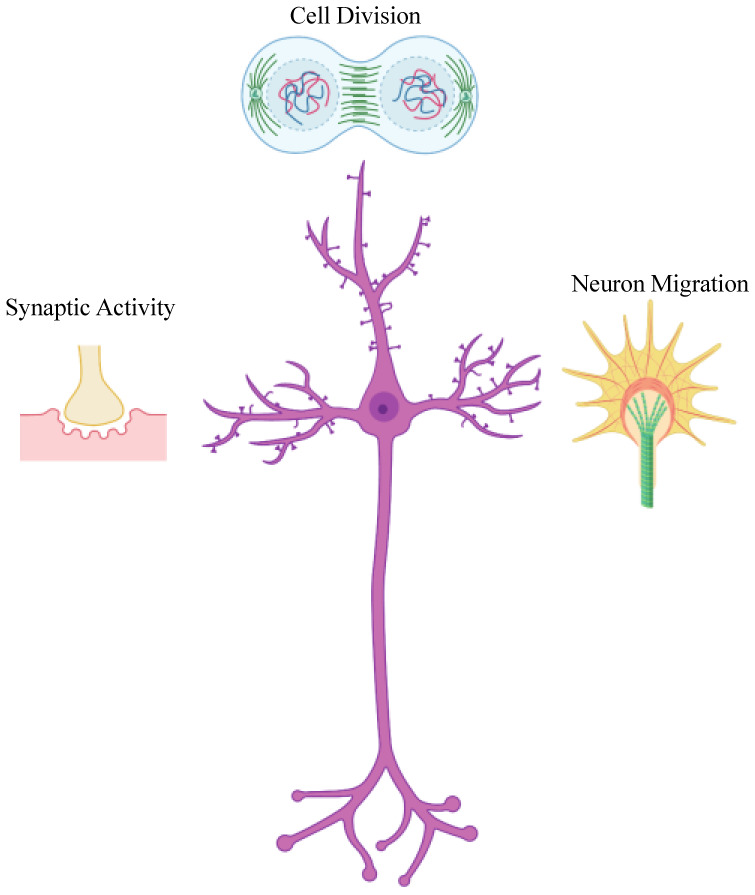
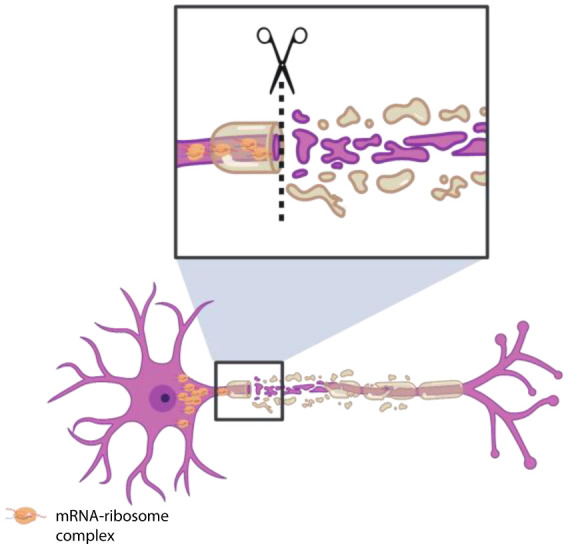
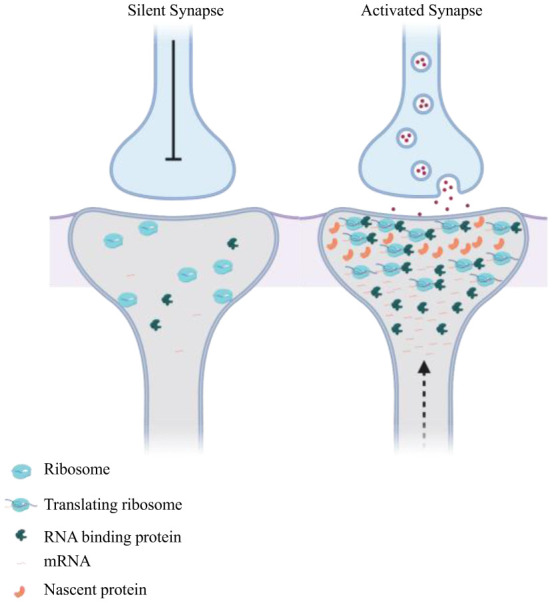
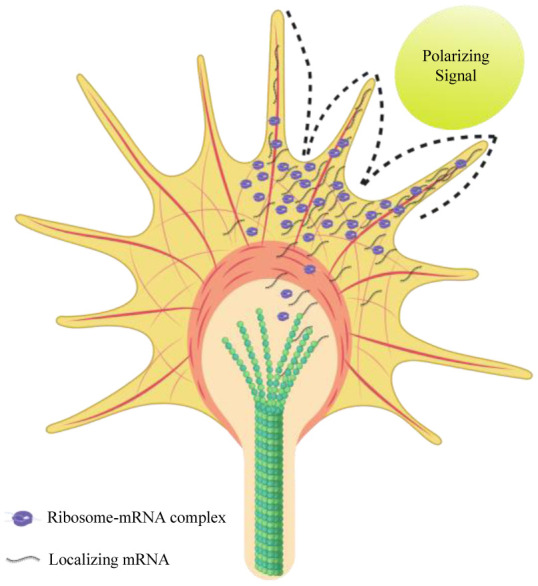
The spatial and temporal regulation of gene expression in neurons is an important step in creating functional and structural neuronal networks. The complexity of neurons require differential expression of various proteins in different compartments. Highly polarised cells, such as neurons, respond rapidly to different external stimuli by changing their local protein abundance and composition. Neurons can have extensions up to a meter away from their cell body in humans, so it is easy to envisage why they need to manage the synthesis of new proteins locally and on-demand. Recent research has demonstrated that neurons can control the expression of different proteins by localising translationally silent mRNAs, followed by subsequent translation. Neurons use mRNA localization and local translation to achieve different purposes during their life cycle. While developing neurons rely on mRNA localization for axon guidance and synaptogenesis, mature neurons can use mRNA localization for maintenance of essential physiological processes. mRNA localization also plays a role in response to neuron injury to regenerate and restore neuronal connections. Recent microscopic imaging techniques such as live imaging of fluorescently tagged molecules combined with genetic and biochemical studies in neurons have illustrated evolutionarily conserved mechanisms for targeting mRNAs into their correct compartments. This review provides an overview of mRNA localization and local translation in vertebrate and invertebrate neurons and discusses the mechanism by which mRNAs are trafficked into axons. Furthermore, the role of mRNA localization in synaptic activation, as well as axonal injury is explored.
神经元中基因表达的时空调控是构建功能性和结构性神经网络的重要步骤。神经元的复杂性要求不同的蛋白质在不同的区室中差异表达。高度极化的细胞,如神经元,通过改变其局部蛋白质丰度和组成,对不同的外部刺激做出快速反应。在人类中,神经元的延伸距离其细胞体可达一米之远,因此很容易理解为什么它们需要在局部按需管理新蛋白质的合成。最近的研究表明,神经元可以通过定位翻译沉默的mRNA,随后进行翻译,来控制不同蛋白质的表达。神经元在其生命周期中利用mRNA定位和局部翻译来实现不同的目的。在发育中的神经元中,mRNA定位依赖于轴突导向和突触形成,而成熟的神经元可以利用mRNA定位来维持基本的生理过程。mRNA定位在神经元损伤后的再生和恢复神经元连接中也发挥着作用。最近的微观成像技术,如荧光标记分子的实时成像与神经元中的遗传和生化研究相结合,已经阐明了将mRNA靶向到其正确区室的进化保守机制。本文综述了脊椎动物和无脊椎动物神经元中的mRNA定位和局部翻译,并讨论了mRNA被运输到轴突中的机制。此外,还探讨了mRNA定位在突触激活以及轴突损伤中的作用。