Ivics Zoltan, Amberger Maximilian, Zahn Tobias, Hildt Eberhard
Abteilung Biotechnologie, Paul-Ehrlich-Institut, Langen, Deutschland.
Abteilung Virologie, Paul-Ehrlich-Institut, Paul-Ehrlich-Str. 51-59, 63225, Langen, Deutschland.
Bundesgesundheitsblatt Gesundheitsforschung Gesundheitsschutz. 2020 Nov;63(11):1357-1364. doi: 10.1007/s00103-020-03223-7. Epub 2020 Sep 29.
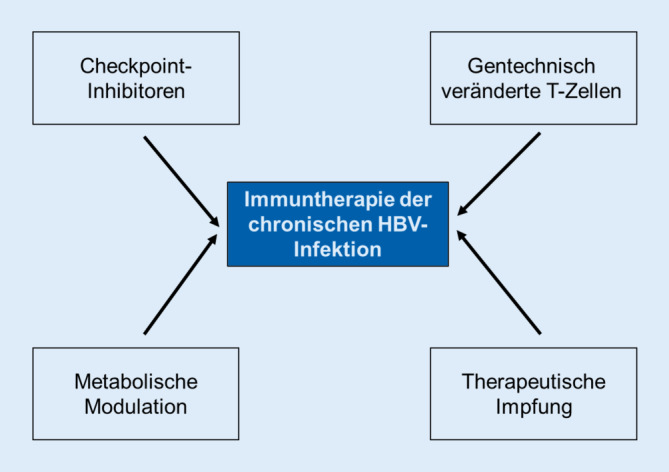
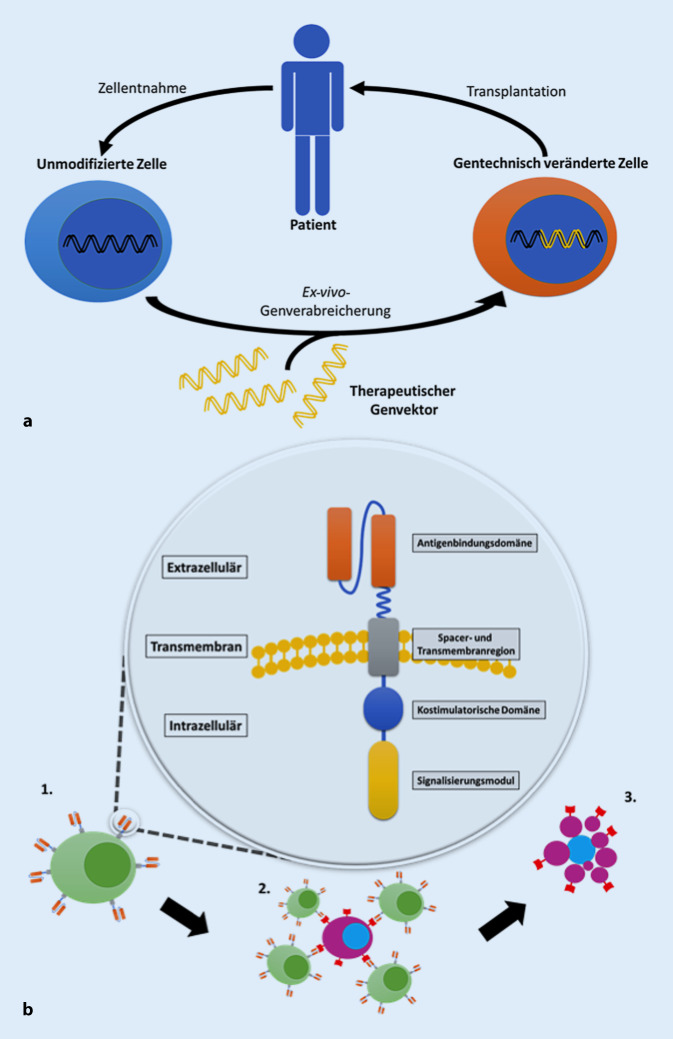
More than 250 million people worldwide suffer from chronic infection with hepatitis B virus (CHB). Chronic infection is associated with an increased risk of developing liver fibrosis/cirrhosis and hepatocellular carcinoma. Approximately 0.8-1 million people die annually as a result of CHB. One difficulty in the treatment of CHB is that the viral genome can persist for a very long time in the form of a minichromosome, and viral sequences can insert themselves into the host genome. Chronic infections are often characterized by functional defects of the cellular immune response, especially the T‑cell response, which prevents the elimination of HBV-infected cells.Immunotherapies aiming to cure CHB therefore aim to restore the antiviral function of the cellular immune response. In this review, various current approaches to immunotherapy of CHB are described, in particular the use of genetically modified autologous T cells as a possible tool for therapy. Furthermore, the modulation of checkpoint inhibitors of the immune response, metabolic T cell therapies, and therapeutic vaccination to stimulate the T‑cell response are summarized as immunotherapeutic strategies for treating CHB.
全球超过2.5亿人患有慢性乙型肝炎病毒(CHB)感染。慢性感染会增加发生肝纤维化/肝硬化和肝细胞癌的风险。每年约有80万至100万人死于CHB。CHB治疗的一个难点在于病毒基因组可以以微型染色体的形式长期存在,并且病毒序列可以插入宿主基因组。慢性感染通常以细胞免疫反应,特别是T细胞反应的功能缺陷为特征,这阻碍了对HBV感染细胞的清除。因此,旨在治愈CHB的免疫疗法旨在恢复细胞免疫反应的抗病毒功能。在这篇综述中,描述了目前治疗CHB的各种免疫疗法,特别是使用基因改造的自体T细胞作为一种可能的治疗工具。此外,免疫反应检查点抑制剂的调节、代谢性T细胞疗法以及刺激T细胞反应的治疗性疫苗接种被总结为治疗CHB的免疫治疗策略。