Am J Trop Med Hyg. 2020 Dec;103(6):2518-2527. doi: 10.4269/ajtmh.20-0258. Epub 2020 Sep 24.
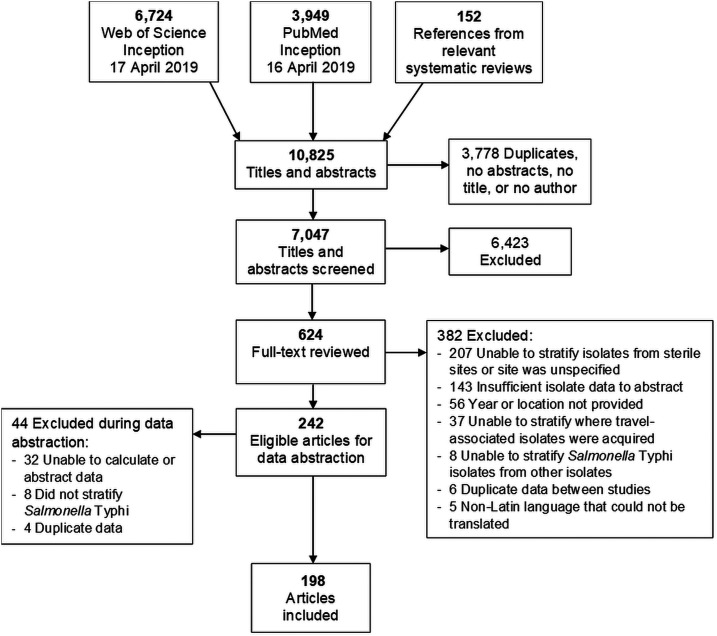
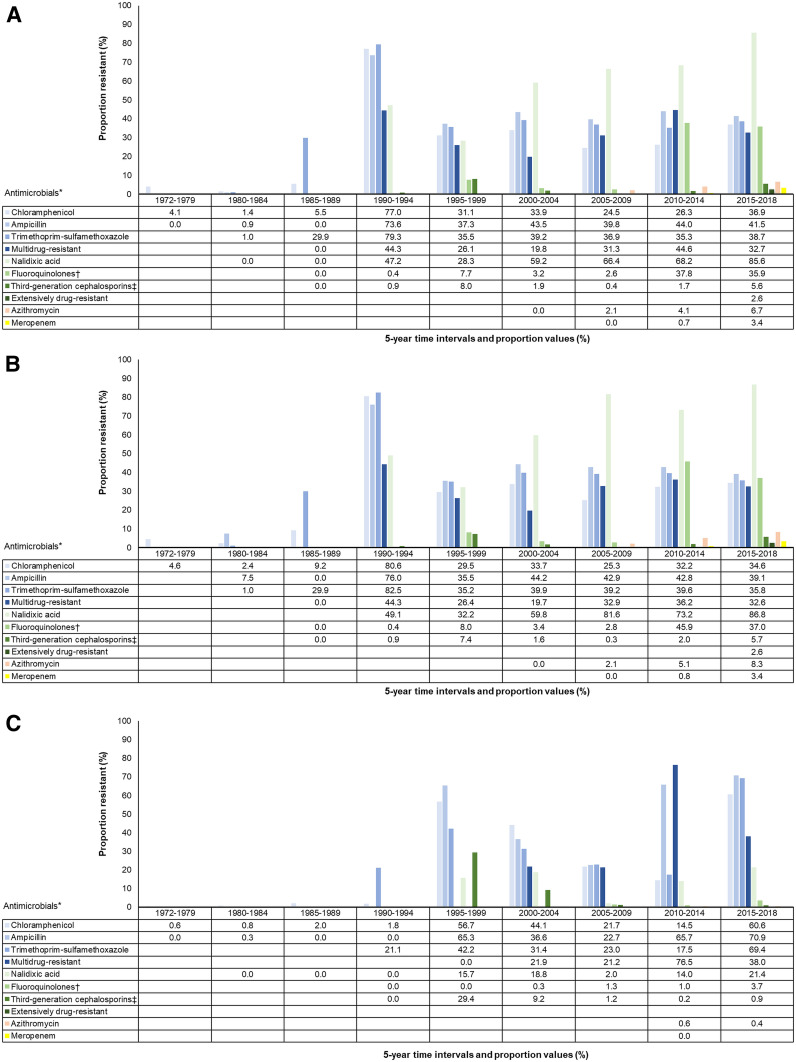
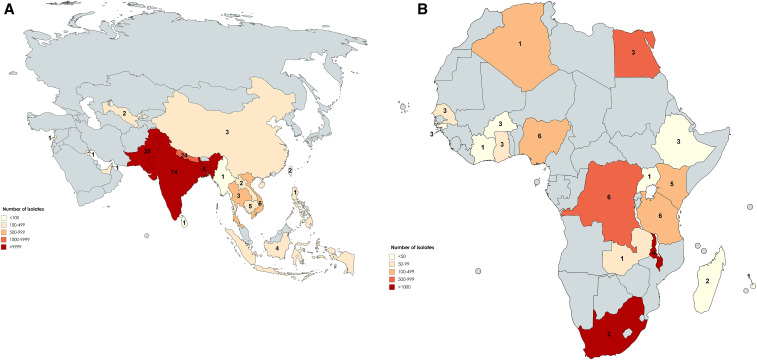
Understanding patterns and trends of antimicrobial resistance (AMR) in Typhi can guide empiric treatment recommendations and contribute to country decisions about typhoid conjugate vaccine (TCV) introduction. We systematically reviewed PubMed and Web of Science for articles reporting the proportion of Typhi isolates resistant to individual antimicrobials worldwide from any time period. Isolates resistant to chloramphenicol, ampicillin, and trimethoprim-sulfamethoxazole were classified as multidrug resistant (MDR), and isolates that were MDR plus resistant to a fluoroquinolone and a third-generation cephalosporin were extensively drug resistant (XDR). Among the 198 articles eligible for analysis, a total of 55,459 Typhi isolates were tested for AMR (median 80; range 2-5,191 per study). Of isolates from 2015 through 2018 in Asia, 1,638 (32.6%) of 5,032 were MDR, 167 (5.7%) of 2,914 were resistant to third-generation cephalosporins, and 148 (8.3%) of 1,777 were resistant to azithromycin. Two studies from Pakistan reported 14 (2.6%) of 546 isolates were XDR. In Africa, the median proportion of Typhi isolates that were MDR increased each consecutive decade from 1990 to 1999 through 2010 to 2018. Typhi has developed resistance to an increasing number of antimicrobial classes in Asia, where XDR Typhi is now a major threat, whereas MDR has expanded in Africa. We suggest continued and increased surveillance is warranted to inform empiric treatment decisions and that AMR data be incorporated into country decisions on TCV introduction.
了解伤寒沙门氏菌(Typhi)中抗生素耐药(AMR)的模式和趋势可以指导经验性治疗建议,并有助于国家决定是否引入伤寒结合疫苗(TCV)。我们系统地检索了 PubMed 和 Web of Science 中的文章,这些文章报告了来自任何时间段的全球范围内对单个抗生素耐药的伤寒沙门氏菌分离株的比例。对氯霉素、氨苄西林和甲氧苄啶-磺胺甲恶唑耐药的分离株被归类为多药耐药(MDR),而对氟喹诺酮类药物和第三代头孢菌素耐药的 MDR 分离株则为广泛耐药(XDR)。在符合分析条件的 198 篇文章中,共有 55459 株伤寒沙门氏菌分离株进行了 AMR 检测(中位数为 80;每篇研究的范围为 2-5191)。在 2015 年至 2018 年亚洲地区的分离株中,5032 株 MDR 的有 1638 株(32.6%),2914 株对第三代头孢菌素耐药的有 167 株(5.7%),1777 株对阿奇霉素耐药的有 148 株(8.3%)。来自巴基斯坦的两项研究报告称,546 株分离株中有 14 株(2.6%)为 XDR。在非洲,从 1990 年至 1999 年,再到 2010 年至 2018 年,伤寒沙门氏菌分离株的 MDR 比例每连续十年都有所增加。亚洲地区的伤寒沙门氏菌对抗生素的耐药性已越来越多,XDR 伤寒沙门氏菌现在是一个主要威胁,而 MDR 在非洲则有所扩大。我们建议继续加强监测,以指导经验性治疗决策,并将 AMR 数据纳入国家关于 TCV 引入的决策。