Liu Huanhuan, Zhang Jing, Yuan Jian, Jiang Xiaolong, Jiang Lingyan, Li Zhenjing, Yin Zhiqiu, Du Yuhui, Zhao Guang, Liu Bin, Huang Di
State Key Laboratory of Food Nutrition and Safety, Tianjin University of Science & Technology, Tianjin, 300457 China.
Key Laboratory of Food Nutrition and Safety, Tianjin University of Science & Technology, Ministry of Education, Tianjin, 300457 China.
Biotechnol Biofuels. 2020 Sep 26;13:163. doi: 10.1186/s13068-020-01802-z. eCollection 2020.
Lignocellulosic biomass is a promising resource of renewable biochemicals and biofuels. However, the presence of inhibitors existing in lignocellulosic hydrolysates (LCH) is a great challenge to acetone-butanol-ethanol (ABE) fermentation by . In particular, phenolic compounds (PCs) from LCH severely block ABE production even at low concentrations. Thus, it is urgent to gain insight into the intracellular metabolic disturbances caused by phenolic inhibitors and elucidate the underlying mechanisms to identify key industrial bottlenecks that undermine efficient ABE production.
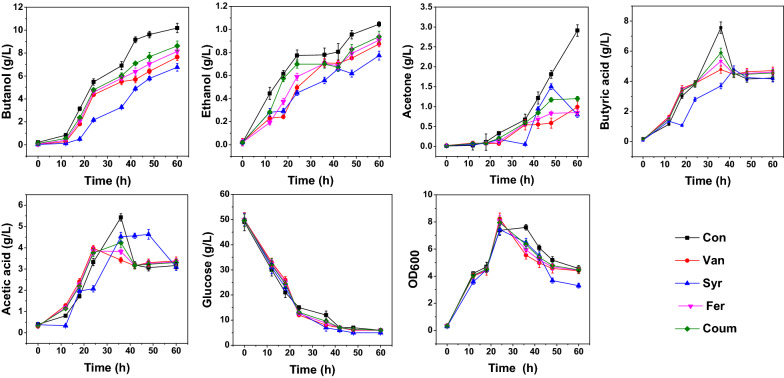
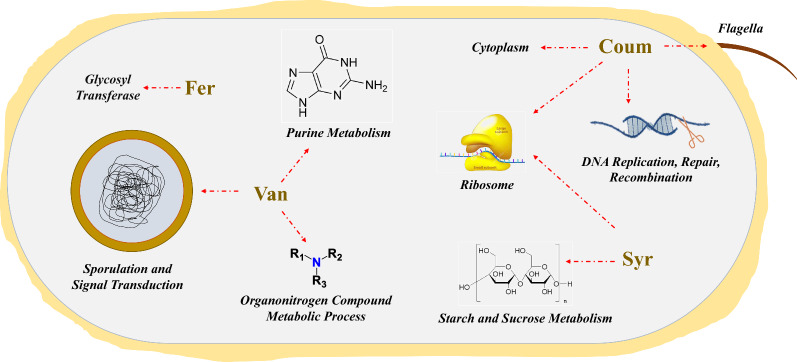
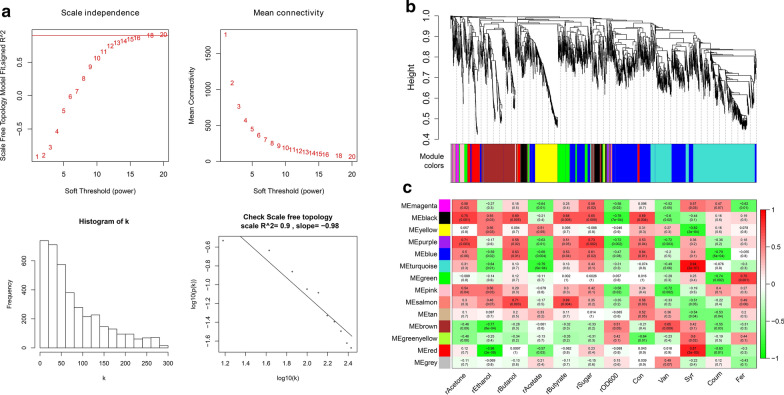
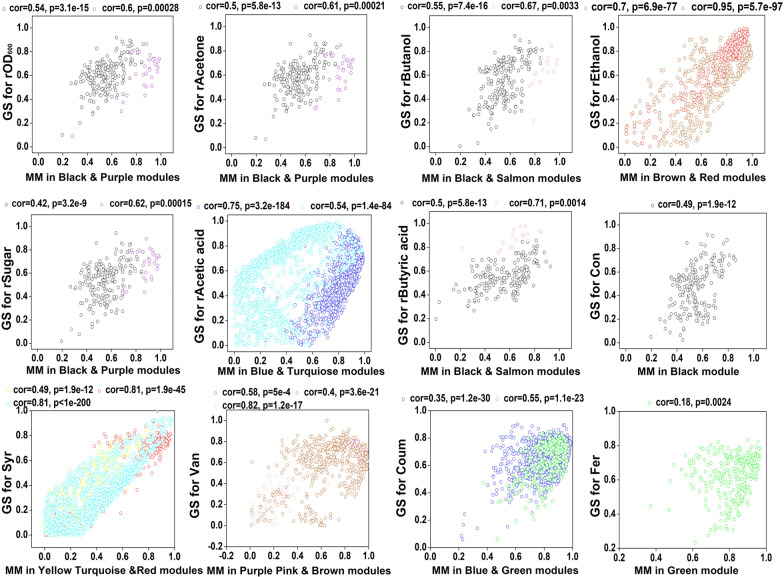
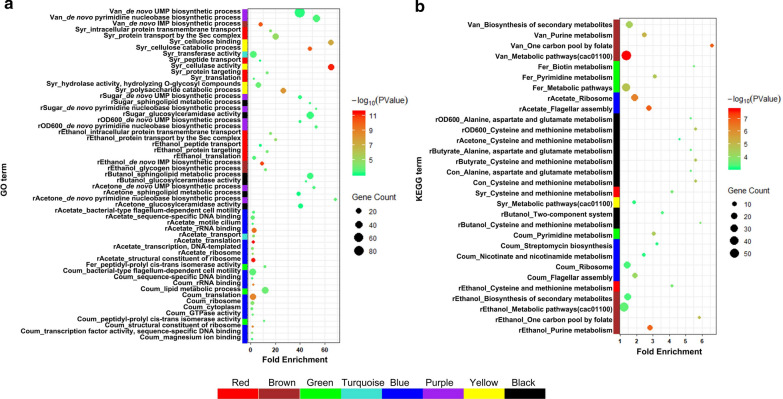
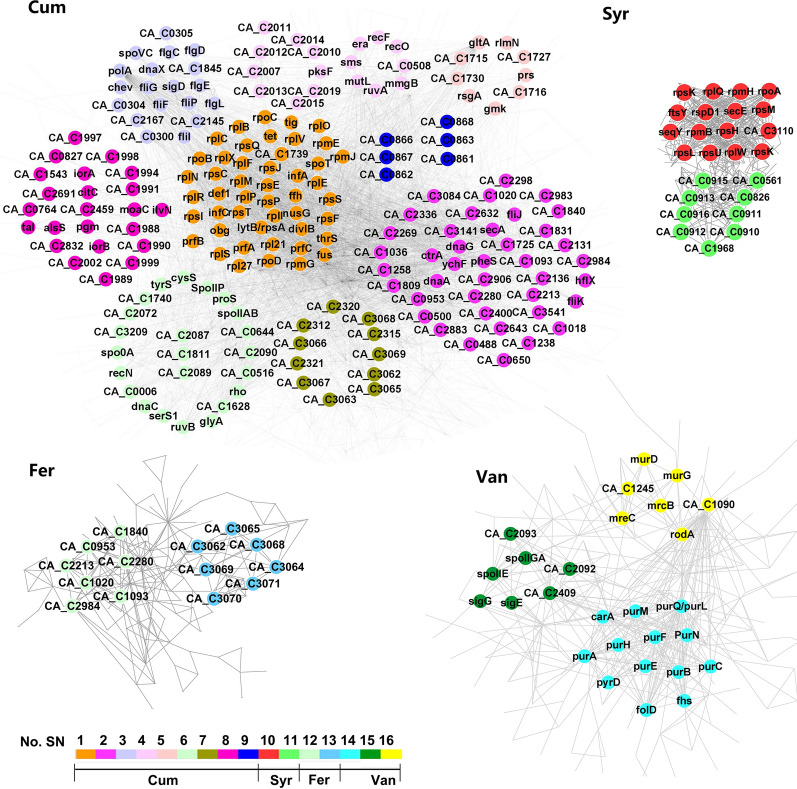
In this study, a time-course of ABE fermentation by in the presence of four typical PCs (syringaldehyde, vanillin, ferulic acid, and -coumaric acid) was characterized, respectively. Addition of PCs caused different irreversible effects on ABE production. Specifically, syringaldehyde showed the greatest inhibition to butanol production, followed by vanillin, ferulic acid, and -coumaric acid. Subsequently, a weighted gene co-expression network analysis (WGCNA) based on RNA-sequencing data was applied to identify metabolic perturbations caused by four LCH-derived PCs, and extract the gene modules associated with extracellular fermentation traits. The hub genes in each module were subjected to protein-protein interaction analysis and enrichment analysis. The results showed that functional modules were PC-dependent and shared some unique features. Specifically, -coumaric acid caused the most extensive transcriptomic disturbances, particularly affecting the gene expressions of ribosome proteins and the assembly of flagella, DNA replication, repair, and recombination; the addition of syringaldehyde caused significant metabolic disturbances on the gene expressions of ribosome proteins, starch and sucrose metabolism; vanillin mainly disturbed purine metabolism, sporulation and signal transduction; and ferulic acid caused a metabolic disturbance on glycosyl transferase-related gene expressions.
This study uncovers novel insights into the inhibitory mechanisms of PCs for the first time and provides guidance for future metabolic engineering efforts, which establishes a powerful foundation for the development of phenol-tolerant strains of for economically sustainable ABE production with high productivity from lignocellulosic biomass.
木质纤维素生物质是可再生生物化学品和生物燃料的一种有前景的资源。然而,木质纤维素水解产物(LCH)中存在的抑制剂对丙酮-丁醇-乙醇(ABE)发酵是一个巨大挑战。特别是,LCH中的酚类化合物(PCs)即使在低浓度下也会严重阻碍ABE的生产。因此,迫切需要深入了解酚类抑制剂引起的细胞内代谢紊乱,并阐明其潜在机制,以确定破坏高效ABE生产的关键工业瓶颈。
在本研究中,分别表征了在四种典型PCs(丁香醛、香草醛、阿魏酸和对香豆酸)存在下丙酮丁醇梭菌进行ABE发酵的时间进程。添加PCs对ABE生产产生了不同的不可逆影响。具体而言,丁香醛对丁醇生产的抑制作用最大,其次是香草醛、阿魏酸和对香豆酸。随后,基于RNA测序数据应用加权基因共表达网络分析(WGCNA)来识别由四种LCH衍生的PCs引起的代谢扰动,并提取与细胞外发酵特性相关的基因模块。对每个模块中的枢纽基因进行蛋白质-蛋白质相互作用分析和富集分析。结果表明,功能模块依赖于PCs并具有一些独特特征。具体而言,对香豆酸引起的转录组紊乱最为广泛,尤其影响核糖体蛋白的基因表达以及鞭毛组装、DNA复制、修复和重组;添加丁香醛对核糖体蛋白、淀粉和蔗糖代谢的基因表达引起显著的代谢紊乱;香草醛主要干扰嘌呤代谢、孢子形成和信号转导;阿魏酸对糖基转移酶相关基因表达引起代谢紊乱。
本研究首次揭示了PCs抑制机制的新见解,并为未来的代谢工程努力提供了指导,为开发能够耐受酚类的丙酮丁醇梭菌菌株奠定了坚实基础,从而以高生产率从木质纤维素生物质中实现经济可持续的ABE生产。