Baniaamam Milad, Handoko M Louis, Agca Rabia, Heslinga Sjoerd C, Konings Thelma C, van Halm Vokko P, Nurmohamed Mike T
Amsterdam Rheumatology Immunology Center, Location Reade, 1056 AB Amsterdam, The Netherlands.
Amsterdam Cardiovascular Sciences, Vrije Universiteit, 1081 HZ Amsterdam, The Netherlands.
J Clin Med. 2020 Sep 29;9(10):3145. doi: 10.3390/jcm9103145.
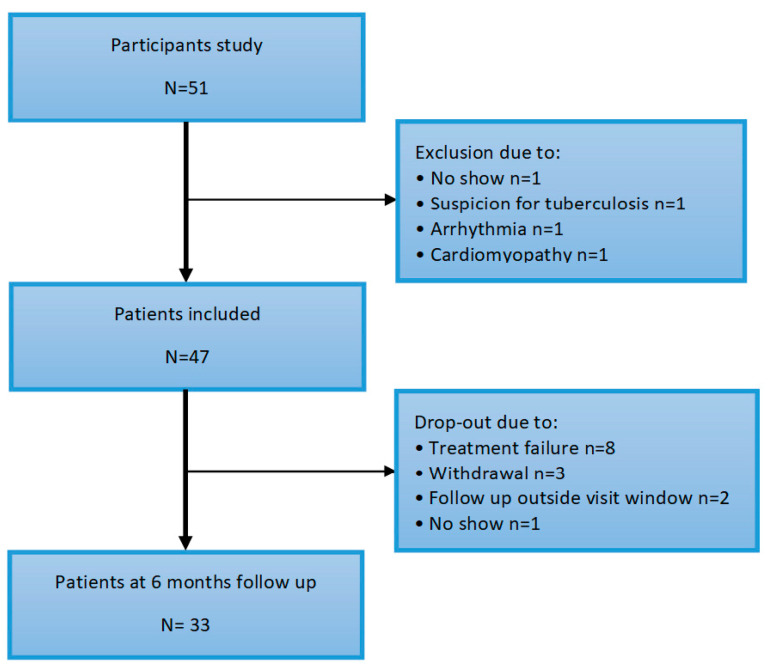
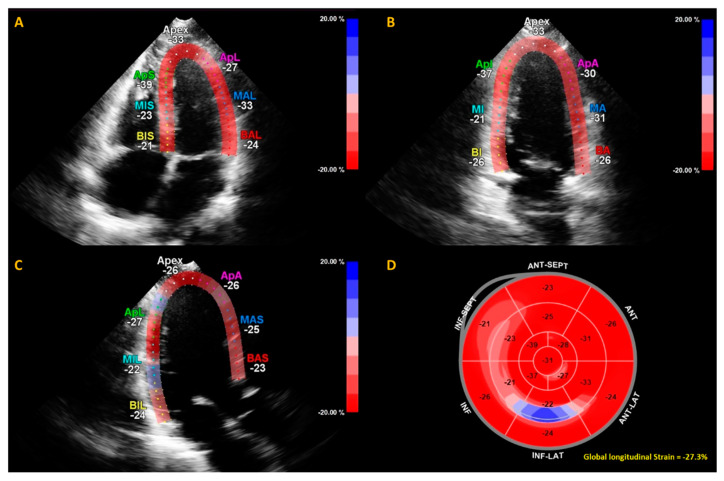
Congestive heart failure (CHF) is the second most prevalent cause of death in rheumatoid arthritis (RA). The systemic inflammatory state in RA patients is deemed responsible for this finding. Anti-inflammatory treatment with anti-tumor necrosis factor (anti-TNF) therapy decreases CV risk and subsequently might improve the cardiac function by lowering the overall inflammatory state. This study investigated the effect of anti-TNF on the cardiac function in RA patients. Fifty one RA patients were included, of which thirty three completed follow-up. Included patients were >18 years, had moderate-high disease activity and no history of cardiac disease. Patients were assessed at baseline and after six months of anti-TNF treatment. Patients underwent conventional Speckle tracking and tissue Doppler echocardiography in combination with clinical and laboratory assessments at baseline and follow-up. The left ventricular ejection fraction (LVEF) and global longitudinal strain (GLS) showed no changes during follow-up, LVEF 63% (±9) to 62% (±8) = 0.097 and GLS -20 (±4) to -20 (±3) = 0.79, respectively. Furthermore, E/e' nor E/A changed significantly between baseline and follow-up, respectively 8 (7-9) and 8 (7-9) = 0.17 and 1.1 (±0.4) and 1.1 (±0.4) = 0.94. Follow-up NT-proBNP decreased with 23%, from 89 ng/L (47-142) to 69 ng/L (42-155), = 0.10. Regression analysis revealed no association between change in inflammatory variables and cardiac function. Echocardiography showed no effect of anti-TNF treatment on the cardiac function in RA patients with low prevalence of cardiac dysfunction. Moreover, NT-proBNP decreased, possibly indicating (subtle) improvement of the cardiac function.
充血性心力衰竭(CHF)是类风湿关节炎(RA)中第二常见的死亡原因。RA患者的全身炎症状态被认为是导致这一结果的原因。使用抗肿瘤坏死因子(抗TNF)疗法进行抗炎治疗可降低心血管风险,随后可能通过降低整体炎症状态来改善心脏功能。本研究调查了抗TNF对RA患者心脏功能的影响。纳入了51例RA患者,其中33例完成了随访。纳入的患者年龄>18岁,疾病活动度为中度至高度,且无心脏病史。在基线和抗TNF治疗6个月后对患者进行评估。患者在基线和随访时接受了传统的斑点追踪和组织多普勒超声心动图检查,并结合临床和实验室评估。左心室射血分数(LVEF)和整体纵向应变(GLS)在随访期间无变化,LVEF分别从63%(±9)降至62%(±8)=0.097,GLS从-20(±4)降至-20(±3)=0.79。此外,E/e'和E/A在基线和随访之间分别无显著变化,分别为8(7-9)和8(7-9)=0.17以及1.1(±0.4)和1.1(±0.4)=0.94。随访时NT-proBNP下降了23%,从89 ng/L(47-142)降至69 ng/L(42-155),=0.10。回归分析显示炎症变量的变化与心脏功能之间无关联。超声心动图显示抗TNF治疗对心脏功能障碍患病率较低的RA患者的心脏功能无影响。此外,NT-proBNP下降,可能表明心脏功能有(细微)改善。