Department of Laboratory Medicine and Research Institute of Bacterial Resistance, College of Medicine, Yonsei University, Seoul 03722, Korea.
Brain Korea 21 PLUS Project for Medical Science, Yonsei University, Seoul 03722, Korea.
Cells. 2020 Sep 29;9(10):2209. doi: 10.3390/cells9102209.
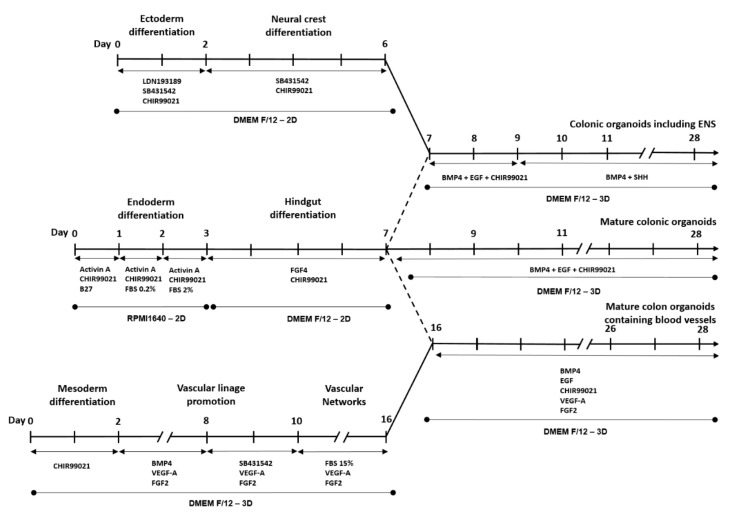
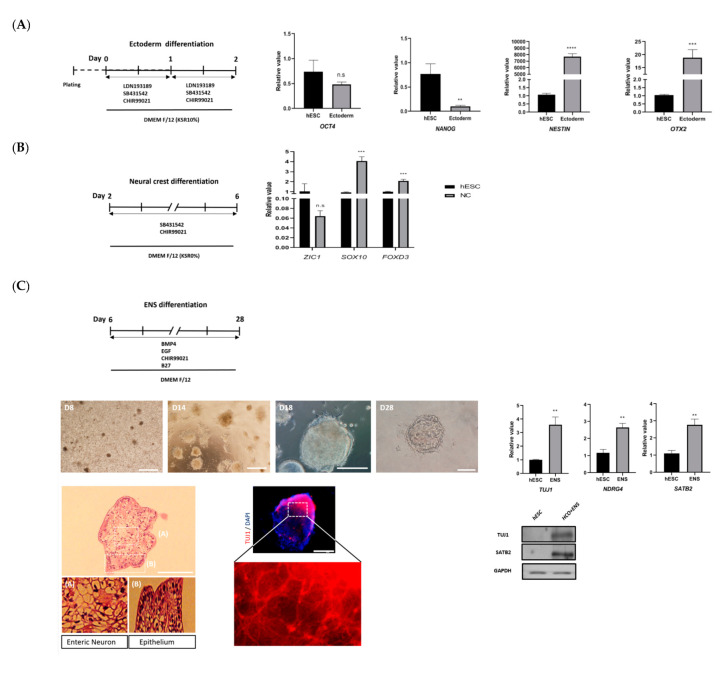
The increased interest in organoid research in recent years has contributed to an improved understanding of diseases that are currently untreatable. Various organoids, including kidney, brain, retina, liver, and spinal cord, have been successfully developed and serve as potential sources for regenerative medicine studies. However, the application of organoids has been limited by their lack of tissue components such as nerve and blood vessels that are essential to organ physiology. In this study, we used three-dimensional co-culture methods to develop colonic organoids that contained enteric nerves and blood vessels. The development of enteric nerves and blood vessels was confirmed phenotypically and genetically by the use of immunofluorescent staining and Western blotting. Colonic organoids that contain essential tissue components could serve as a useful model for the study of colon diseases and help to overcome current bottlenecks in colon disease research.
近年来,人们对类器官研究的兴趣日益浓厚,这有助于加深对目前无法治疗的疾病的理解。各种类器官,包括肾、脑、视网膜、肝和脊髓,已经成功开发出来,并可作为再生医学研究的潜在来源。然而,类器官的应用受到限制,因为它们缺乏神经和血管等组织成分,而这些成分对器官生理功能至关重要。在这项研究中,我们使用三维共培养方法开发了含有肠神经和血管的结肠类器官。通过免疫荧光染色和 Western blot 证实了肠神经和血管的发育具有表型和遗传特征。含有重要组织成分的结肠类器官可以作为研究结肠疾病的有用模型,并有助于克服当前结肠疾病研究的瓶颈。