A.N. Belozersky Institute of Physico-Chemical Biology, M.V. Lomonosov Moscow State University, Leninskie gory 1, Bld. 40, 119 992 Moscow, Russia.
Cells. 2020 Sep 29;9(10):2211. doi: 10.3390/cells9102211.
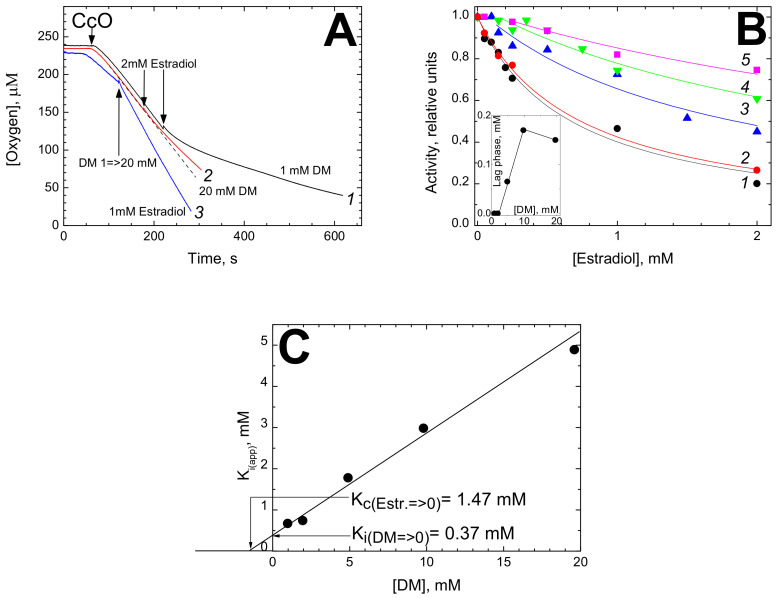
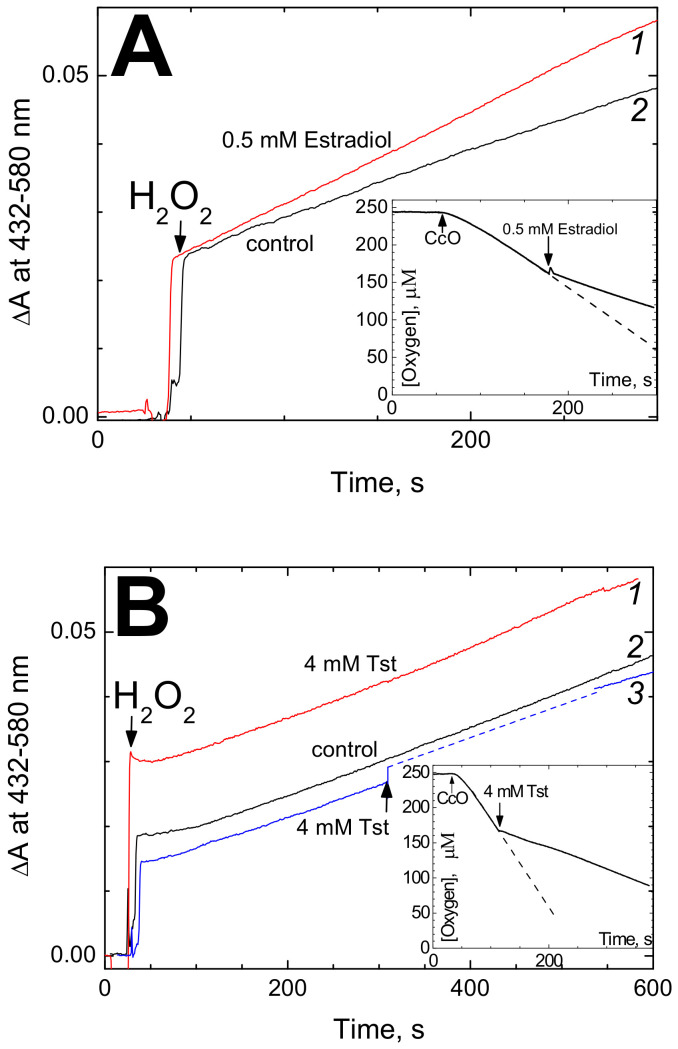
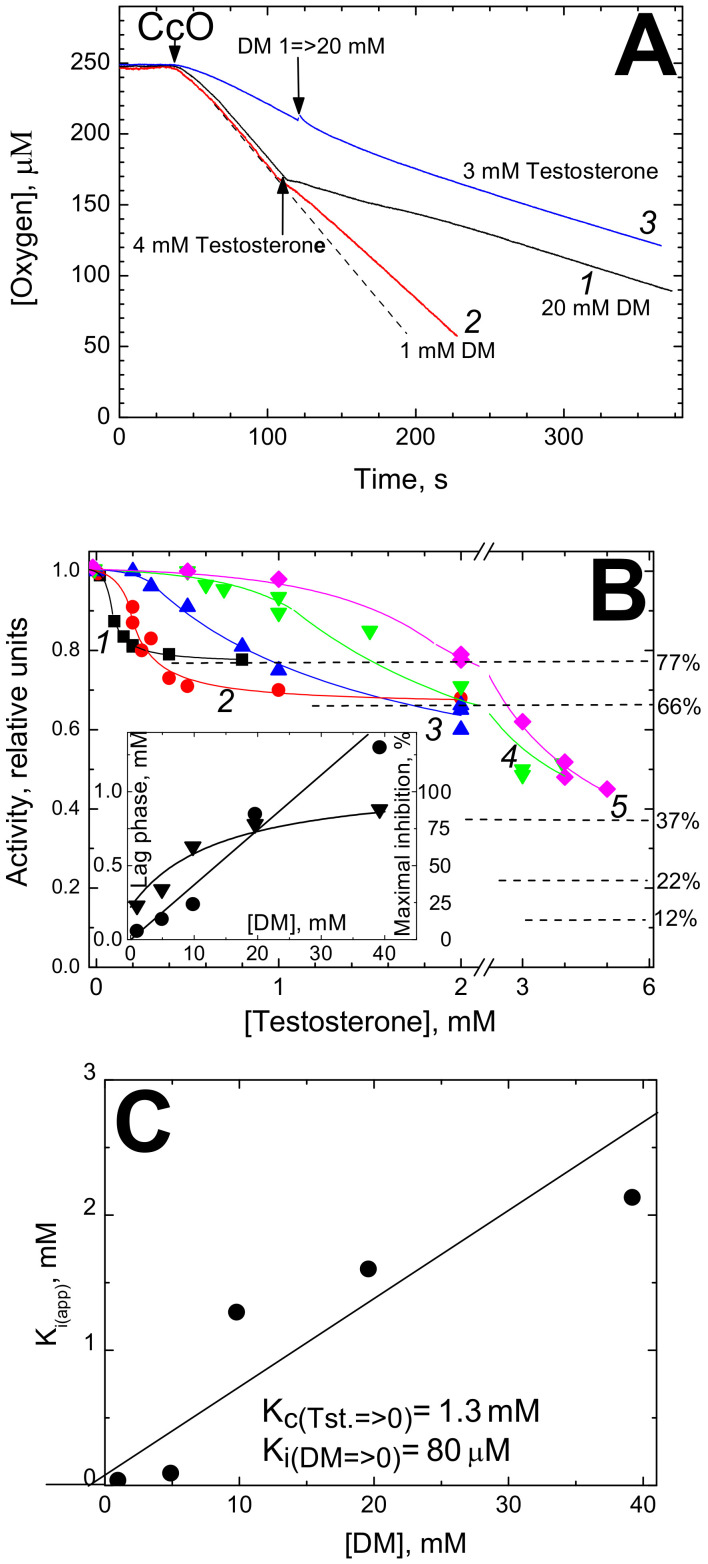
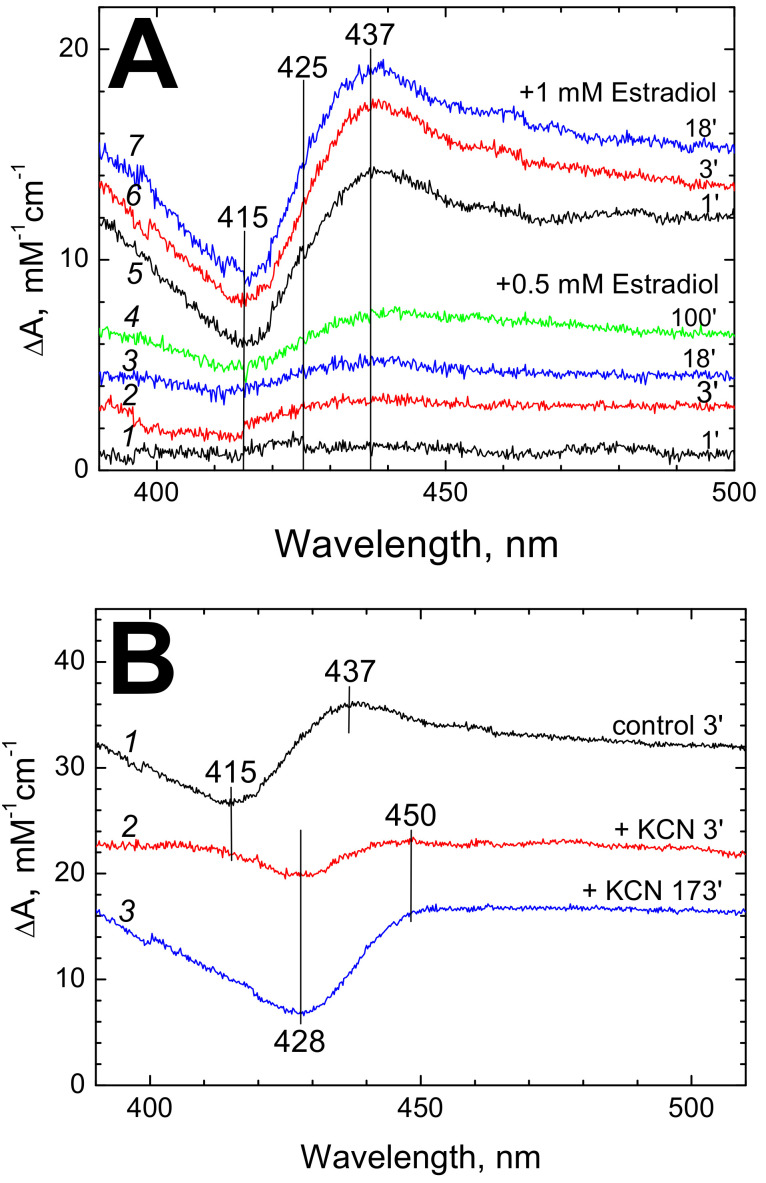
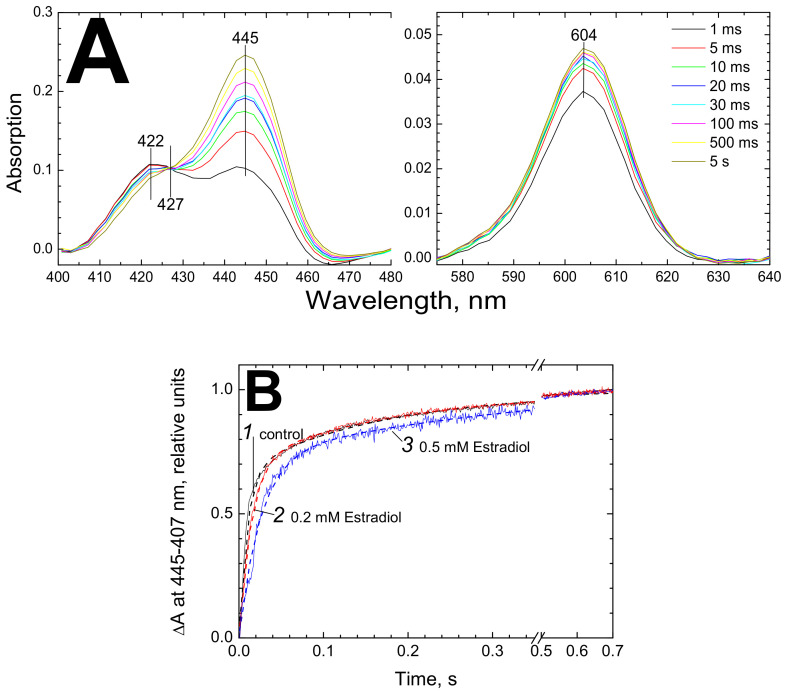
Estradiol, testosterone and other steroid hormones inhibit cytochrome oxidase (CcO) purified from bovine heart. The inhibition is strongly dependent on concentration of dodecyl-maltoside (DM) in the assay. The plots of K vs [DM] are linear for both estradiol and testosterone which may indicate an 1:1 stoichiometry competition between the hormones and the detergent. Binding of estradiol, but not of testosterone, brings about spectral shift of the oxidized CcO consistent with an effect on heme . We presume that the hormones bind to CcO at the bile acid binding site described by Ferguson-Miller and collaborators. Estradiol is shown to inhibit intraprotein electron transfer between hemes and Notably, neither estradiol nor testosterone suppresses the peroxidase activity of CcO. Such a specific mode of action indicates that inhibition of CcO activity by the hormones is associated with impairing proton transfer via the K-proton channel.
雌二醇、睾酮和其他甾体激素抑制从牛心中纯化的细胞色素氧化酶 (CcO)。这种抑制强烈依赖于测定中十二烷基麦芽糖 (DM) 的浓度。雌二醇和睾酮的 K 对 [DM] 的曲线是线性的,这可能表明激素和去污剂之间存在 1:1 的化学计量竞争。雌二醇的结合,但不是睾酮的结合,导致氧化的 CcO 的光谱位移与对血红素的影响一致。我们推测激素结合到 CcO 在 Ferguson-Miller 及其同事描述的胆汁酸结合位点。已证明雌二醇抑制血红素之间的蛋白内电子转移 和 值得注意的是,雌二醇和睾酮都不会抑制 CcO 的过氧化物酶活性。这种特定的作用模式表明,激素对 CcO 活性的抑制与通过 K-质子通道的质子转移受损有关。