Department of Pharmacology, University of California San Diego, 9500 Gilman Drive, La Jolla, 92093 California, United States.
Institute of Pharmaceutical Sciences, University of Graz, Universitätsplatz 1/I, 8010 Graz, Austria.
Anal Chem. 2020 Oct 20;92(20):14054-14062. doi: 10.1021/acs.analchem.0c03016. Epub 2020 Oct 1.
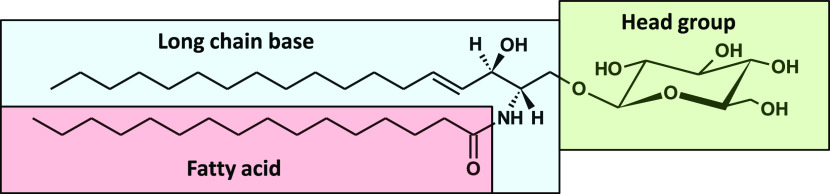
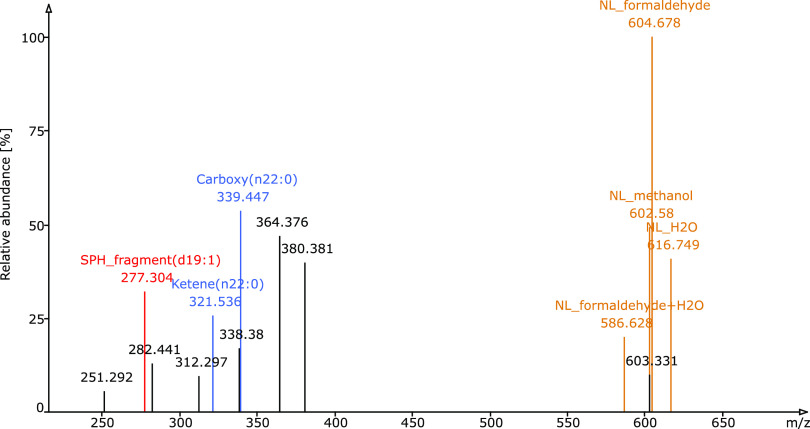
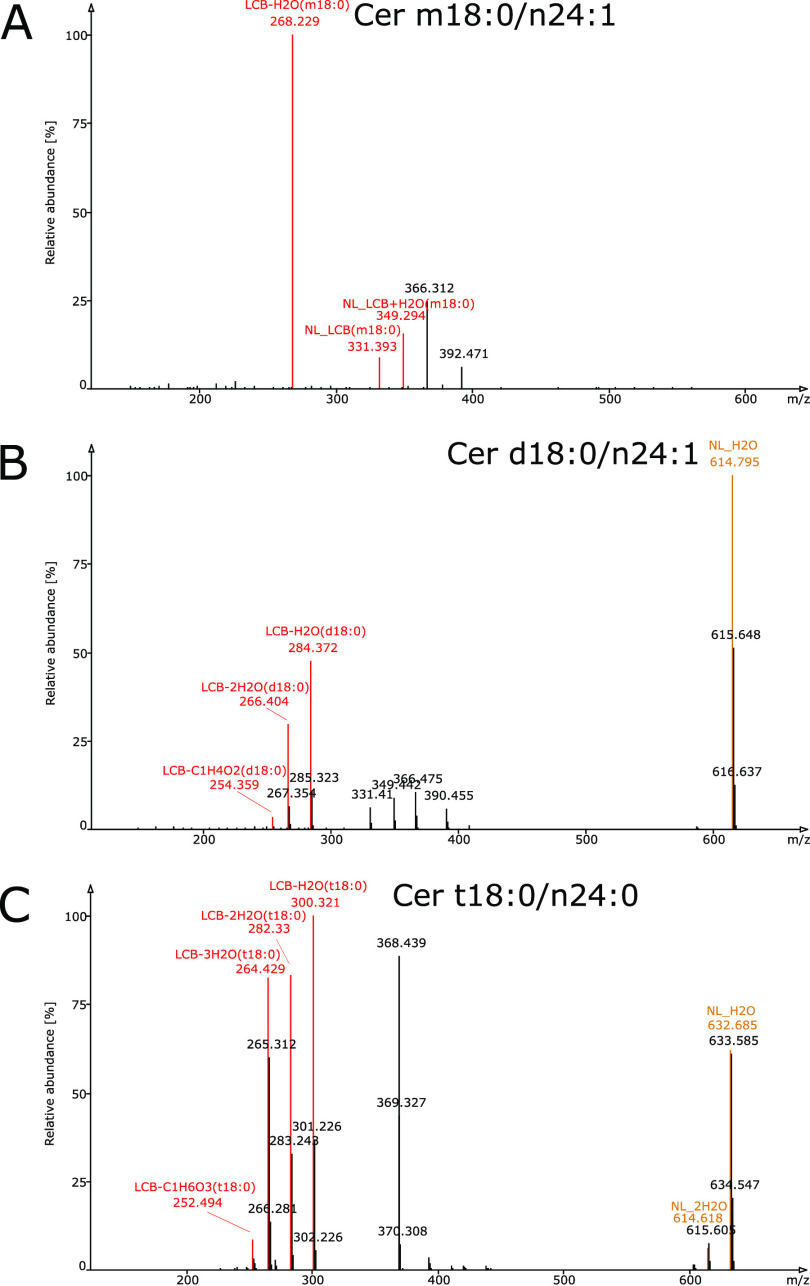
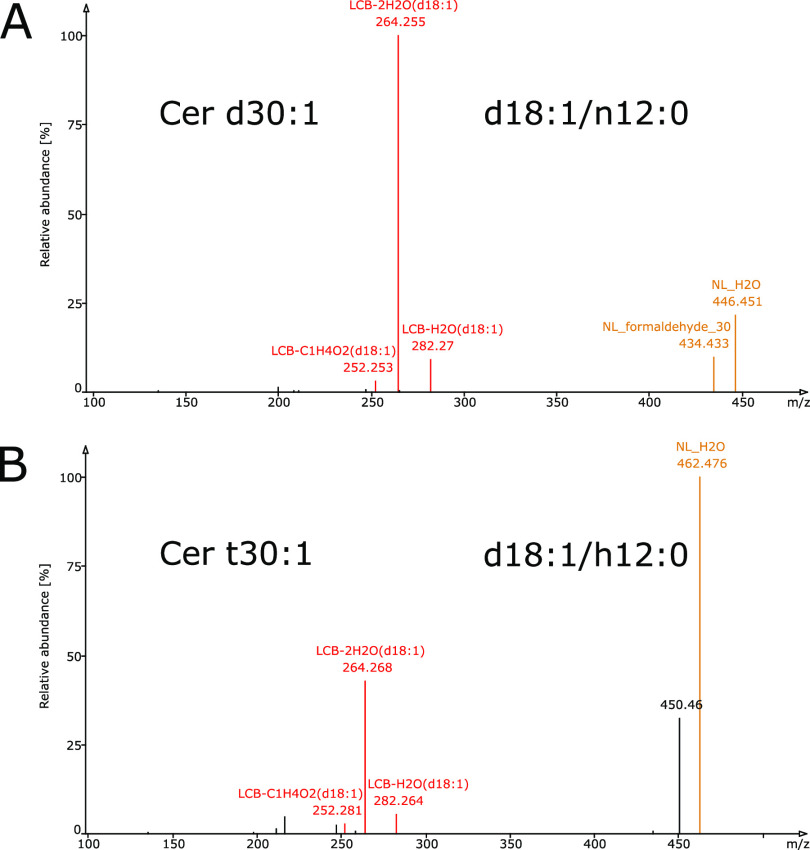
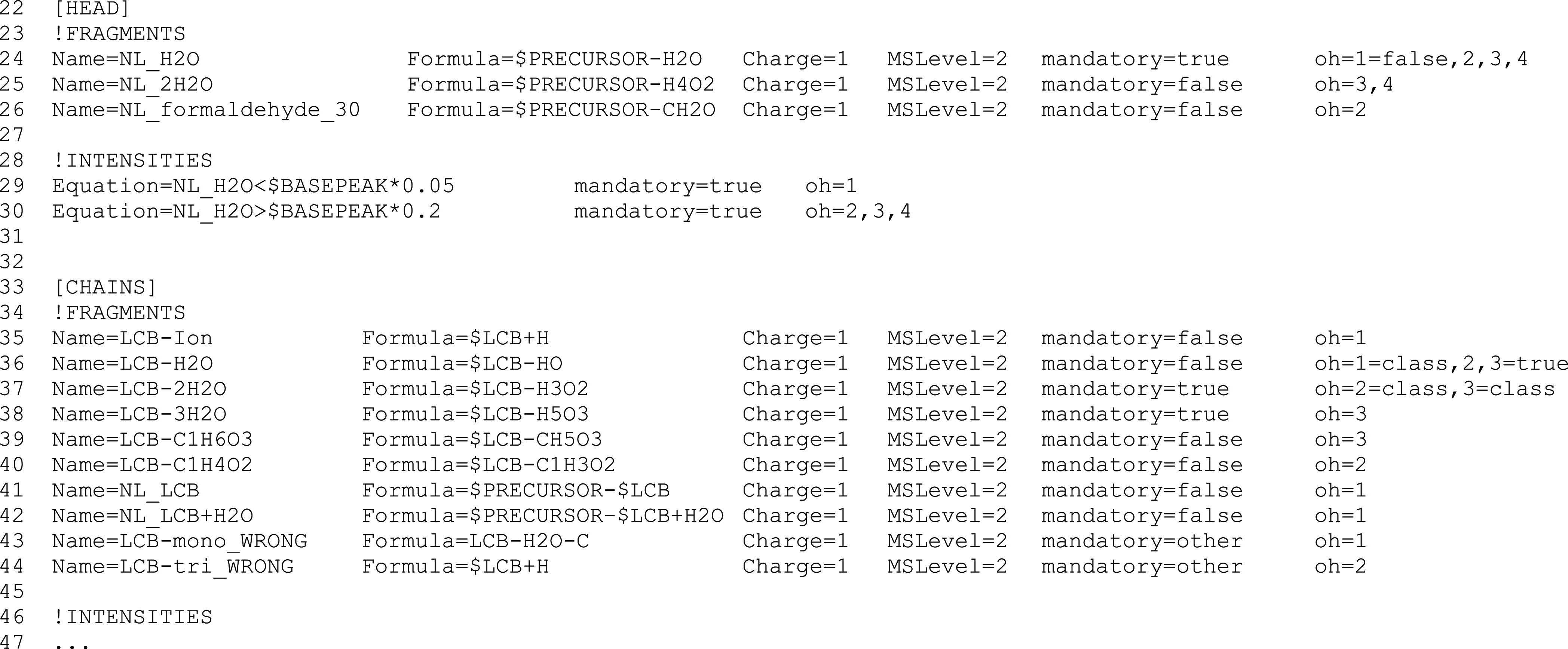
Sphingolipids constitute a heterogeneous lipid category that is involved in many key cellular functions. For high-throughput analyses of sphingolipids, tandem mass spectrometry (MS/MS) is the method of choice, offering sufficient sensitivity, structural information, and quantitative precision for detecting hundreds to thousands of species simultaneously. While glycerolipids and phospholipids are predominantly non-hydroxylated, sphingolipids are typically dihydroxylated. However, species containing one or three hydroxylation sites can be detected frequently. This variability in the number of hydroxylation sites on the sphingolipid long-chain base and the fatty acyl moiety produces many more isobaric species and fragments than for other lipid categories. Due to this complexity, the automated annotation of sphingolipid species is challenging, and incorrect annotations are common. In this study, we present an extension of the Lipid Data Analyzer (LDA) "decision rule set" concept that considers the structural characteristics that are specific for this lipid category. To address the challenges inherent to automated annotation of sphingolipid structures from MS/MS data, we first developed decision rule sets using spectra from authentic standards and then tested the applicability on biological samples including murine brain and human plasma. A benchmark test based on the murine brain samples revealed a highly improved annotation quality as measured by sensitivity and reliability. The results of this benchmark test combined with the easy extensibility of the software to other (sphingo)lipid classes and the capability to detect and correctly annotate novel sphingolipid species make LDA broadly applicable to automated sphingolipid analysis, especially in high-throughput settings.
鞘脂是一类异质脂质,参与许多关键的细胞功能。对于鞘脂的高通量分析,串联质谱(MS/MS)是首选方法,它具有足够的灵敏度、结构信息和定量精度,可同时检测数百到数千种物质。虽然甘油磷脂和磷脂主要是非羟化的,但鞘脂通常是二羟化的。然而,含有一个或三个羟基化位点的物质经常被检测到。鞘脂长链碱基和脂肪酸部分的羟基化位点数量的这种可变性产生了比其他脂质类别更多的等电点物质和片段。由于这种复杂性,鞘脂物质的自动注释具有挑战性,并且经常出现错误注释。在本研究中,我们提出了脂质数据分析器(LDA)“决策规则集”概念的扩展,该概念考虑了特定于该脂质类别的结构特征。为了解决从 MS/MS 数据自动注释鞘脂结构所固有的挑战,我们首先使用真实标准品的光谱开发了决策规则集,然后在包括鼠脑和人血浆在内的生物样本上测试了其适用性。基于鼠脑样本的基准测试显示,通过灵敏度和可靠性来衡量,注释质量有了显著提高。该基准测试的结果与软件易于扩展到其他(鞘氨醇)脂类以及检测和正确注释新鞘脂物质的能力相结合,使 LDA 广泛适用于自动化鞘脂分析,尤其是在高通量设置中。