Division of Population Health and Genomics, School of Medicine, University of Dundee, Dundee, DD1 9SY, UK.
The Scottish Renal Registry, Scottish Health Audits, Public Health & Intelligence, Information Services, Meridian Court, 5 Cadogan Street, Glasgow, G2 6QE, UK.
BMC Nephrol. 2020 Oct 1;21(1):419. doi: 10.1186/s12882-020-02061-8.
Infection with the severe acute respiratory coronavirus 2 (SARS-CoV-2) has led to a worldwide pandemic with coronavirus disease 2019 (COVID-19), the disease caused by SARS-CoV-2, overwhelming healthcare systems globally. Preliminary reports suggest a high incidence of infection and mortality with SARS-CoV-2 in patients receiving kidney replacement therapy (KRT). The aims of this study are to report characteristics, rates and outcomes of all patients affected by infection with SARS-CoV-2 undergoing KRT in Scotland.
Study design was an observational cohort study. Data were linked between the Scottish Renal Registry, Health Protection Scotland and the Scottish Intensive Care Society Audit Group national data sets using a unique patient identifier (Community Health Index (CHI)) for each individual by the Public Health and Intelligence unit of Public Health, Scotland. Descriptive statistics and survival analyses were performed.
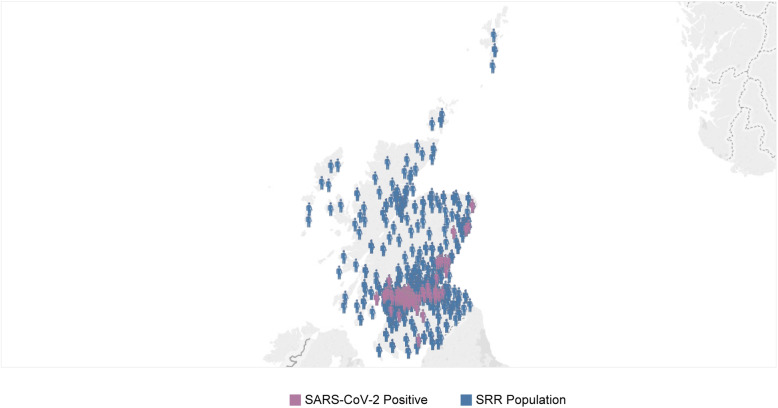
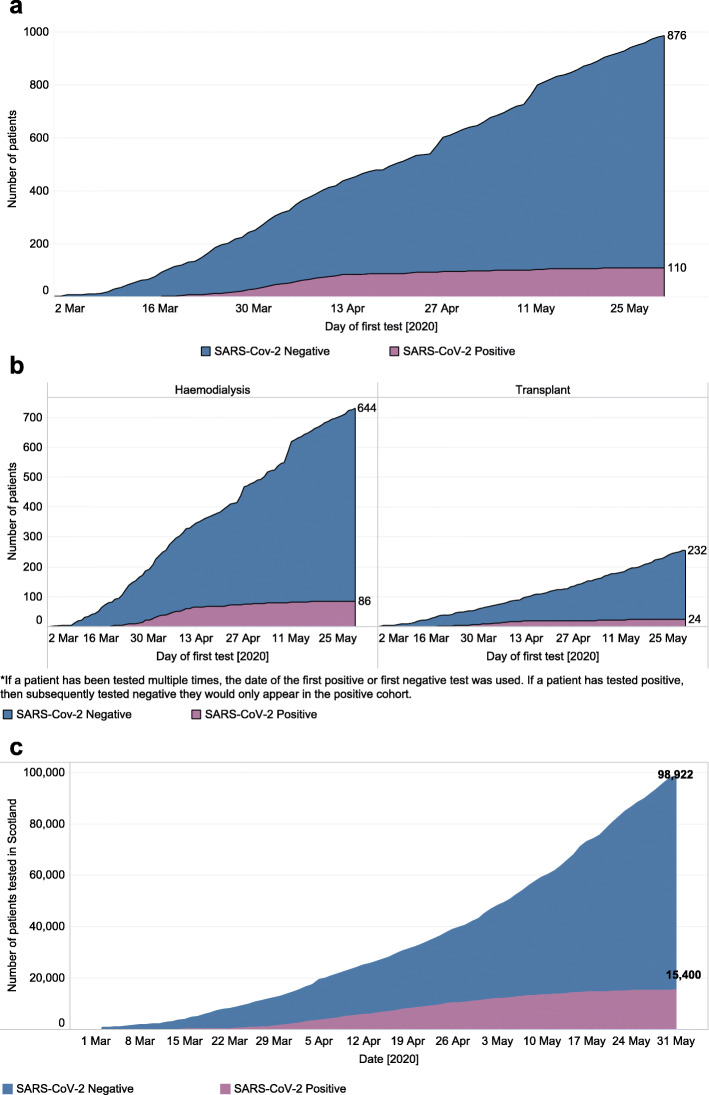
During the period 1st March 2020 to 31st May 2020, 110 patients receiving KRT tested positive for SARS-CoV-2 amounting to 2% of the prevalent KRT population. Of those affected, 86 were receiving haemodialysis or peritoneal dialysis and 24 had a renal transplant. Patients who tested positive were older and more likely to reside in more deprived postcodes. Mortality was high at 26.7% in the dialysis patients and 29.2% in the transplant patients.
The rate of detected SARS-CoV-2 in people receiving KRT in Scotland was relatively low but with a high mortality for those demonstrating infection. Although impossible to confirm, it appears that the measures taken within dialysis units coupled with the national shielding policy, have been effective in protecting this population from infection.
严重急性呼吸冠状病毒 2(SARS-CoV-2)的感染导致了全球大流行,即由 SARS-CoV-2 引起的 2019 年冠状病毒病(COVID-19),使全球的医疗保健系统不堪重负。初步报告表明,在接受肾脏替代治疗(KRT)的患者中,SARS-CoV-2 的感染率和死亡率较高。本研究的目的是报告在苏格兰接受 KRT 的所有感染 SARS-CoV-2 的患者的特征、发生率和结局。
研究设计为观察性队列研究。苏格兰肾脏登记处、苏格兰卫生保护局和苏格兰重症监护学会审计组的数据集通过公共卫生和情报部门使用每个个体的唯一患者标识符(社区健康索引(CHI))进行链接,苏格兰。进行描述性统计和生存分析。
在 2020 年 3 月 1 日至 5 月 31 日期间,110 名接受 KRT 的患者检测出 SARS-CoV-2 呈阳性,占流行 KRT 人群的 2%。受影响的患者中,86 人正在接受血液透析或腹膜透析,24 人接受了肾移植。检测呈阳性的患者年龄较大,更有可能居住在贫困程度较高的邮政编码地区。透析患者的死亡率为 26.7%,移植患者的死亡率为 29.2%。
苏格兰接受 KRT 的人群中检测到 SARS-CoV-2 的比例相对较低,但感染患者的死亡率较高。尽管无法确认,但似乎透析单位采取的措施以及国家屏蔽政策有效地保护了这一人群免受感染。