Morales-Hojas Ramiro, Sun Jingxuan, Alvira Iraizoz Fernando, Tan Xiaoling, Chen Julian
Rothamsted Insect Survey Biointeractions and Crop Protection Department Rothamsted Research Harpenden UK.
State Key Laboratory for Biology of Plant Diseases and Insect Pests Institute of Plant Protection Chinese Academy of Agricultural Sciences Beijing China.
Ecol Evol. 2020 Sep 11;10(18):9647-9662. doi: 10.1002/ece3.6565. eCollection 2020 Sep.
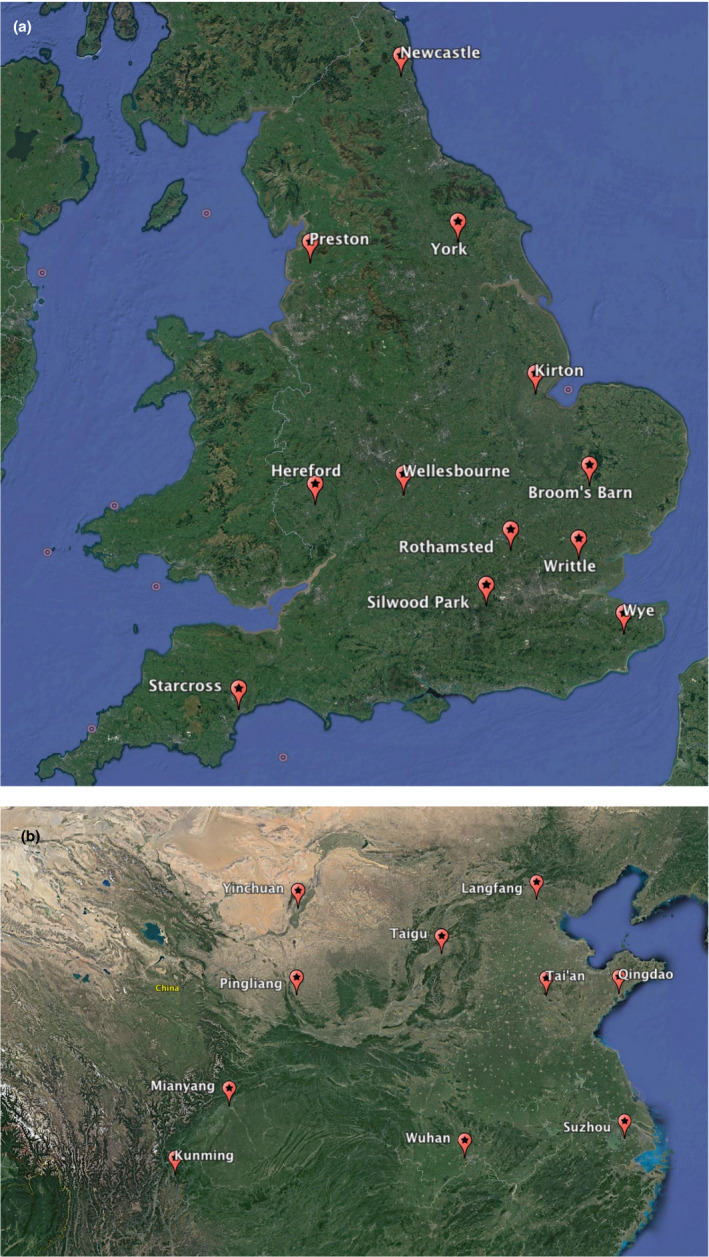
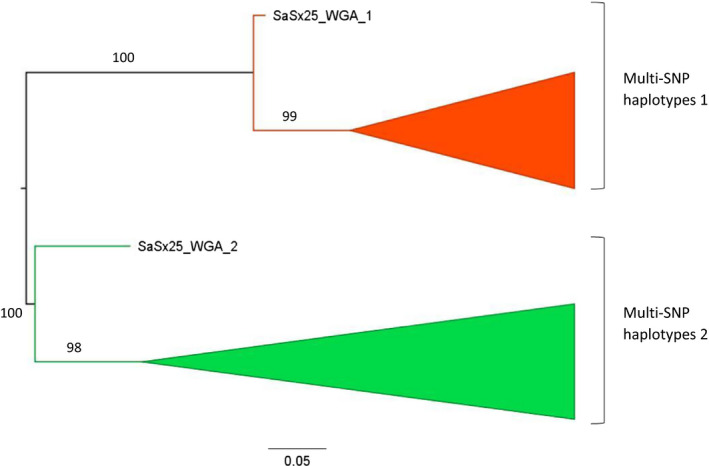
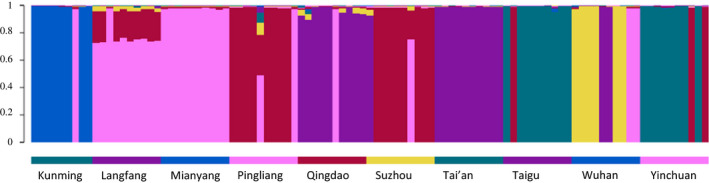
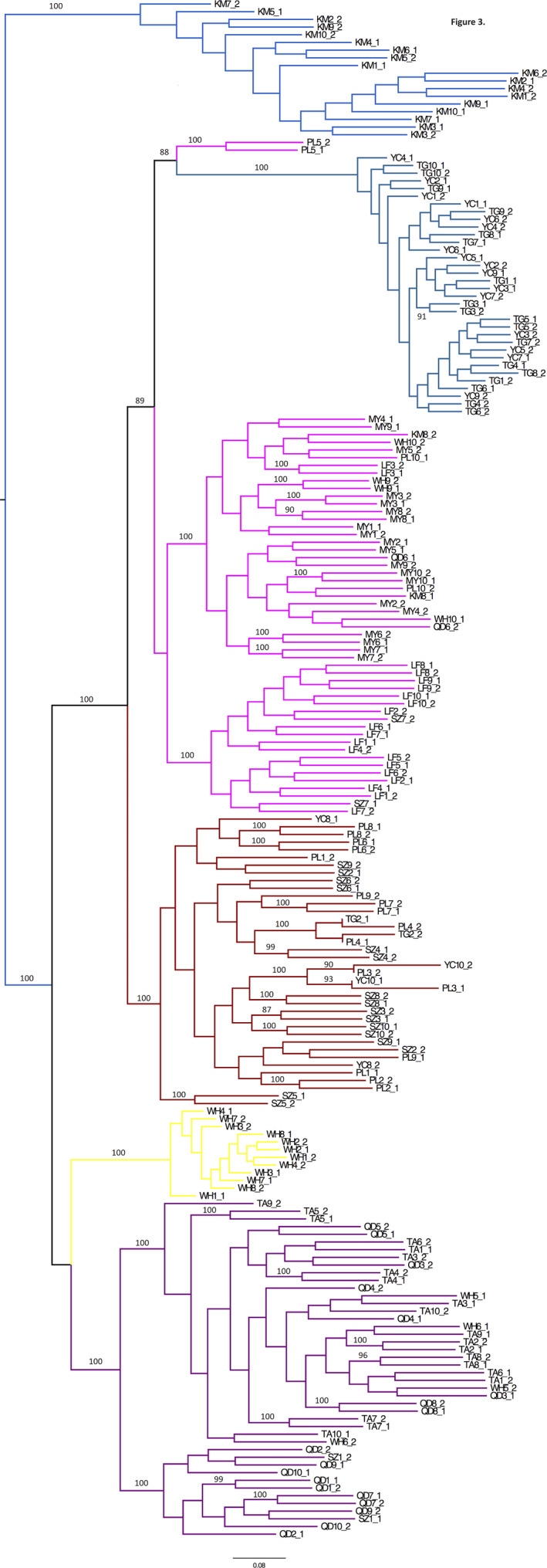
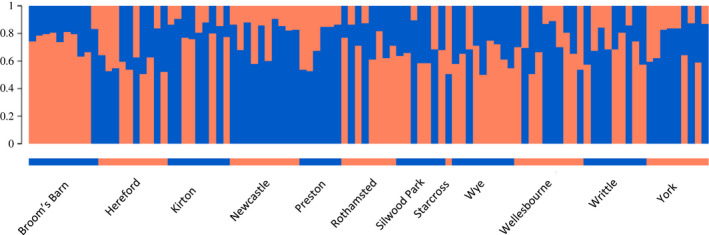
Genetic diversity of populations has important ecological and evolutionary consequences, whose understanding is fundamental to improve the sustainability of agricultural production. Studies of how differences in agricultural management and environment influence the population structure of insect pests are central to predict outbreaks and optimize control programs. Here, we have studied the population genetic diversity and evolution of and , which are among the most relevant aphid pests of cereals across Europe and Asia, respectively. We have used genotyping by sequencing (GBS) to identify genome-wide single nucleotide polymorphisms (SNPs) to infer the geographic structure and migration patterns. In the present study, we show that the population structure in present-day populations is different from that described in previous studies, which suggest that they have evolved recently possibly as a response to human-induced changes in agriculture. This study shows that in England is predominantly parthenogenetic and there has been a demographic and spatial expansion of a single genetic cluster, which could correspond with the insecticide resistance superclone identified in previous studies. Conversely, in China, populations are mostly cyclical parthenogenetic, with one sexual stage in autumn to produce overwintering eggs, and there are six genetically differentiated subpopulations and high genetic differentiation between geographic locations, which suggests that further taxonomical research is needed. Unlike in England, there is no evidence for insecticide resistance and there is no predominance of a single lineage in in China.
种群的遗传多样性具有重要的生态和进化后果,了解这些后果对于提高农业生产的可持续性至关重要。研究农业管理和环境差异如何影响害虫的种群结构,对于预测害虫爆发和优化防治方案至关重要。在此,我们研究了麦长管蚜和禾谷缢管蚜的种群遗传多样性和进化,它们分别是欧洲和亚洲谷类作物中最主要的蚜虫害虫。我们使用简化基因组测序(GBS)来鉴定全基因组单核苷酸多态性(SNP),以推断地理结构和迁移模式。在本研究中,我们表明现今种群的种群结构与先前研究中描述的不同,这表明它们可能是最近由于人类引起的农业变化而进化的。这项研究表明,英国的麦长管蚜主要进行孤雌生殖,并且单个遗传簇在数量和空间上有所扩张,这可能与先前研究中鉴定出的抗杀虫剂超级克隆相对应。相反,在中国,禾谷缢管蚜种群大多进行周期性孤雌生殖,秋季有一个有性阶段以产生越冬卵,并且有六个遗传分化的亚种群,地理位置之间存在高度遗传分化,这表明需要进一步开展分类学研究。与英国的麦长管蚜不同,中国的禾谷缢管蚜没有抗杀虫剂的证据,也没有单一谱系占主导地位的情况。