Department of Anesthesiology, Sun Yat-Sen University Cancer Center, State Key Laboratory of Oncology in Southern China, Collaborative Innovation for Cancer Medicine, Guangzhou, Guangdong 510060, China.
Department of Clinical Trial Center, Sun Yat-Sen University Cancer Center, State Key Laboratory of Oncology in Southern China, Collaborative Innovation for Cancer Medicine, Guangzhou, Guangdong 510060, China.
Biosci Rep. 2020 Oct 30;40(10). doi: 10.1042/BSR20202603.
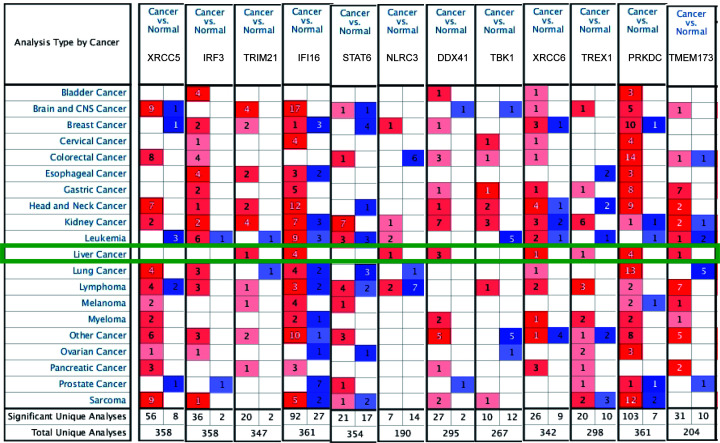
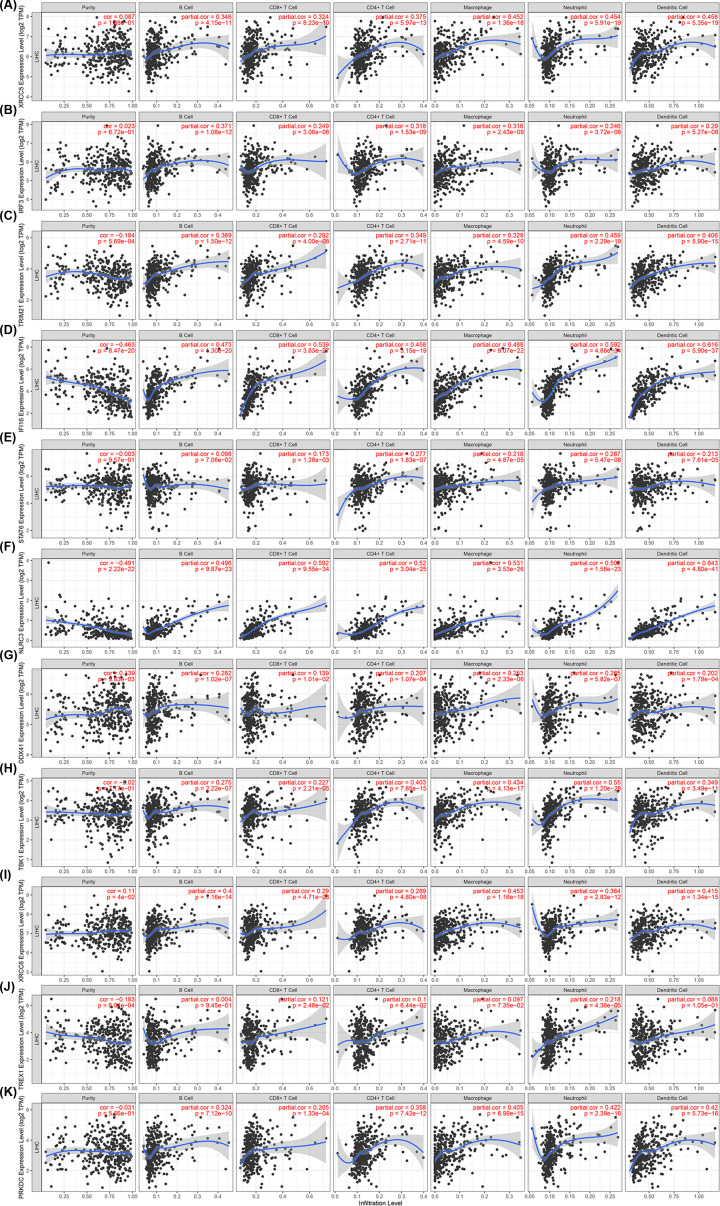
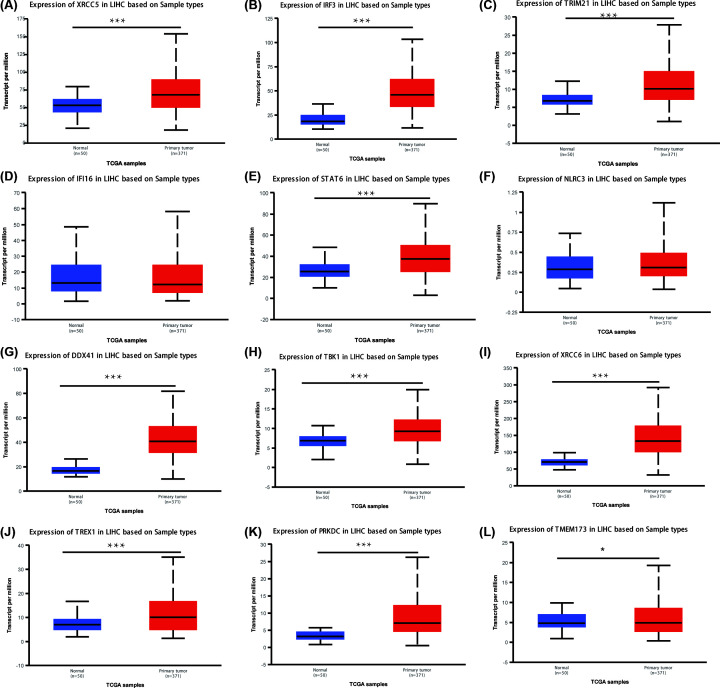
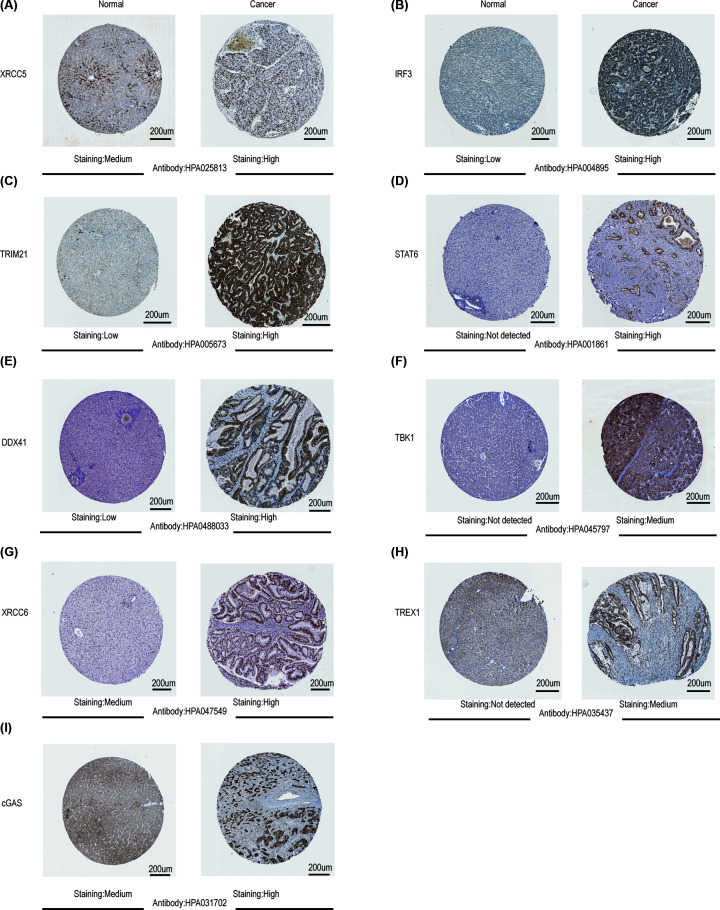
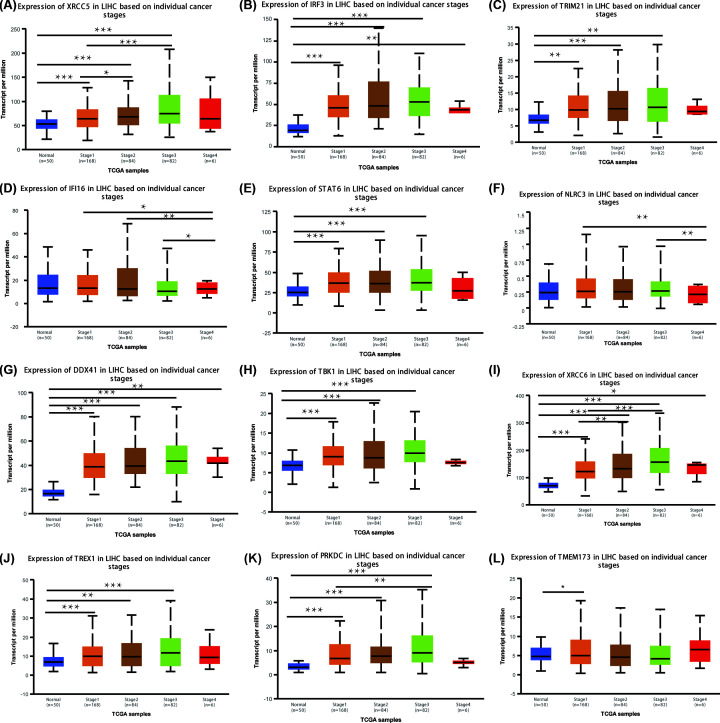
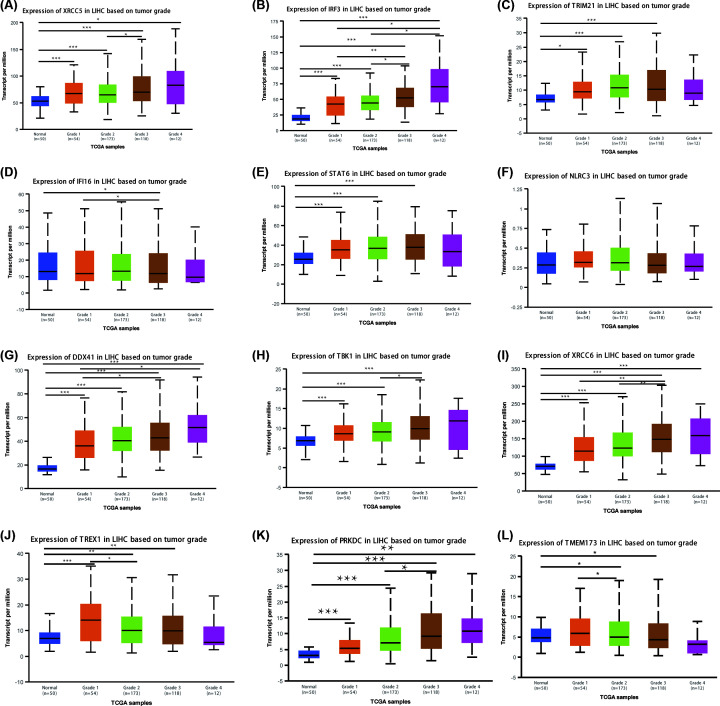
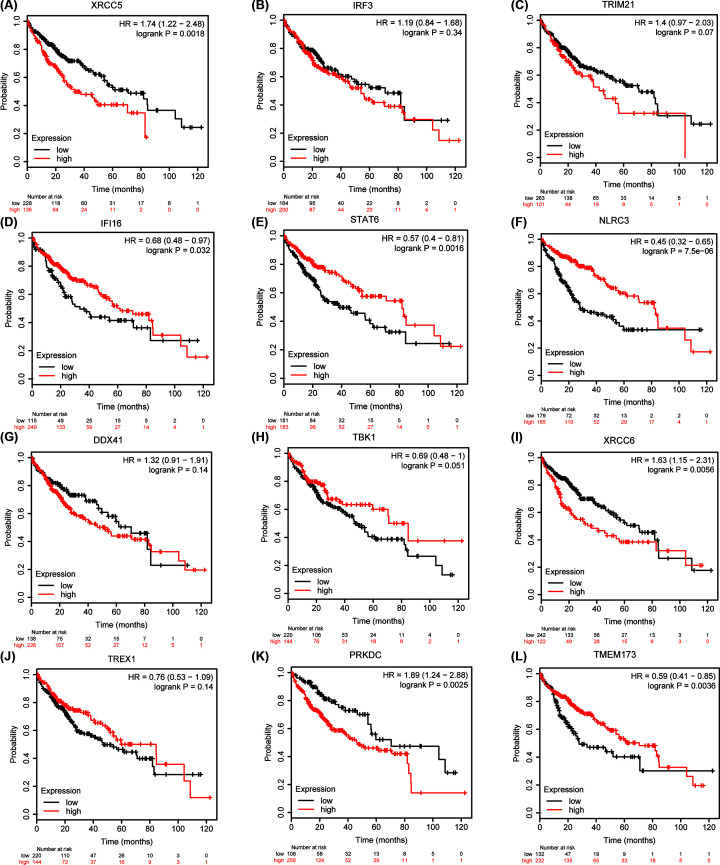
The cyclic GMP-AMP synthase-stimulator of interferon genes (cGAS-STING) pathway induces innate immunity by activating the production of inflammatory cytokines and type I interferons. Recently, studies revealed that self-DNA from by-products of chromosome instability and tumors could activate the cGAS-STING pathway, and subsequently promote or inhibit tumor development. However, the prognostic value and correlations with immune infiltrates of the cGAS-STING pathway in hepatocellular carcinoma (HCC) have not been clarified. In the present study, we used the Molecular Signatures Database, Oncomine, UALCAN, Human Protein Atlas, Kaplan-Meier plotter, LinkedOmics, and Tumor Immune Estimation Resource databases. Overexpression of XRCC5, IRF3, TRIM21, STAT6, DDX41, TBK1, XRCC6, TREX1, PRKDC, and TMEM173 was markedly correlated with clinical stages and pathological grades in HCC. Moreover, higher mRNA expression of XRCC5, XRCC6, and PRKDC was significantly related with shorter overall survival. However, higher mRNA expression of IFI16, STAT6, NLRC3, and TMEM173 was associated with favorable overall survival. Our results suggested that the kinase targets of the cGAS-STING pathway included the SRC family of tyrosine kinases (LCK and LYN), phosphoinositide 3-kinase-related protein kinase (PIKK) family kinases (ATM and ATR), and mitogen-activated protein kinase 1 (MAPK1). Furthermore, we identified significant correlations among the expression of cGAS-STING pathway and infiltration of B cells, CD4+T cells, CD8+ T cells, macrophages, neutrophils, and dendritic cells in HCC. The expression of the cGAS-STING pathway also exhibited strong relationships with diverse immune marker sets in HCC. These findings suggest that cGAS-STING pathway members may be used as prognostic biomarkers and immunotherapeutic targets HCC patients.
环鸟苷酸-腺苷酸合酶-干扰素基因刺激物 (cGAS-STING) 途径通过激活炎症细胞因子和 I 型干扰素的产生来诱导先天免疫。最近的研究表明,来自染色体不稳定性和肿瘤副产物的自身 DNA 可以激活 cGAS-STING 途径,进而促进或抑制肿瘤的发展。然而,cGAS-STING 途径在肝细胞癌 (HCC) 中的预后价值及其与免疫浸润的相关性尚不清楚。在本研究中,我们使用了分子标志物数据库、Oncomine、UALCAN、人类蛋白质图谱、Kaplan-Meier 绘图器、LinkedOmics 和肿瘤免疫估计资源数据库。XRCC5、IRF3、TRIM21、STAT6、DDX41、TBK1、XRCC6、TREX1、PRKDC 和 TMEM173 的过表达与 HCC 的临床分期和病理分级明显相关。此外,XRCC5、XRCC6 和 PRKDC 的高 mRNA 表达与总生存期较短显著相关。然而,IFI16、STAT6、NLRC3 和 TMEM173 的高 mRNA 表达与较好的总生存期相关。我们的研究结果表明,cGAS-STING 途径的激酶靶标包括 SRC 家族酪氨酸激酶 (LCK 和 LYN)、磷脂酰肌醇 3-激酶相关蛋白激酶 (PIKK) 家族激酶 (ATM 和 ATR) 和丝裂原活化蛋白激酶 1 (MAPK1)。此外,我们发现 cGAS-STING 途径的表达与 HCC 中 B 细胞、CD4+T 细胞、CD8+T 细胞、巨噬细胞、中性粒细胞和树突状细胞的浸润之间存在显著相关性。cGAS-STING 途径的表达也与 HCC 中不同的免疫标志物集之间存在很强的关系。这些发现表明,cGAS-STING 途径成员可作为 HCC 患者的预后生物标志物和免疫治疗靶标。