Department of Psychiatry, Perelman School of Medicine, University of Pennsylvania, Philadelphia, PA 19104, USA; Lifespan Brain Institute, Children's Hospital of Philadelphia and Penn Medicine, University of Pennsylvania, Philadelphia, PA 19104, USA; Department of Child and Adolescent Psychiatry and Behavioral Sciences, Children's Hospital of Philadelphia, Philadelphia, PA 19104, USA.
Department of Psychiatry, Perelman School of Medicine, University of Pennsylvania, Philadelphia, PA 19104, USA; Lifespan Brain Institute, Children's Hospital of Philadelphia and Penn Medicine, University of Pennsylvania, Philadelphia, PA 19104, USA; Department of Child and Adolescent Psychiatry and Behavioral Sciences, Children's Hospital of Philadelphia, Philadelphia, PA 19104, USA.
Psychiatry Res. 2020 Nov;293:113475. doi: 10.1016/j.psychres.2020.113475. Epub 2020 Sep 24.
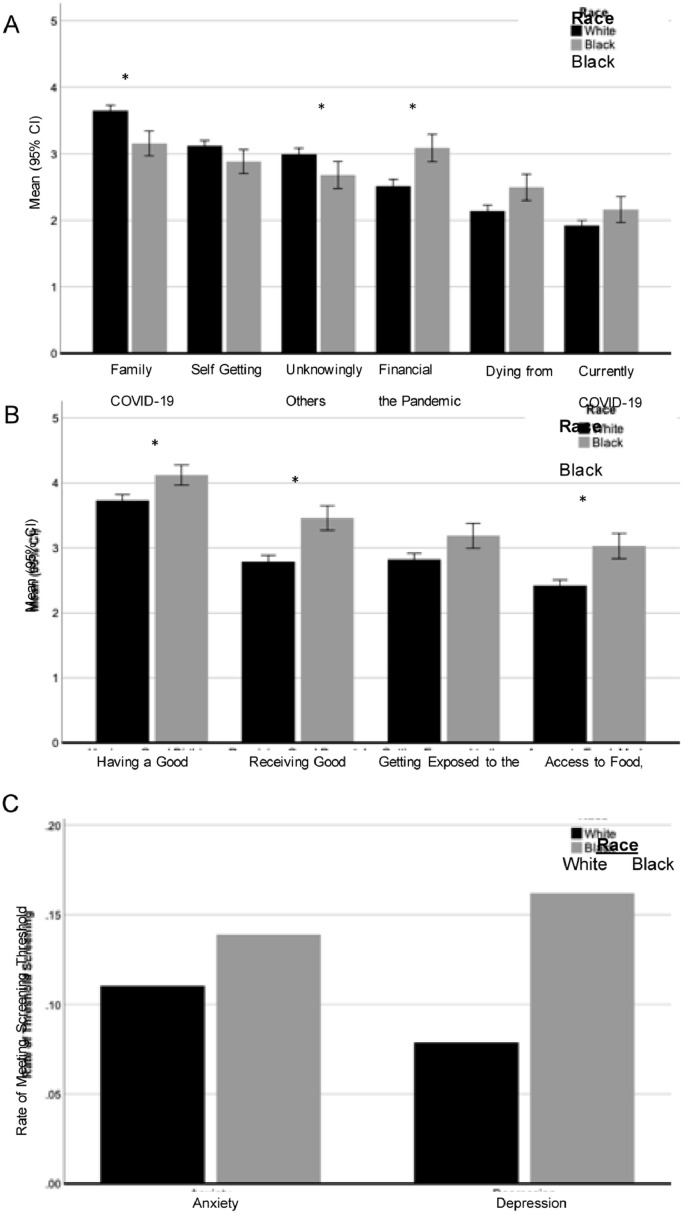
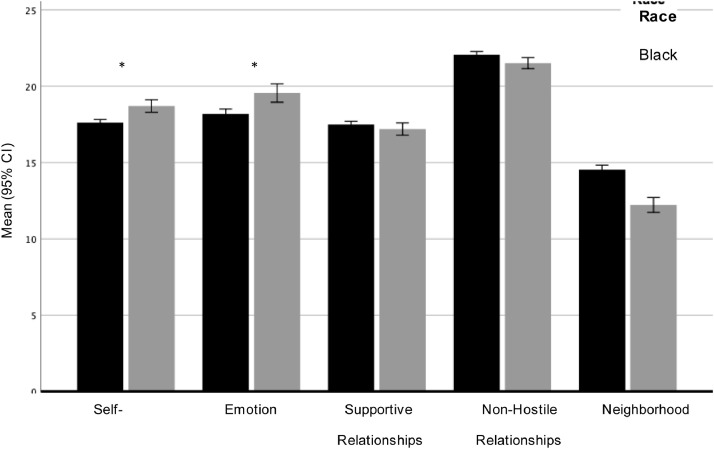
The COVID-19 pandemic has disproportionately impacted the well-being of vulnerable populations in the US, including Black people. The impact on pregnant women is of special concern for the intrauterine and post-natal development of their offspring. We evaluated in an online survey a sample of 913 pregnant women, 216 Black, 571 White, 126 Other, during a 2-week stay-at-home mandate in the Philadelphia region. We applied logistic regression models and analysis of covariance to examine general and pregnancy-specific worries and negative consequences arising from the COVID-19 pandemic, symptoms of anxiety and depression, and resilience. Black pregnant women reported greater likelihood of having their employment negatively impacted, more concerns about a lasting economic burden, and more worries about their prenatal care, birth experience, and post-natal needs. In the full sample, 11.1% of women met screening criteria for anxiety and 9.9% met criteria for depression. Black women were more likely to meet criteria for depression than White women, but this difference was not significant accounting for covariates. Resilience factors including self-reliance and emotion regulation were higher in Black women. Racial disparities related to COVID-19 in pregnant women can advance the understanding of pregnancy related stressors and improve early identification of mental health needs.
译文:
标题:COVID-19 大流行对美国弱势群体的健康产生了不成比例的影响,包括黑人群体。对孕妇的影响特别令人关注,因为这会影响其后代的宫内和产后发育。方法:我们在费城地区实行为期两周的居家令期间,通过在线调查评估了 913 名孕妇的样本,其中 216 名是黑人,571 名是白人,126 名是其他种族。我们应用逻辑回归模型和协方差分析来研究 COVID-19 大流行引起的一般和妊娠特异性担忧以及负面后果、焦虑和抑郁症状以及适应力。结果:黑人孕妇报告说,她们的就业受到负面影响的可能性更大,对持久的经济负担的担忧更多,对产前护理、分娩经历和产后需求的担忧更多。在全样本中,有 11.1%的女性符合焦虑症的筛查标准,9.9%的女性符合抑郁症的筛查标准。黑人女性比白人女性更有可能符合抑郁症的标准,但考虑到协变量,这一差异并不显著。黑人女性的自力更生和情绪调节等适应力因素更高。结论:与 COVID-19 相关的种族差异可能会增进对妊娠相关应激源的理解,并改善对心理健康需求的早期识别。