Liu Kaili, Song Jincheng, Yan Yue, Zou Kun, Che Yuxuan, Wang Beichen, Li Zongjuan, Yu Wendan, Guo Wei, Zou Lijuan, Deng Wuguo, Sun Xiuhua
The Second Affiliated Hospital & Institute of Cancer Stem Cells, Dalian Medical University, Dalian, China.
Sun Yat-sen University Cancer Center, State Key Laboratory of Oncology in South China, Collaborative Innovation Center of Cancer Medicine, Guangzhou, China.
Transl Oncol. 2021 Jan;14(1):100876. doi: 10.1016/j.tranon.2020.100876. Epub 2020 Sep 29.
Epirubicin is a first-line chemotherapeutic drug for the clinical treatment of diffuse large B cell lymphoma (DLBCL), but the overexpression of multidrug resistance (MDR) transporter proteins, especially P-glycoprotein (P-gp), renders epirubicin ineffective. Some studies reveal the potential role of melatonin in chemotherapeutic synergy and MDR.
The cell viability and apoptosis were determined by CCK-8 assay and acridine orange/ethidium bromide (AO/EB) fluorescence staining assay. Immunofluorescence and immunohistochemical staining were used to detect the expression of P-gp in DLBCL cells and tissues. Rhodamine-123 accumulation assay was used to evaluate the pump function of P-gp. The possible mechanisms of melatonin sensitize DLBCL cells to epirubicin were explored by western blotting, cytochrome C release, and pulldown assay.
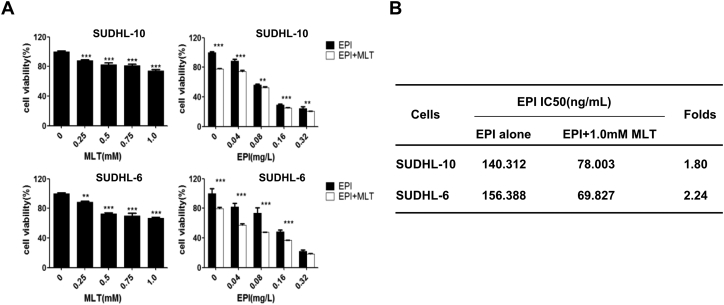
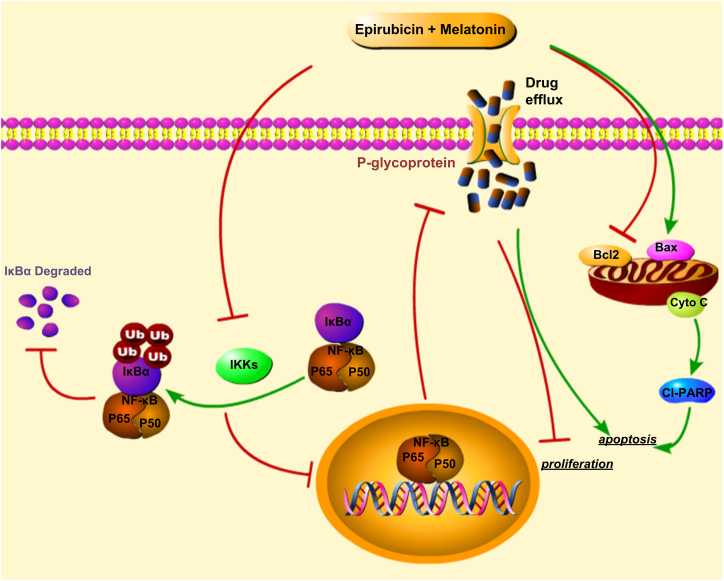
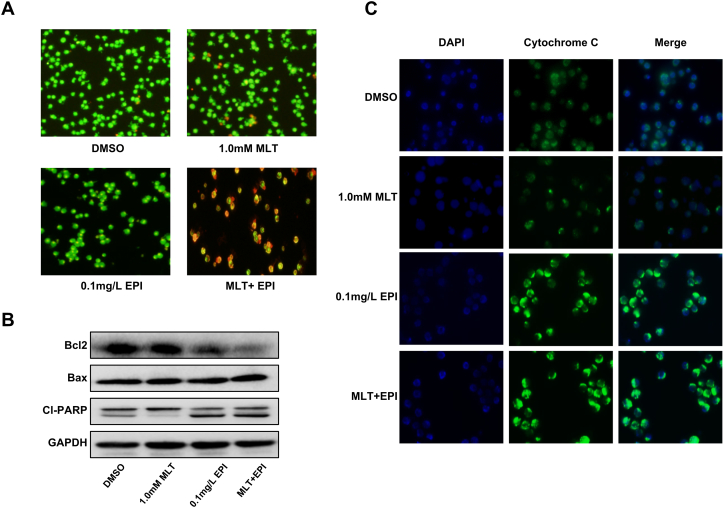
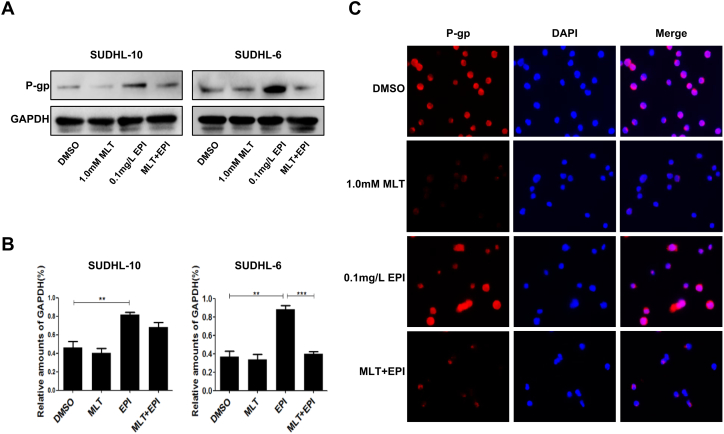
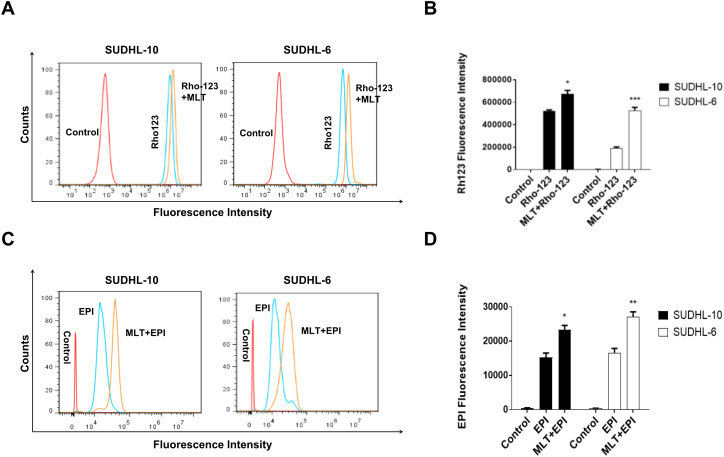
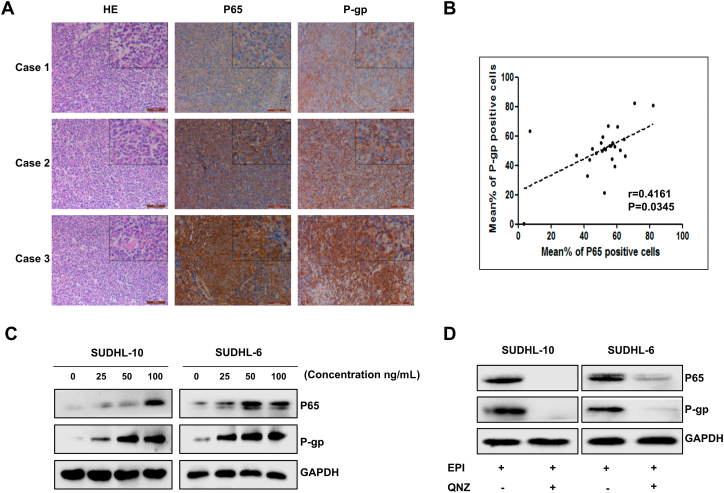
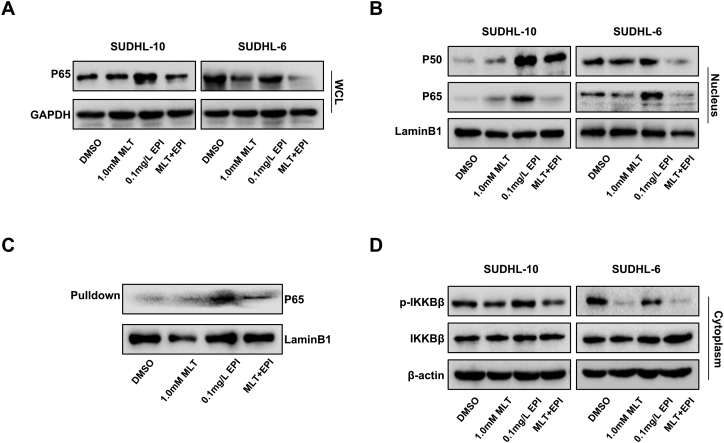
Melatonin significantly enhanced the epirubicin-induced cell proliferation suppression, epirubicin-induced apoptosis, and reduced the IC50 value of epirubicin. Further, melatonin synergized with epirubicin to promote the activation of the mitochondria-mediated apoptosis pathway and increased the accumulation of epirubicin in DLBCL cells by inhibiting the expression and function of P-gp. Immunohistochemical staining studies revealed that P-gp expression was positively correlated with P65 expression. Epirubicin was subsequently discovered to upregulate the expression of P-gp by activating the NF-κB pathway in the DLBCL cells. Melatonin reduced the amount of P65 protein in the nucleus and abrogated the ability of P65 to bind to the ABCB1 promoter, decisively suppressing P-gp expression.
Our results demonstrated that melatonin inactivates the NF-κB pathway and downregulates the expression of P-gp, ultimately sensitizing DLBCL cells to the epirubicin that suppresses their growth.
表柔比星是临床治疗弥漫性大B细胞淋巴瘤(DLBCL)的一线化疗药物,但多药耐药(MDR)转运蛋白的过表达,尤其是P-糖蛋白(P-gp),使表柔比星失效。一些研究揭示了褪黑素在化疗协同作用和多药耐药中的潜在作用。
采用CCK-8法和吖啶橙/溴化乙锭(AO/EB)荧光染色法测定细胞活力和凋亡情况。采用免疫荧光和免疫组化染色检测DLBCL细胞和组织中P-gp的表达。采用罗丹明-123蓄积试验评估P-gp的泵功能。通过蛋白质免疫印迹法、细胞色素C释放试验和下拉试验探讨褪黑素使DLBCL细胞对表柔比星敏感的可能机制。
褪黑素显著增强表柔比星诱导的细胞增殖抑制、表柔比星诱导的凋亡,并降低表柔比星的IC50值。此外,褪黑素与表柔比星协同作用,促进线粒体介导的凋亡途径的激活,并通过抑制P-gp的表达和功能增加表柔比星在DLBCL细胞中的蓄积。免疫组化染色研究显示,P-gp表达与P65表达呈正相关。随后发现表柔比星通过激活DLBCL细胞中的NF-κB途径上调P-gp的表达。褪黑素减少了细胞核中P65蛋白的量,并消除了P65与ABCB1启动子结合的能力,决定性地抑制了P-gp的表达。
我们的结果表明,褪黑素使NF-κB途径失活并下调P-gp的表达,最终使DLBCL细胞对抑制其生长的表柔比星敏感。