Pedersen Henriette, Schmiegelow Kjeld, Hamerlik Petra
Brain Tumor Biology, Danish Cancer Society Research Center, Strandboulevarden 49, DK-2100 Copenhagen, Denmark.
Department of Paediatrics and Adolescent Medicine, Rigshospitalet, Copenhagen University Hospital, Juliane Maries Vej 8, DK-2100 Copenhagen, Denmark.
Cancers (Basel). 2020 Sep 30;12(10):2813. doi: 10.3390/cancers12102813.
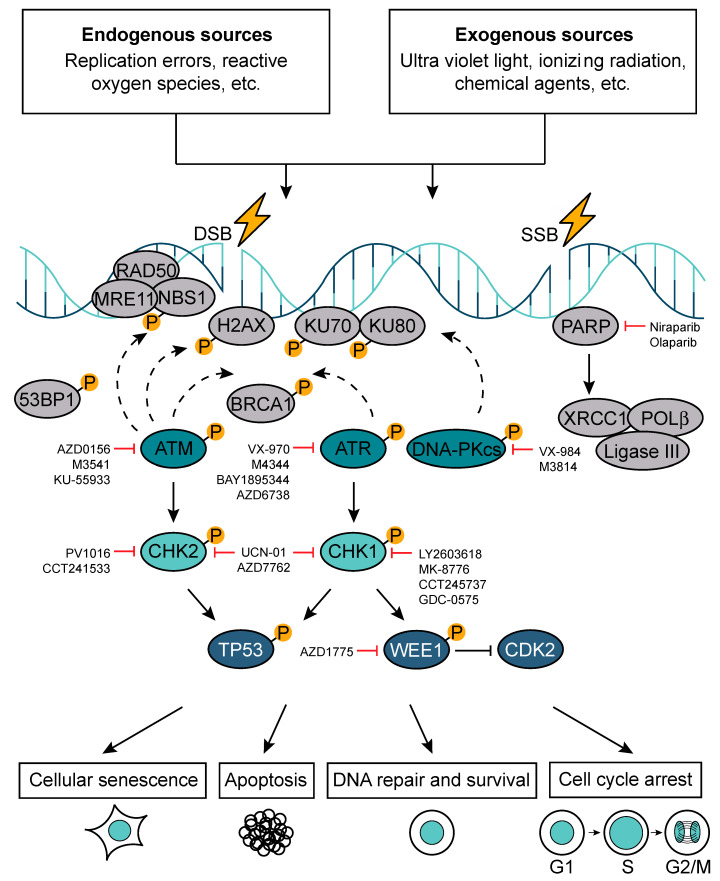
Malignant gliomas (MG) are among the most prevalent and lethal primary intrinsic brain tumors. Although radiotherapy (RT) is the most effective nonsurgical therapy, recurrence is universal. Dysregulated DNA damage response pathway (DDR) signaling, rampant genomic instability, and radio-resistance are among the hallmarks of MGs, with current therapies only offering palliation. A subgroup of pediatric high-grade gliomas (pHGG) is characterized by H3K27M mutation, which drives global loss of di- and trimethylation of histone H3K27. Here, we review the most recent literature and discuss the key studies dissecting the molecular biology of H3K27M-mutated gliomas in children. We speculate that the aberrant activation and/or deactivation of some of the key components of DDR may be synthetically lethal to H3K27M mutation and thus can open novel avenues for effective therapeutic interventions for patients suffering from this deadly disease.
恶性胶质瘤(MG)是最常见且致命的原发性脑内肿瘤之一。尽管放射治疗(RT)是最有效的非手术治疗方法,但复发却很普遍。DNA损伤反应通路(DDR)信号失调、猖獗的基因组不稳定和放射抗性是MG的特征,目前的治疗仅能提供姑息治疗。小儿高级别胶质瘤(pHGG)的一个亚组以H3K27M突变为特征,该突变导致组蛋白H3K27的二甲基化和三甲基化整体缺失。在此,我们回顾了最新文献,并讨论了剖析儿童H3K27M突变型胶质瘤分子生物学的关键研究。我们推测,DDR某些关键成分的异常激活和/或失活可能对H3K27M突变具有合成致死性,从而可为患有这种致命疾病的患者开辟有效的治疗干预新途径。