AIMS@JCU, Townsville, Queensland, Australia.
Australian Institute of Marine Science, PMB No.3, Townsville MC, Townsville, Queensland, 4810, Australia.
Microbiome. 2020 Oct 2;8(1):144. doi: 10.1186/s40168-020-00919-5.
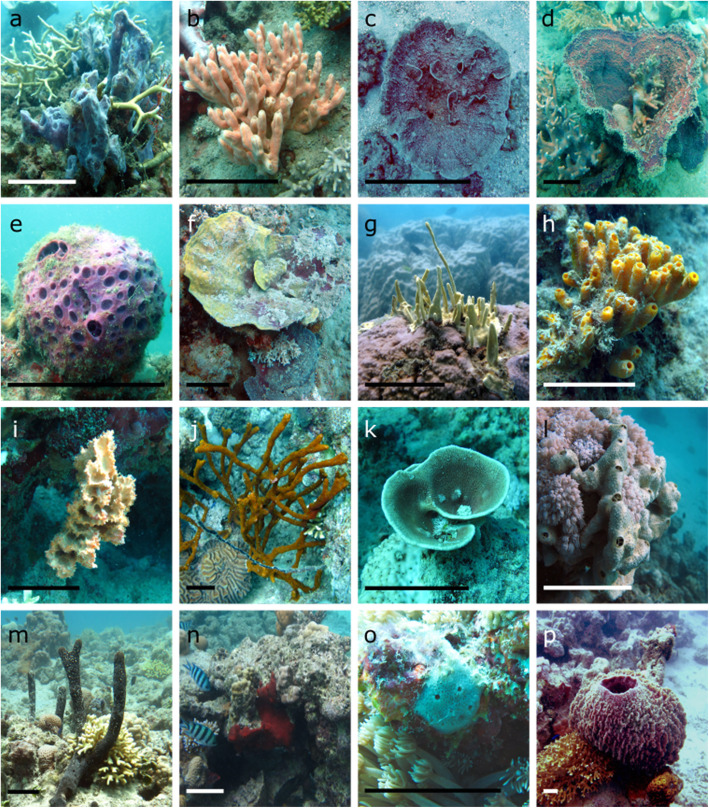
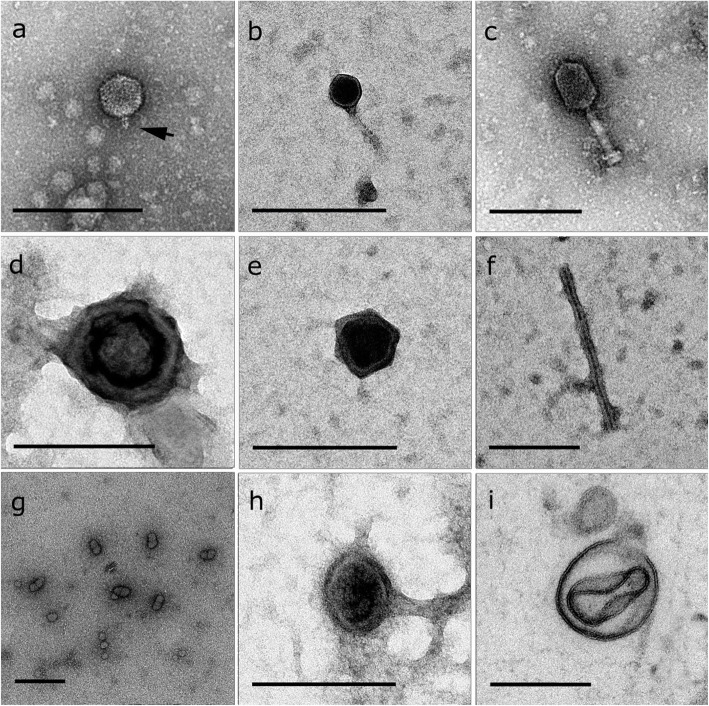
Viruses directly affect the most important biological processes in the ocean via their regulation of prokaryotic and eukaryotic populations. Marine sponges form stable symbiotic partnerships with a wide diversity of microorganisms and this high symbiont complexity makes them an ideal model for studying viral ecology. Here, we used morphological and molecular approaches to illuminate the diversity and function of viruses inhabiting nine sponge species from the Great Barrier Reef and seven from the Red Sea.
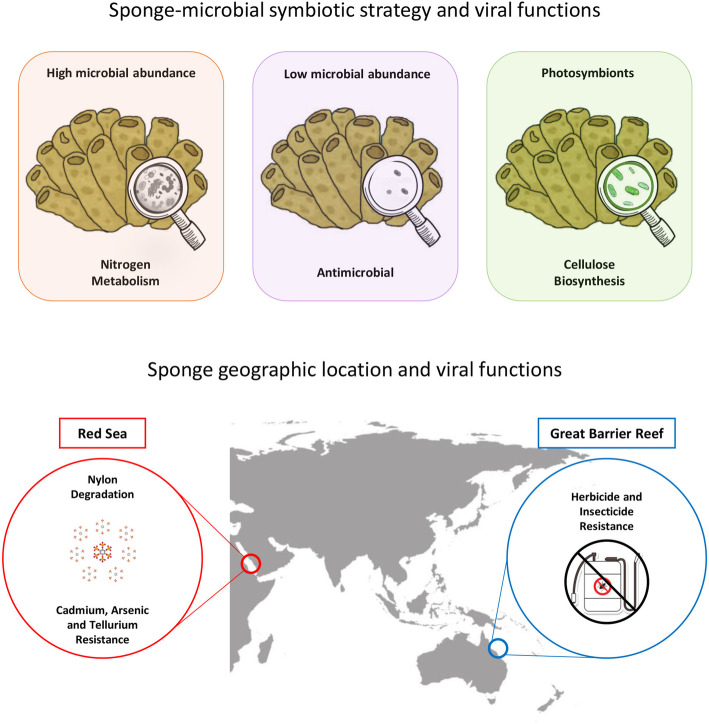
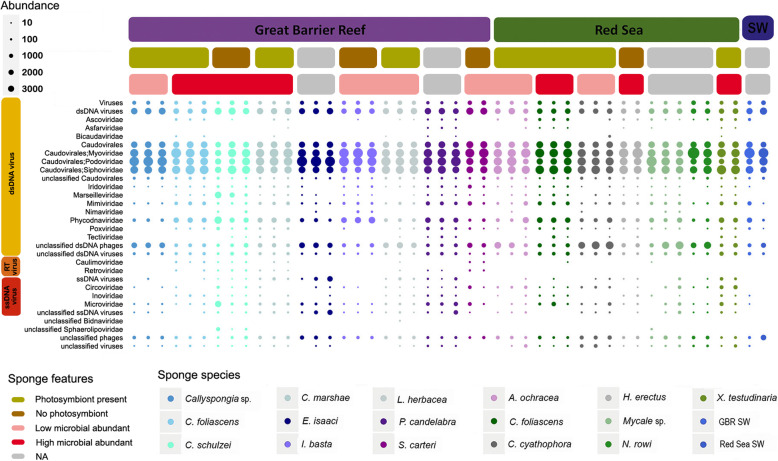
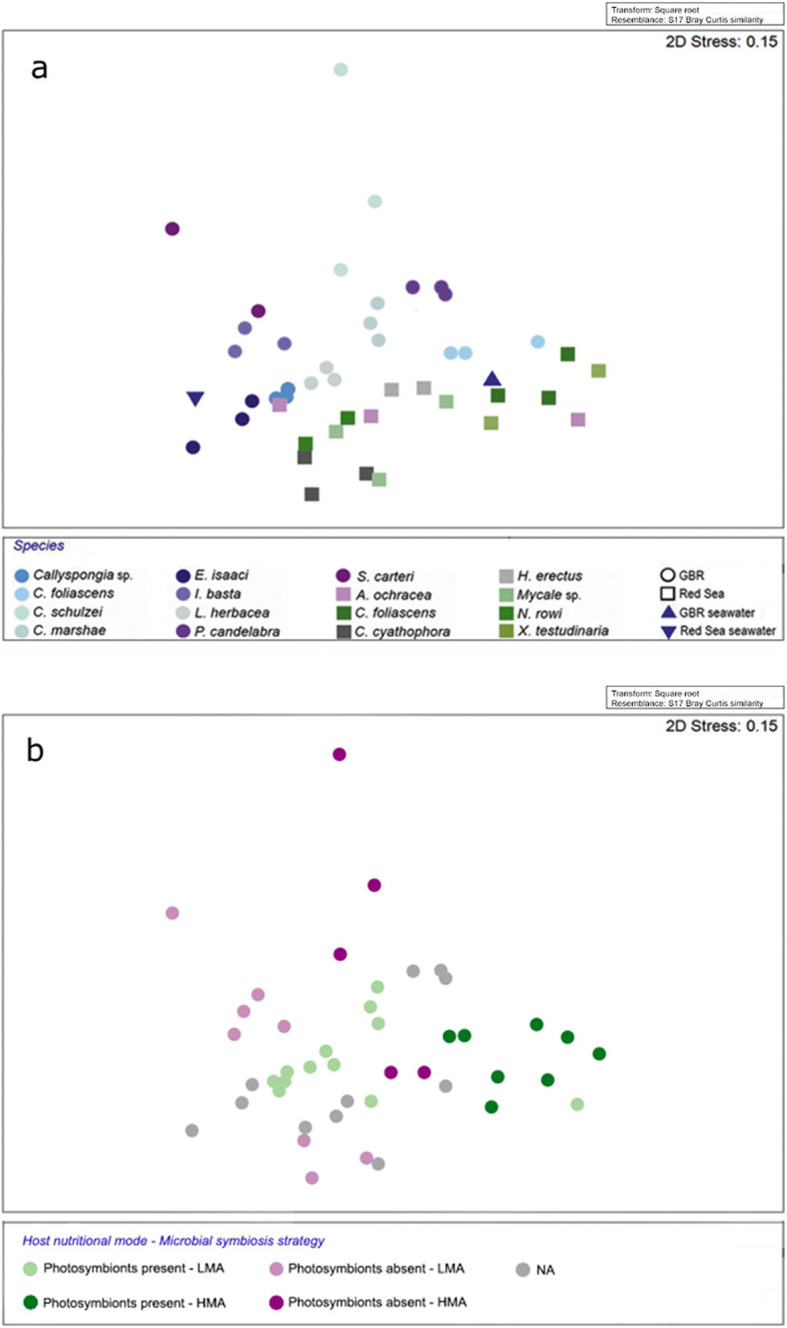
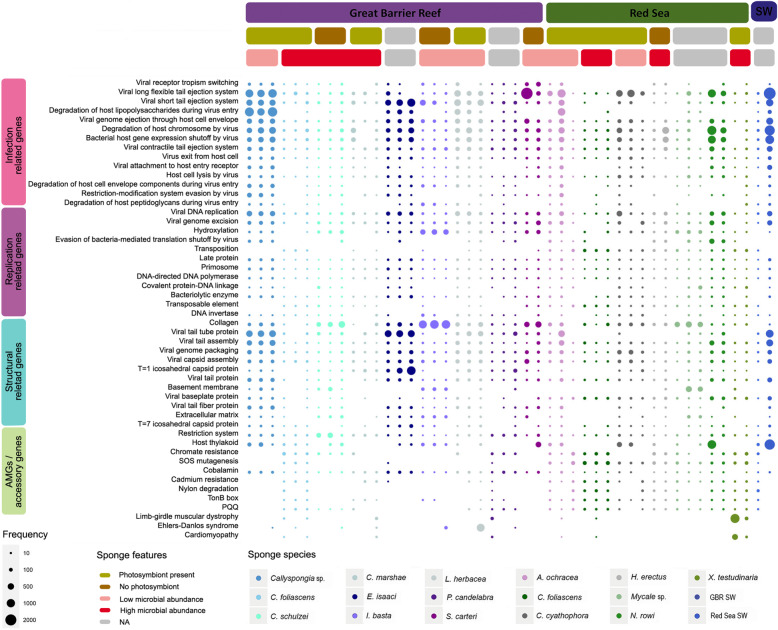
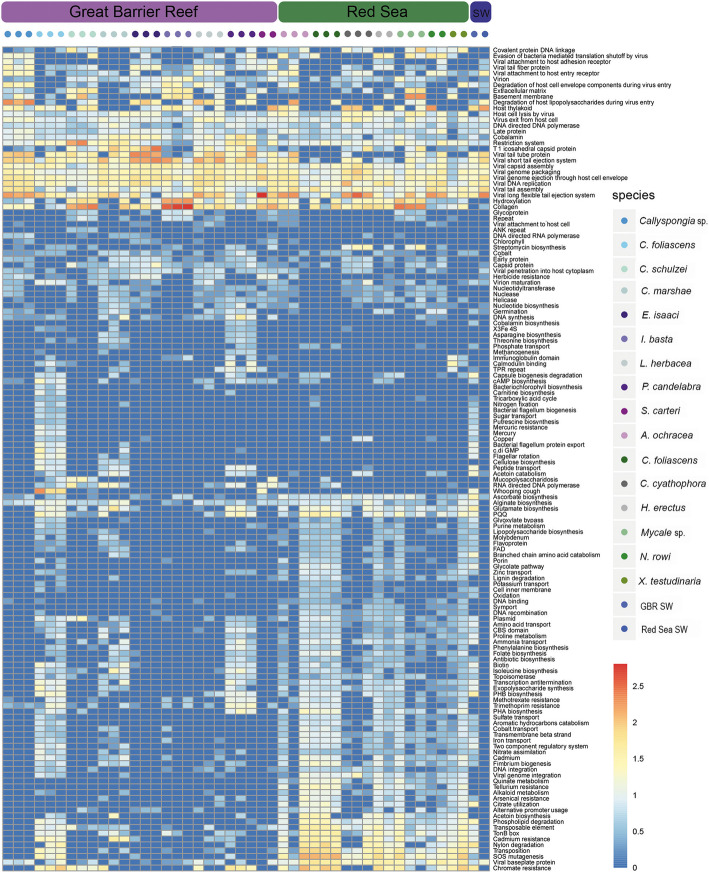
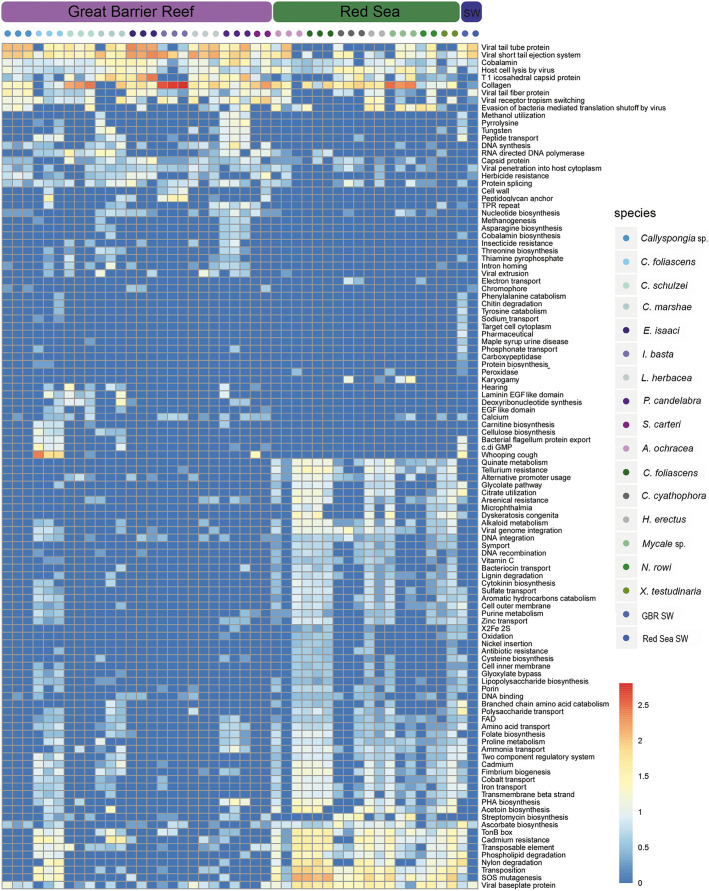
Viromic sequencing revealed host-specific and site-specific patterns in the viral assemblages, with all sponge species dominated by the bacteriophage order Caudovirales but also containing variable representation from the nucleocytoplasmic large DNA virus families Mimiviridae, Marseilleviridae, Phycodnaviridae, Ascoviridae, Iridoviridae, Asfarviridae and Poxviridae. Whilst core viral functions related to replication, infection and structure were largely consistent across the sponge viromes, functional profiles varied significantly between species and sites largely due to differential representation of putative auxiliary metabolic genes (AMGs) and accessory genes, including those associated with herbicide resistance, heavy metal resistance and nylon degradation. Furthermore, putative AMGs varied with the composition and abundance of the sponge-associated microbiome. For instance, genes associated with antimicrobial activity were enriched in low microbial abundance sponges, genes associated with nitrogen metabolism were enriched in high microbial abundance sponges and genes related to cellulose biosynthesis were enriched in species that host photosynthetic symbionts.
Our results highlight the diverse functional roles that viruses can play in marine sponges and are consistent with our current understanding of sponge ecology. Differential representation of putative viral AMGs and accessory genes across sponge species illustrate the diverse suite of beneficial roles viruses can play in the functional ecology of these complex reef holobionts. Video Abstract.
病毒通过调控原核生物和真核生物的种群,直接影响海洋中的最重要的生物过程。海洋海绵与广泛的微生物形成稳定的共生关系,这种高共生体复杂性使它们成为研究病毒生态学的理想模型。在这里,我们使用形态学和分子方法来阐明栖息在大堡礁的 9 种海绵物种和红海的 7 种海绵物种中的病毒的多样性和功能。
病毒组学测序揭示了病毒组合中宿主特异性和地点特异性的模式,所有海绵物种都以噬菌体目 Caudovirales 为主,但也包含来自核质大 DNA 病毒科的可变代表,包括 Mimiviridae、Marseilleviridae、Phycodnaviridae、Ascoviridae、Iridoviridae、Asfarviridae 和 Poxviridae。虽然与复制、感染和结构相关的核心病毒功能在海绵病毒组中基本一致,但功能谱在物种和地点之间存在显著差异,这主要是由于辅助代谢基因(AMGs)和附加基因的差异表达,包括与除草剂抗性、重金属抗性和尼龙降解相关的基因。此外,假定的 AMGs 随海绵相关微生物组的组成和丰度而变化。例如,与抗菌活性相关的基因在微生物丰度低的海绵中富集,与氮代谢相关的基因在微生物丰度高的海绵中富集,与宿主光合作用共生体相关的基因与纤维素生物合成有关。
我们的结果强调了病毒在海洋海绵中可以发挥的多样化功能作用,并与我们目前对海绵生态学的理解一致。不同海绵物种中假定的病毒 AMGs 和附加基因的差异表达说明了病毒在这些复杂珊瑚共生体的功能生态学中可以发挥的多种有益作用。视频摘要。