Division of Gastroenterology and Hepatology, Department of Medicine, Charleston, South Carolina.
Division of Gastroenterology and Hepatology, Department of Medicine, Charleston, South Carolina.
Clin Gastroenterol Hepatol. 2021 Jul;19(7):1355-1365.e4. doi: 10.1016/j.cgh.2020.09.041. Epub 2020 Oct 1.
BACKGROUND & AIMS: The prevalence and significance of digestive manifestations in coronavirus disease 2019 (COVID-19) remain uncertain. We aimed to assess the prevalence, spectrum, severity, and significance of digestive manifestations in patients hospitalized with COVID-19.
Consecutive patients hospitalized with COVID-19 were identified across a geographically diverse alliance of medical centers in North America. Data pertaining to baseline characteristics, symptomatology, laboratory assessment, imaging, and endoscopic findings from the time of symptom onset until discharge or death were abstracted manually from electronic health records to characterize the prevalence, spectrum, and severity of digestive manifestations. Regression analyses were performed to evaluate the association between digestive manifestations and severe outcomes related to COVID-19.
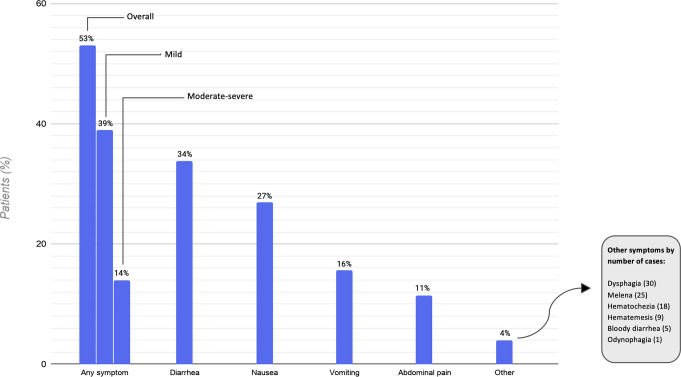
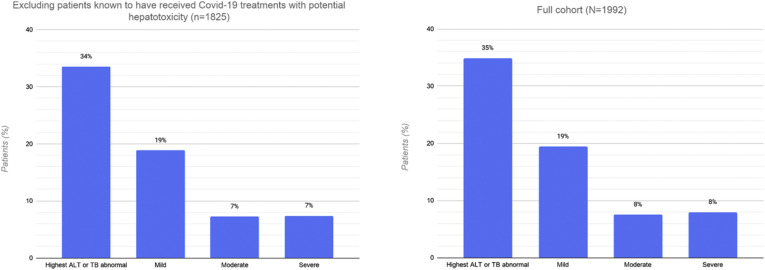
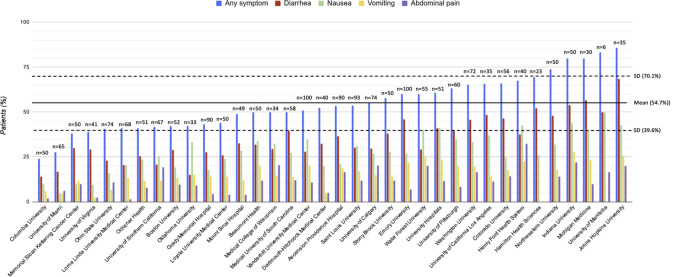
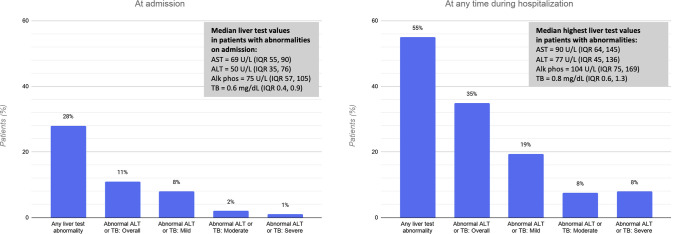
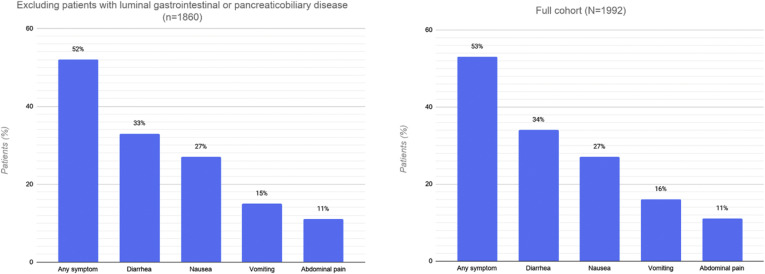
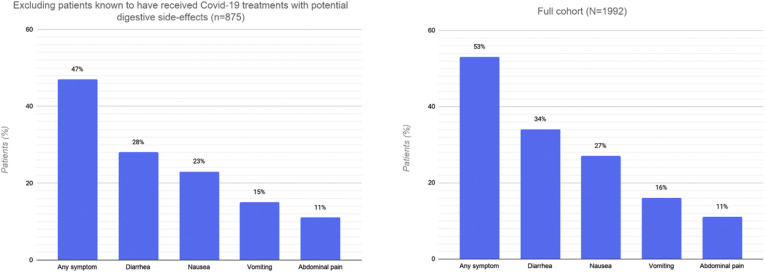
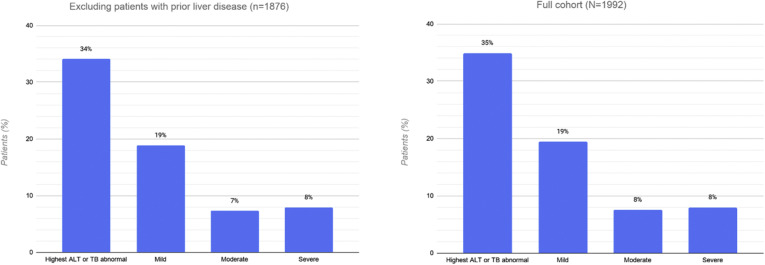
A total of 1992 patients across 36 centers met eligibility criteria and were included. Overall, 53% of patients experienced at least 1 gastrointestinal symptom at any time during their illness, most commonly diarrhea (34%), nausea (27%), vomiting (16%), and abdominal pain (11%). In 74% of cases, gastrointestinal symptoms were judged to be mild. In total, 35% of patients developed an abnormal alanine aminotransferase or total bilirubin level; these were increased to less than 5 times the upper limit of normal in 77% of cases. After adjusting for potential confounders, the presence of gastrointestinal symptoms at any time (odds ratio, 0.93; 95% CI, 0.76-1.15) or liver test abnormalities on admission (odds ratio, 1.31; 95% CI, 0.80-2.12) were not associated independently with mechanical ventilation or death.
Among patients hospitalized with COVID-19, gastrointestinal symptoms and liver test abnormalities were common, but the majority were mild and their presence was not associated with a more severe clinical course.
在 2019 年冠状病毒病(COVID-19)中,消化系统表现的流行率和意义仍不确定。我们旨在评估 COVID-19 住院患者消化系统表现的流行率、范围、严重程度和意义。
在北美地域多样的医疗中心联盟中,连续鉴定出 COVID-19 住院患者。从症状出现到出院或死亡,手动从电子健康记录中提取与基线特征、症状、实验室评估、影像学和内镜表现有关的数据,以描述消化系统表现的流行率、范围和严重程度。进行回归分析,以评估消化系统表现与 COVID-19 相关严重结局之间的关联。
共有 36 个中心的 1992 名患者符合入选标准并被纳入研究。总体而言,53%的患者在患病期间的任何时候都至少经历过 1 种胃肠道症状,最常见的是腹泻(34%)、恶心(27%)、呕吐(16%)和腹痛(11%)。在 74%的病例中,胃肠道症状被判断为轻度。共有 35%的患者出现异常的丙氨酸氨基转移酶或总胆红素水平;其中 77%的病例升高至正常值上限的 5 倍以下。在调整了潜在混杂因素后,任何时候存在胃肠道症状(比值比,0.93;95%置信区间,0.76-1.15)或入院时肝功能检查异常(比值比,1.31;95%置信区间,0.80-2.12)与机械通气或死亡均无独立相关性。
在 COVID-19 住院患者中,胃肠道症状和肝功能检查异常很常见,但大多数为轻度,其存在与更严重的临床病程无关。