Albaret Marie Alexandra, Paré Arnaud, Malet Lucie, De Souza Geneviève, Lavergne Emilie, Goga Dominique, De Pinieux Gonzague, Castellier Claire, Swalduz Aurélie, Robin Vivian, Lavergne Vincent, Mertani Hichem-Claude, Treilleux Isabelle, Vermot-Desroches Claudine, Diaz Jean-Jacques, Saintigny Pierre
Univ Lyon, Université Claude Bernard Lyon 1, INSERM U1052, CNRS UMR5286, Centre Léon Bérard, Cancer Research Center of Lyon, 69008 Lyon, France; Department of Translational Research and Innovation, Centre Léon Bérard, 69373 Lyon, France.
Univ Lyon, Université Claude Bernard Lyon 1, INSERM U1052, CNRS UMR5286, Centre Léon Bérard, Cancer Research Center of Lyon, 69008 Lyon, France; Department of Translational Research and Innovation, Centre Léon Bérard, 69373 Lyon, France; Department of Maxillofacial and Plastic surgery, CHRU of Tours, 37170 Chambray-lés-Tours, France; University of François Rabelais, School of Medicine, Tours F-37032, France.
Transl Oncol. 2021 Jan;14(1):100878. doi: 10.1016/j.tranon.2020.100878. Epub 2020 Sep 30.
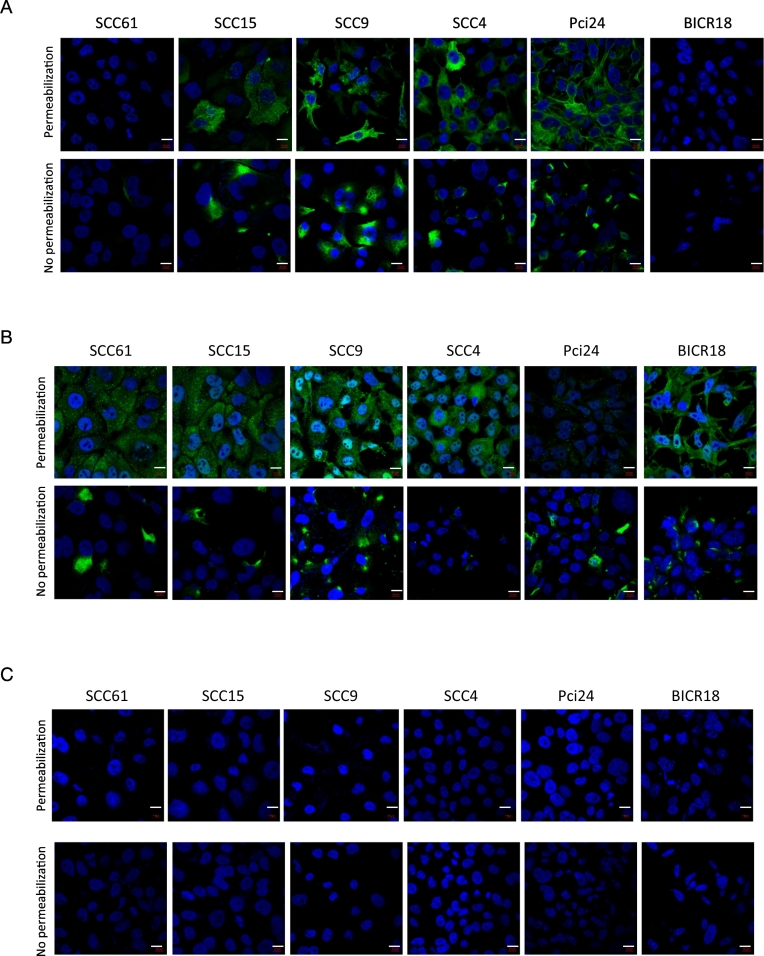
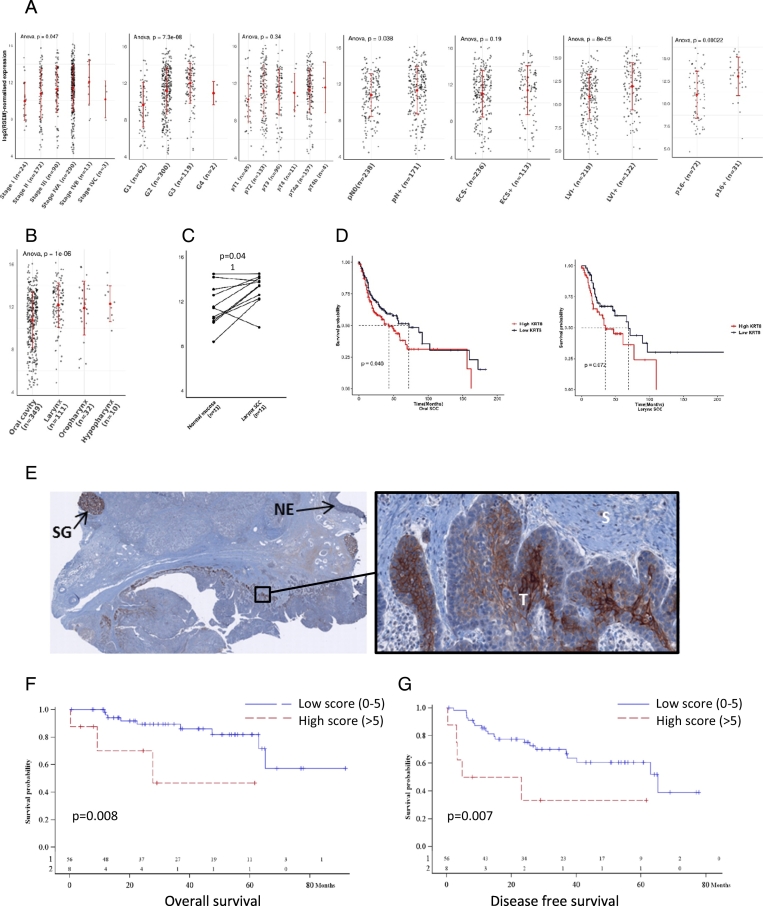
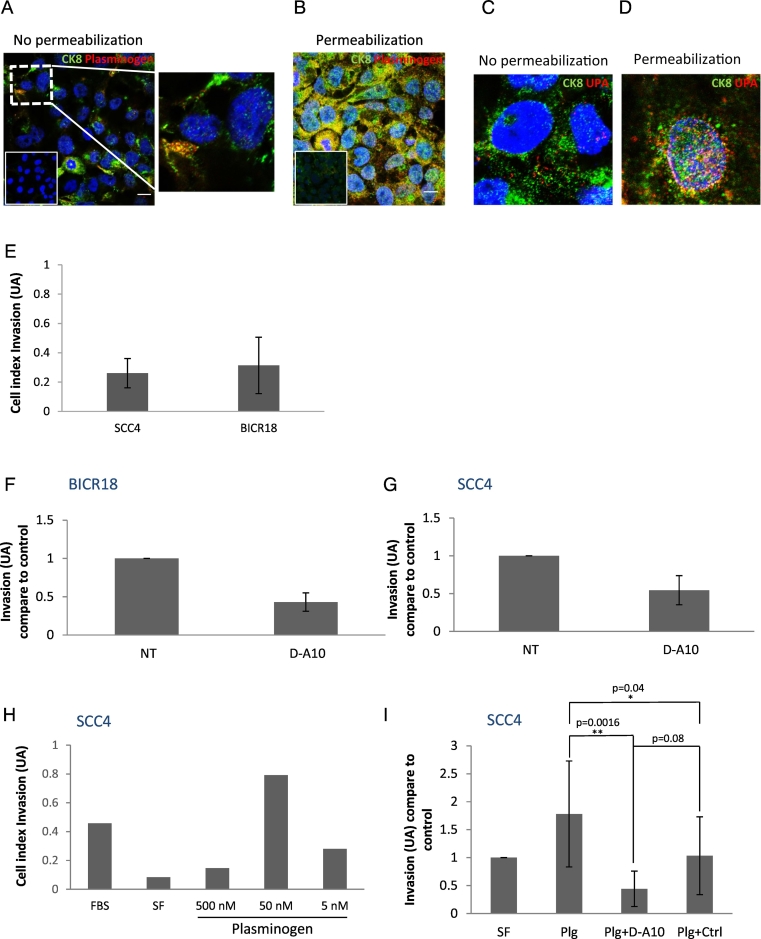
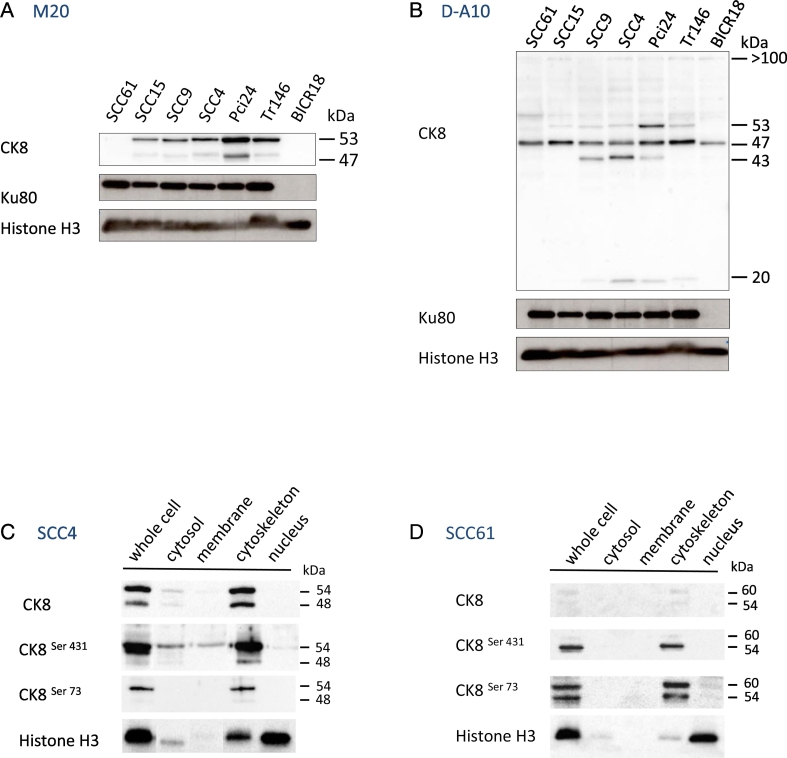
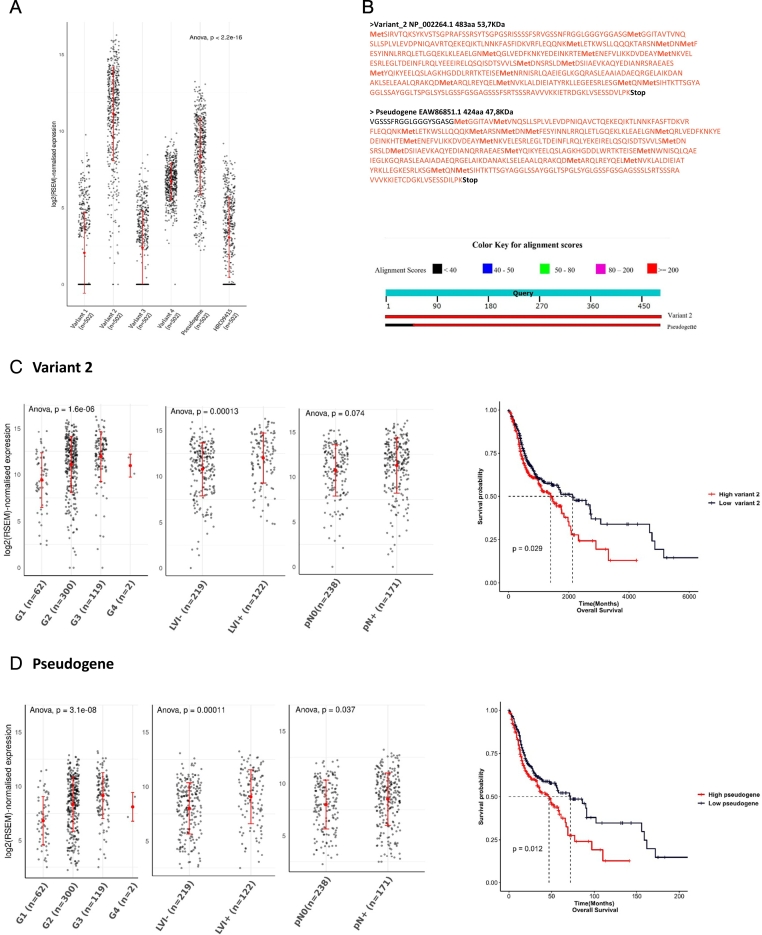
Keratin 8 (K8) expressed at the surface of cancer cells, referred as externalized K8 (eK8), has been observed in a variety of carcinoma cell lines. K8 has been previously reported to be expressed in poorly differentiated head and neck squamous cell carcinoma (HNSCC); however, its role during the invasive phase of upper aerodigestive tract tumorigenesis is unknown. Cohorts of HNSCC tumors for protein and mRNA expression and panel of cell lines were used for investigation. K8 was found to be externalized in a majority of HNSCC cell lines. Among the two main K8 protein isoforms only the 54 kDa was found to be present at the plasma membrane of HNSCC cells. The plasminogen-induced invasion of HNSCC cells was inhibited by the anti-eK8 D-A10 antagonist monoclonal antibody. Overexpression of K8 mRNA and protein were both correlated with tumor aggressive features and poor outcome. The effect of eK8 neutralization on invasion, its presence exclusively in cancer cells and the association of K8 expression with aggressive features and poor clinical outcome in HNSCC unravel eK8 as key player in invasion and a promising therapeutic target in HNSCC.
在多种癌细胞系中都观察到了在癌细胞表面表达的角蛋白8(K8),即外化K8(eK8)。此前有报道称K8在低分化头颈部鳞状细胞癌(HNSCC)中表达;然而,其在上呼吸道消化道肿瘤发生侵袭阶段的作用尚不清楚。研究使用了HNSCC肿瘤队列进行蛋白质和mRNA表达分析,并利用细胞系进行研究。发现大多数HNSCC细胞系中K8都发生了外化。在两种主要的K8蛋白异构体中,仅发现54 kDa的异构体存在于HNSCC细胞的质膜上。纤溶酶原诱导的HNSCC细胞侵袭受到抗eK8 D-A10拮抗剂单克隆抗体的抑制。K8 mRNA和蛋白的过表达均与肿瘤侵袭性特征和不良预后相关。eK8中和对侵袭的影响、其仅在癌细胞中的存在以及K8表达与HNSCC侵袭性特征和不良临床预后的关联,揭示了eK8是侵袭的关键因素,也是HNSCC中有前景的治疗靶点。