Kidney Research Center, Chang Gung Memorial Hospital at Linkou, Taoyuan, Taiwan; Graduate Institute of Clinical Medical Sciences, College of Medicine, Chang Gung University, Taoyuan, Taiwan; College of Medicine, Chang Gung University, Taoyuan, Taiwan.
Division of Allergy, Asthma, and Rheumatology, Department of Pediatrics, Chang Gung Memorial Hospital at Linkou, Taoyuan, Taiwan; College of Medicine, Chang Gung University, Taoyuan, Taiwan.
Biomed J. 2020 Oct;43(5):434-437. doi: 10.1016/j.bj.2020.05.019. Epub 2020 Jun 3.
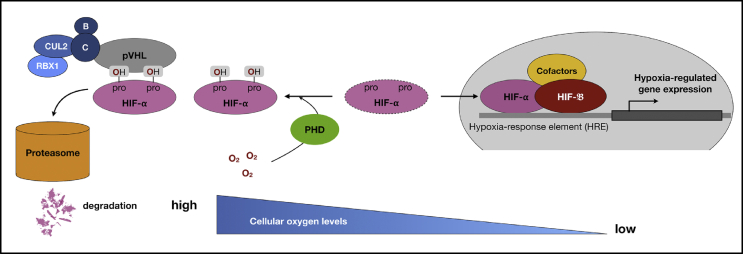
The importance of oxygen to life has been recognized for hundreds of years, but how cells and tissues sense reduced oxygen levels remained elusive until the late twentieth century. The 2019 Nobel Prize in Physiology or Medicine was awarded to William G. Kaelin Jr., Sir Peter J. Ratcliffe, and Gregg L. Semenza for their discovery of hypoxia-inducible factor, a key transcription factor that regulates gene expression in response to decreases in cellular oxygenation. The three scientists provided the first information about the cellular oxygen-sensing mechanism and downstream signal transduction under hypoxic conditions. Their discoveries have also paved the way for promising novel treatments for cancer, renal anemia, and inflammatory disease.
氧气对生命的重要性已经被认识了数百年,但直到 20 世纪后期,细胞和组织如何感知氧气水平的降低仍然是个谜。2019 年诺贝尔生理学或医学奖授予了威廉·G·凯林(William G. Kaelin Jr.)、彼得·J·拉特克利夫(Sir Peter J. Ratcliffe)和格雷格·L·塞门扎(Gregg L. Semenza),以表彰他们发现了缺氧诱导因子(hypoxia-inducible factor),这是一种关键的转录因子,可调节细胞氧合作用降低时的基因表达。这三位科学家提供了有关细胞在缺氧条件下氧气感应机制和下游信号转导的首批信息。他们的发现也为癌症、肾性贫血和炎症性疾病的有前途的新疗法铺平了道路。