Saki Jasem, Sabaghan Mohamad, Arjmand Reza, Teimoori Ali, Rashno Mohammad, Saki Ghasem, Shojaee Saeedeh
Cellular and Molecular Research Center, Ahvaz Jundishapur University of Medical Sciences, Ahvaz, Iran.
Department of Parasitology, Faculty of Medicine, Ahvaz Jundishapur University of Medical Sciences, Ahvaz, Iran.
EXCLI J. 2020 Aug 24;19:1196-1207. doi: 10.17179/excli2020-2052. eCollection 2020.
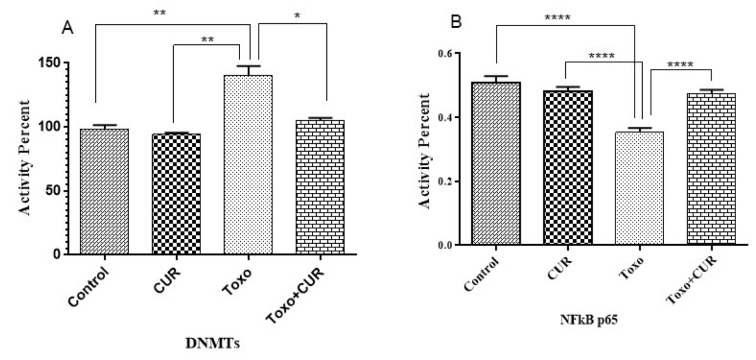
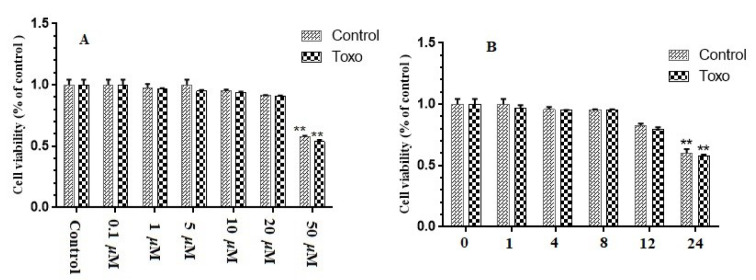
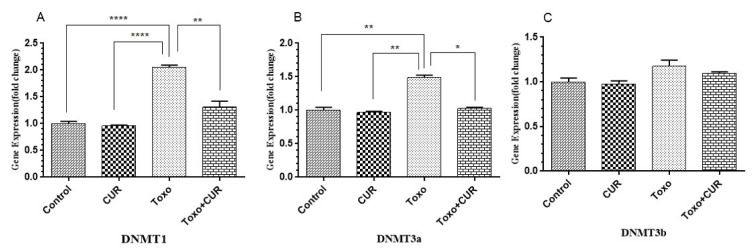
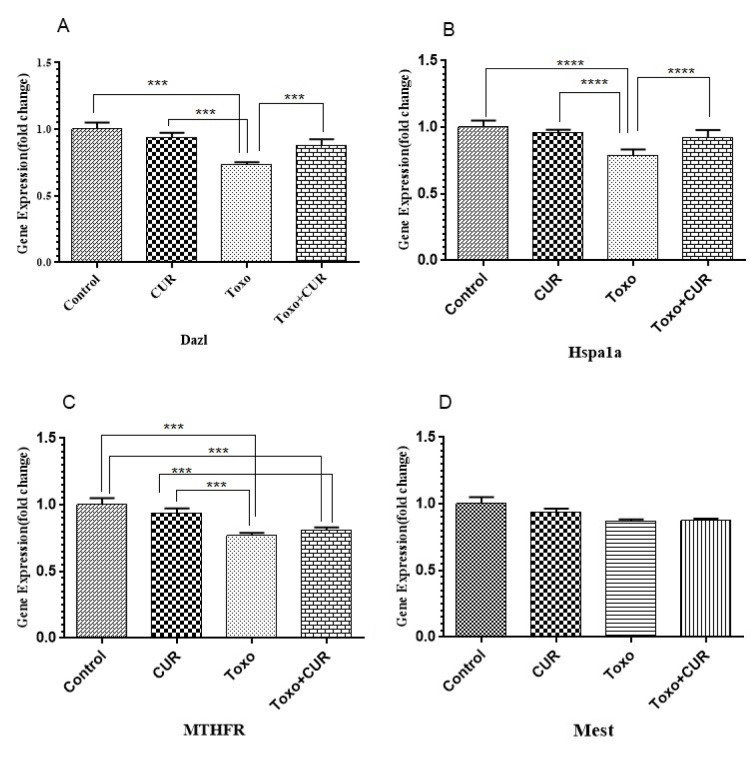
is a common protozoan parasite, which infects warm-blooded mammals, including mice and humans, throughout the world. The negative effects of infection on the human reproductive system have been documented, especially in females. However, only few studies have examined the effects of infection on the male reproductive system. Previous research shows that can induce DNA methylation in some gene promoters, which are key regulators of spermatogenesis. Therefore, this study aimed to evaluate the effects of curcumin on the activity of DNA methyltransferases (DNMTs), as well as selected genes, involved in spermatogenesis in spermatogenic cells. In the spermatogenic cells exposed to , there was a significant increase in DNMT1 and DNMT3A gene expression and a significant reduction in HSPA1A, MTHR, and DAZL gene expression, compared to the controls. The present results showed that curcumin could regulate changes in -mediated gene expression. The effect of on DNMT activity was also investigated in this study. A 40 % increase in DNMT activity was observed due to infection. However, DNMT activity was restored by treatment with 20 μM curcumin for eight hours. The results revealed that increases the NF-κB activity, compared to the control group. The increase in NF-κB activity, induced by , was inhibited by curcumin. In conclusion, , by increasing DNMT expression and activity, leads to an increase in NF-κB activity in cells. On the other hand, curcumin reduced DNA methylation, induced by owing to its NF-κB-inhibiting properties. Therefore, curcumin, as a hypomethylating agent, can be potentially used to alleviate the negative effects of on the male reproductive system.
是一种常见的原生动物寄生虫,在全世界感染包括小鼠和人类在内的温血哺乳动物。感染对人类生殖系统的负面影响已有文献记载,尤其是在女性中。然而,只有少数研究考察了感染对男性生殖系统的影响。先前的研究表明,可在某些基因启动子中诱导DNA甲基化,而这些启动子是精子发生的关键调节因子。因此,本研究旨在评估姜黄素对生精细胞中参与精子发生的DNA甲基转移酶(DNMTs)活性以及选定基因的影响。与对照组相比,在暴露于的生精细胞中,DNMT1和DNMT3A基因表达显著增加,而HSPA1A、MTHR和DAZL基因表达显著降低。目前的结果表明,姜黄素可以调节介导的基因表达变化。本研究还考察了对DNMT活性的影响。由于感染,观察到DNMT活性增加了40%。然而,用20μM姜黄素处理8小时可恢复DNMT活性。结果显示,与对照组相比,增加了NF-κB活性。姜黄素抑制了由诱导的NF-κB活性增加。总之,通过增加DNMT表达和活性,导致细胞中NF-κB活性增加。另一方面,姜黄素因其NF-κB抑制特性而减少了诱导的DNA甲基化。因此,姜黄素作为一种去甲基化剂,有可能用于减轻对男性生殖系统的负面影响。