Chen Kai, Tang Wen-Si, Zhou Yong-Bin, Xu Zhao-Shi, Chen Jun, Ma You-Zhi, Chen Ming, Li Hai-Yan
College of Life Sciences, Jilin Agricultural University, Changchun, China.
Institute of Crop Science, Chinese Academy of Agricultural Sciences (CAAS)/National Key Facility for Crop Gene Resources and Genetic Improvement, Key Laboratory of Biology and Genetic Improvement of Triticeae Crops, Ministry of Agriculture, Beijing, China.
Front Plant Sci. 2020 Sep 4;11:555794. doi: 10.3389/fpls.2020.555794. eCollection 2020.
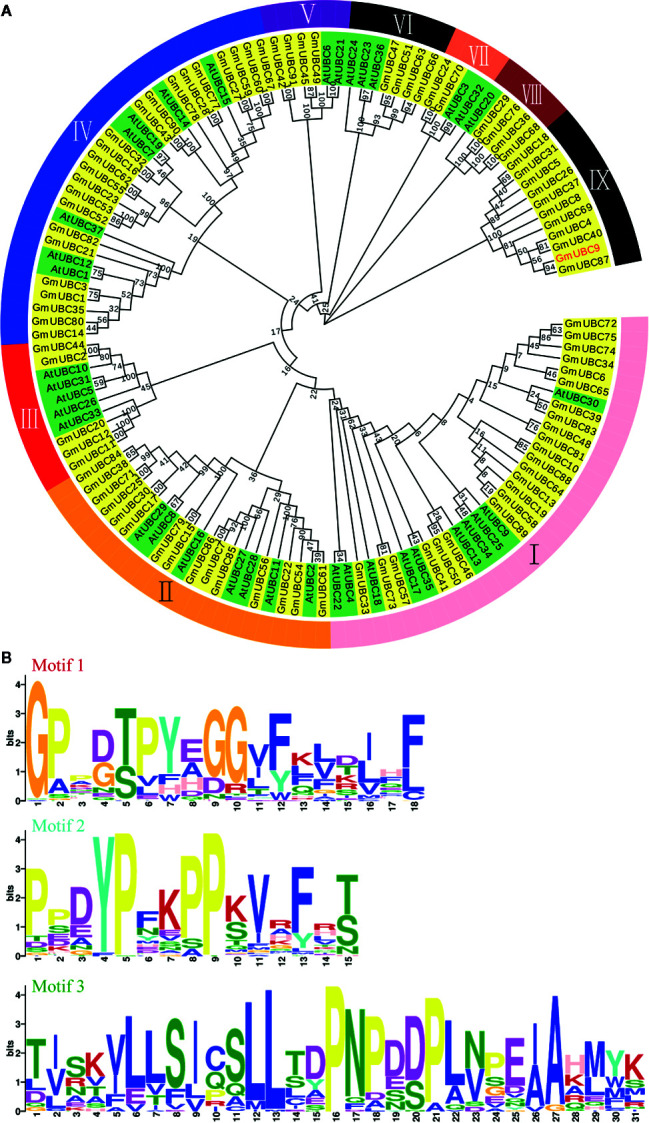
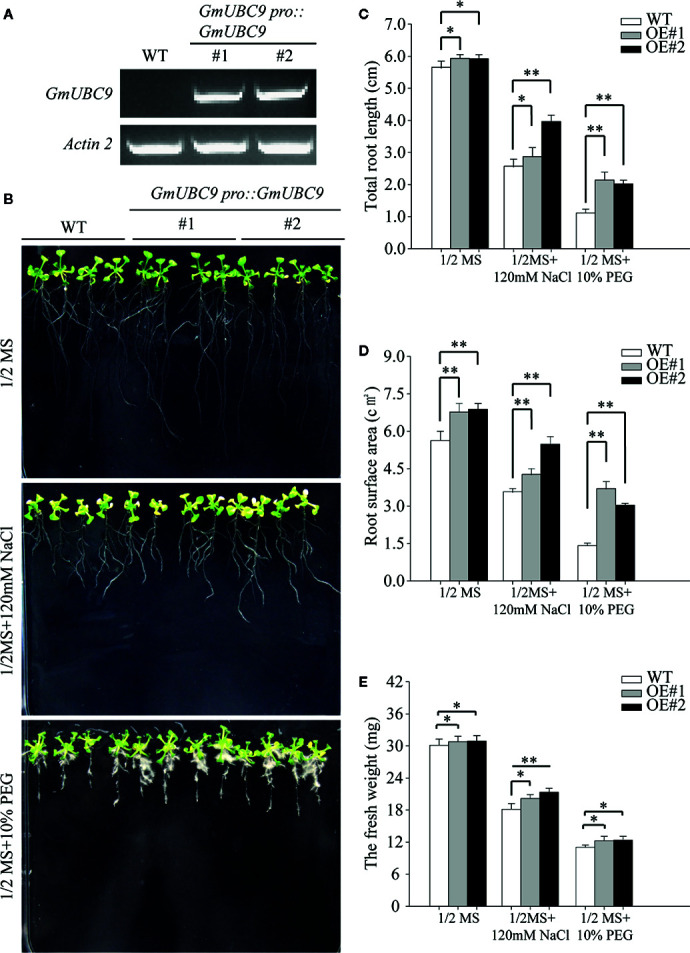
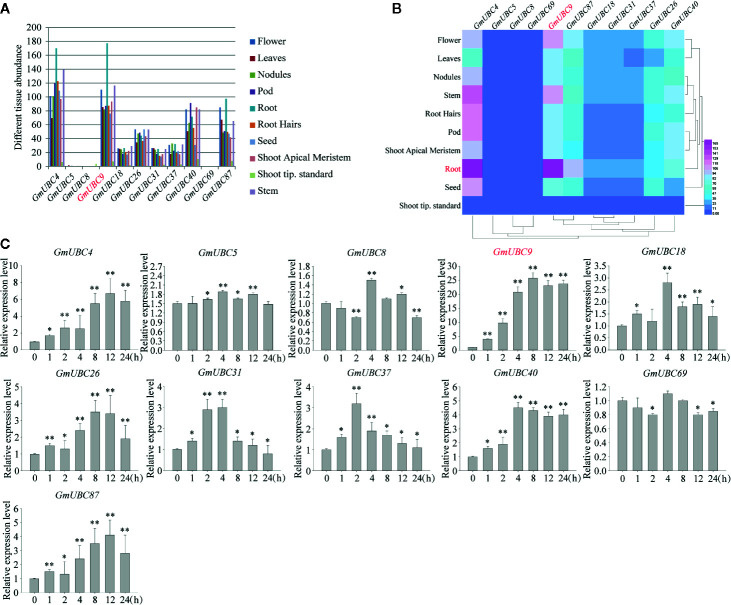
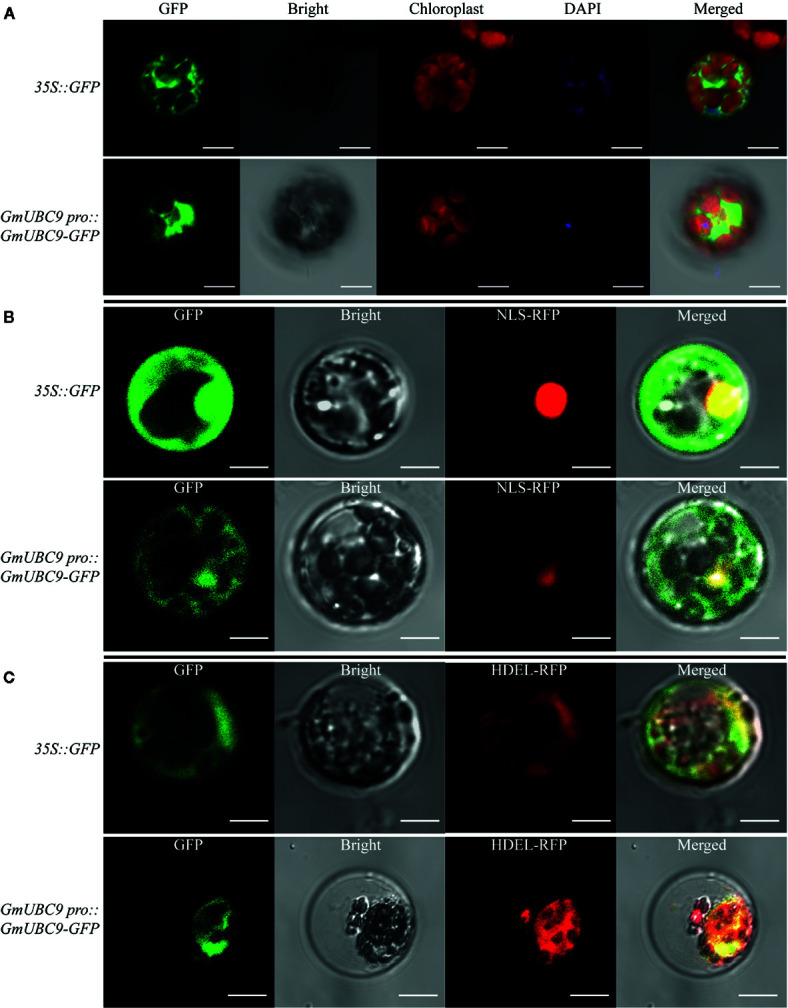
Ubiquitylation is a form of post-translational modification of proteins that can alter localization, functionality, degradation, or transcriptional activity within a cell. E2 ubiquitin-conjugating enzyme (UBC) and E3 ubiquitin ligases are the primary determinants of substrate specificity in the context of ubiquitin conjugation. Multiubiquitination modifies target proteins for 26S proteasome degradation, while monoubiquitination controls protein activation and localization. At present, research on the monoubiquitination, especially histone monoubiquitination, has mostly focused on model plants with relatively few on crop species. In this study, we identified 91 -like genes in soybean. The chromosomal localization, phylogenetic relationships, gene structures, and putative cis-acting elements were evaluated. Furthermore, the tissue-specific expression patterns of Class I genes under drought stress were also investigated. Among Class I genes, induction in response to drought stress was evident, and so this gene was selected for further analysis. GmUBC9 localized to the nucleus and endoplasmic reticulum. The overexpression of in led to enhanced tolerance for drought conditions across a range of stages of development, while overexpression in soybean hairy roots similarly led to improvements in tolerance for drought conditions, increased proline content, and reduced MDA content in soybean seedlings compared to wild type plants. HISTONE MONOUBIQUITINATION 2 (HUB2), an E3-like protein involved in histone H2B ubiquitylation (H2Bub1), was found to interact with GmUBC9 through Y2H analysis and BiFC assays in and soybean. Under drought conditions, the level of H2Bub1 increased, and transcription of drought response genes was activated in transgenic and soybean. In addition, transgenic and soybean showed a late-flowering phenotype and had increased expression levels of the flowering related genes and . These findings indicate that GmUBC9 is important for drought stress response and regulation of flowering time in soybean.
泛素化是蛋白质翻译后修饰的一种形式,它可以改变细胞内蛋白质的定位、功能、降解或转录活性。E2泛素结合酶(UBC)和E3泛素连接酶是泛素结合过程中底物特异性的主要决定因素。多泛素化修饰靶蛋白以进行26S蛋白酶体降解,而单泛素化则控制蛋白质的激活和定位。目前,关于单泛素化的研究,尤其是组蛋白单泛素化,大多集中在模式植物上,对作物物种的研究相对较少。在本研究中,我们在大豆中鉴定出91个类似基因。对其染色体定位、系统发育关系、基因结构和假定的顺式作用元件进行了评估。此外,还研究了干旱胁迫下I类基因的组织特异性表达模式。在I类基因中,对干旱胁迫的诱导作用明显,因此选择该基因进行进一步分析。GmUBC9定位于细胞核和内质网。在拟南芥中过表达GmUBC9导致在发育的各个阶段对干旱条件的耐受性增强,而在大豆毛状根中过表达同样导致与野生型植物相比,大豆幼苗对干旱条件的耐受性提高、脯氨酸含量增加和丙二醛含量降低。通过酵母双杂交分析和双分子荧光互补分析发现,参与组蛋白H2B泛素化(H2Bub1)的类E3蛋白组蛋白单泛素化2(HUB2)在拟南芥和大豆中与GmUBC9相互作用。在干旱条件下,H2Bub1水平升高,干旱响应基因的转录在转基因拟南芥和大豆中被激活。此外,转基因拟南芥和大豆表现出晚花表型,并且开花相关基因FT和SOC1的表达水平增加。这些发现表明,GmUBC9对大豆干旱胁迫响应和开花时间调控很重要。