Guan Mingwei, Huang Xiaohu, Xiao Zhongchun, Jia Ledong, Wang Shuxian, Zhu Meichen, Qiao Cailin, Wei Lijuan, Xu Xinfu, Liang Ying, Wang Rui, Lu Kun, Li Jiana, Qu Cunmin
Chongqing Engineering Research Center for Rapeseed, College of Agronomy and Biotechnology, Southwest University, Chongqing, China.
Academy of Agricultural Sciences, Southwest University, Chongqing, China.
Front Plant Sci. 2019 Jan 4;9:1872. doi: 10.3389/fpls.2018.01872. eCollection 2018.
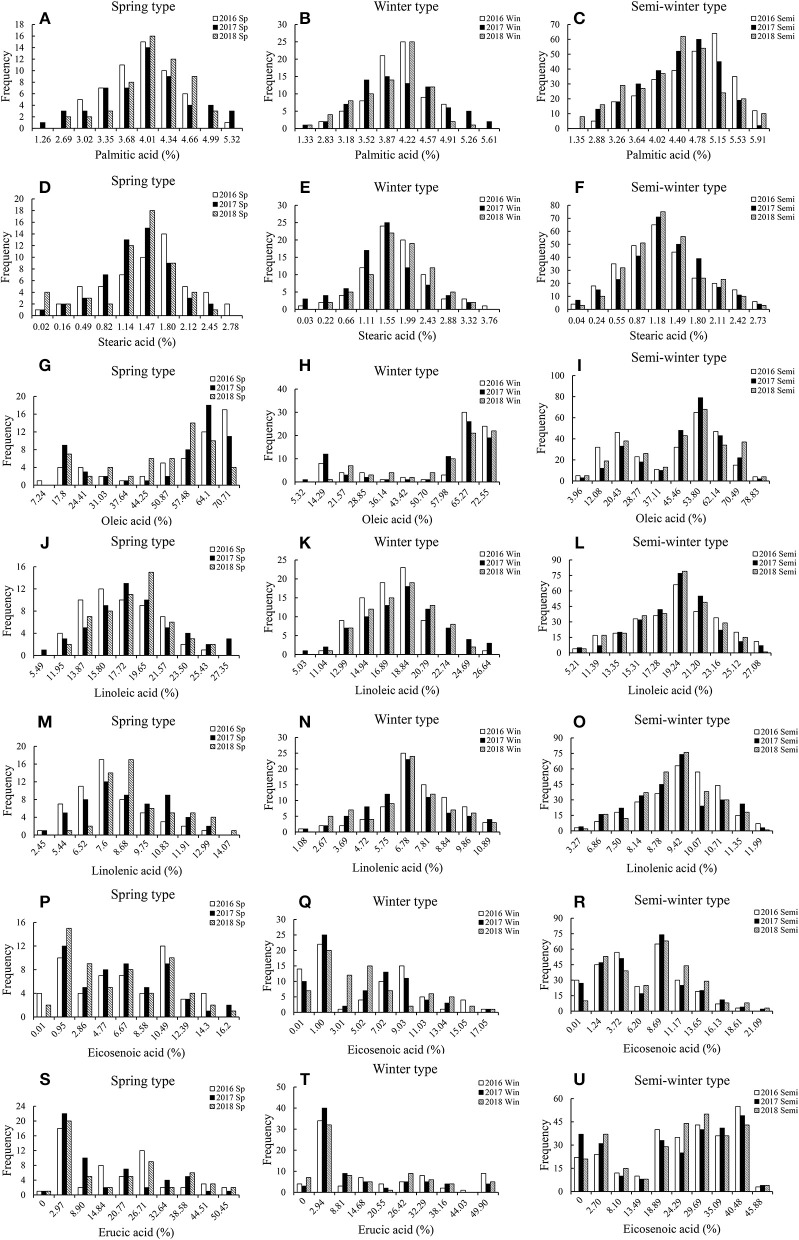
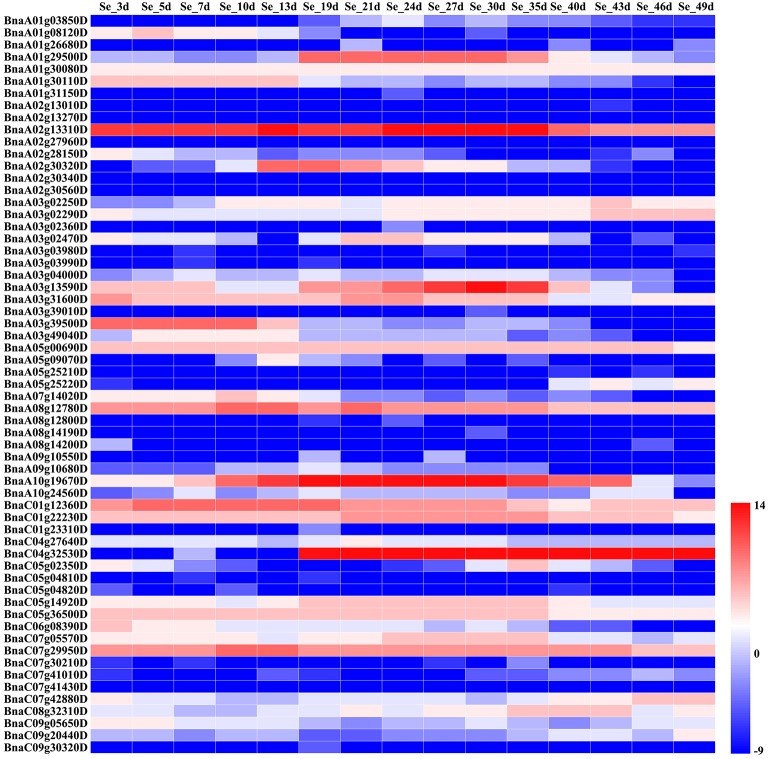
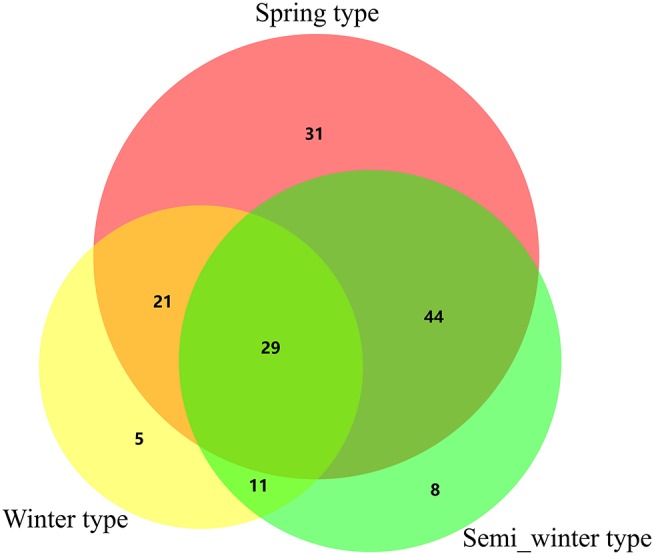
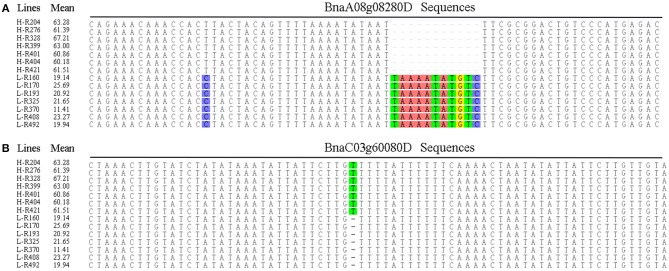
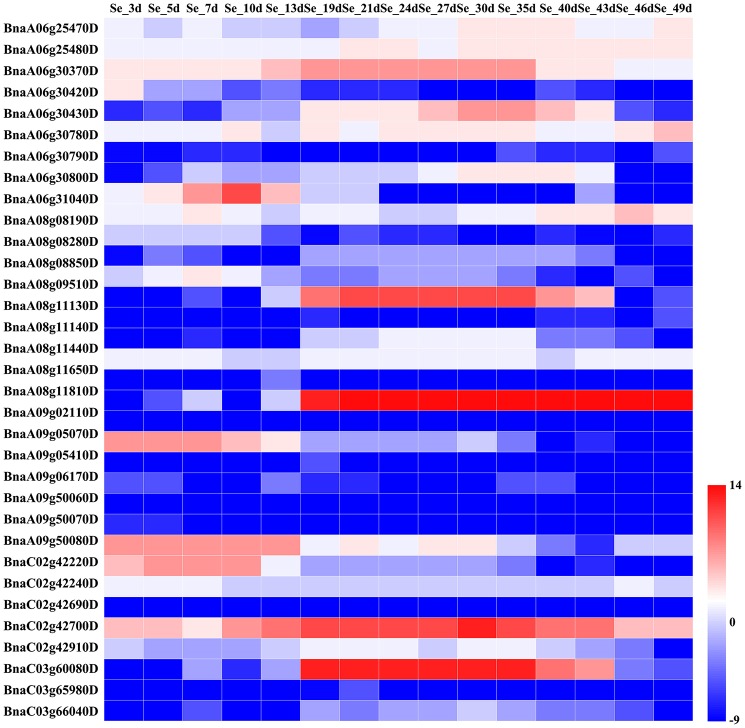
L. is a widely cultivated oil crop and provides important resources of edible vegetable oil, and its quality is determined by fatty acid composition and content. To explain the genetic basis and identify more minor loci for fatty acid content, the multi-locus random-SNP-effect mixed linear model (mrMLM) was used to identify genomic regions associated with fatty acid content in a genetically diverse population of 435 rapeseed accessions, including 77 winter-type, 55 spring-type, and 303 semi-winter-type accessions grown in different environments. A total of 149 quantitative trait nucleotides (QTNs) were found to be associated with fatty acid content and composition, including 34 QTNs that overlapped with the previously reported loci, and 115 novel QTNs. Of these, 35 novel QTNs, located on chromosome A01, A02, A03, A05, A06, A09, A10, and C02, respectively, were repeatedly detected across different environments. Subsequently, we annotated 95 putative candidate genes by BlastP analysis using sequences from homologs of the identified regions. The candidate genes included 34 environmentally-insensitive genes (e.g., , and ) and 61 environment-sensitive genes (e.g., , and ) as well as genes invloved in the fatty acid biosynthesis. Among these, and differed in genomic sequence between the high- and low-oleic acid lines, and might thus be the novel alleles regulating oleic acid content. Furthermore, RT-qPCR analysis of these genes showed differential expression levels during seed development. Our results highlight the practical and scientific value of mrMLM or QTN detection and the accuracy of linking specific QTNs to fatty acid content, and suggest a useful strategy to improve the fatty acid content of seeds by molecular marker-assisted breeding.
油菜是一种广泛种植的油料作物,提供重要的食用植物油资源,其品质由脂肪酸组成和含量决定。为了解脂肪酸含量的遗传基础并鉴定更多的微效位点,采用多位点随机单核苷酸多态性效应混合线性模型(mrMLM)在435份油菜种质的遗传多样性群体中鉴定与脂肪酸含量相关的基因组区域,这些种质包括77份冬性类型、55份春性类型和303份半冬性类型,种植于不同环境。共发现149个数量性状核苷酸(QTN)与脂肪酸含量和组成相关,其中34个QTN与先前报道的位点重叠,115个为新发现的QTN。其中,分别位于A01、A02、A03、A05、A06、A09、A10和C02染色体上的3