Iturbe-Hernandez Teodoro, García de Guadiana Romualdo Luis, Gil Ortega Ignacio, Martínez Francés Antonio, Meca Birlanga Olga, Cerezo-Manchado Juan José
Department of Hematology, Hospital Clínico Universitario Santa Lucía, Cartagena, Spain.
Laboratory Department, Hospital Clínico Universitario Santa Lucía, Cartagena, Spain.
Drugs Context. 2020 Sep 18;9. doi: 10.7573/dic.2020-8-3. eCollection 2020.
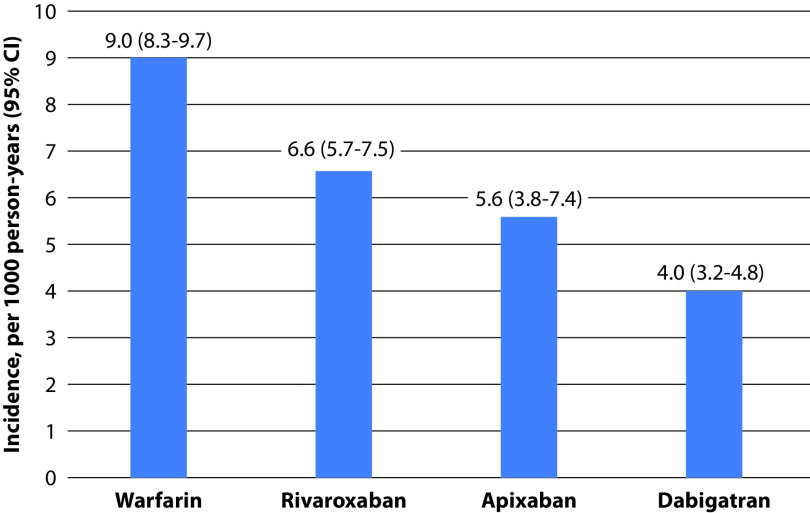
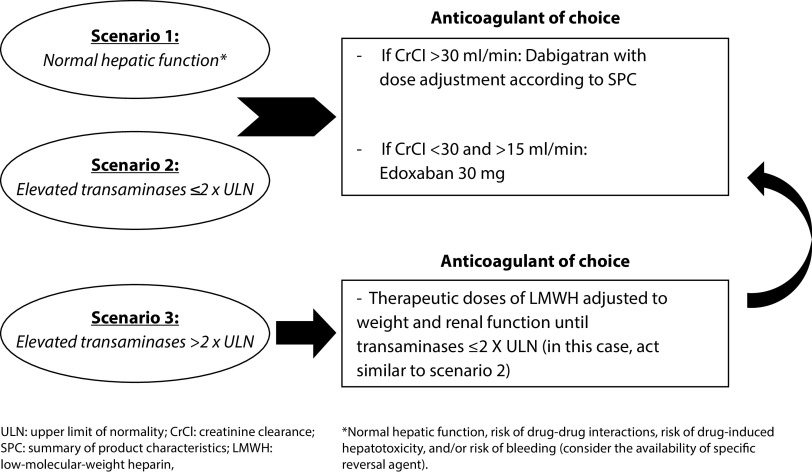
Atrial fibrillation is a frequent complication among patients with severe coronavirus disease-2019 (COVID-19) infection. Both direct and indirect mechanisms through COVID-19 have been described to explain this relationship. COVID-19 infection increases the risk of developing both arterial and venous thrombotic complications through systemic coagulation activation, leading to increased mortality. Chronic oral anticoagulation is essential to reduce the thromboembolic risk among AF patients. Switching to low-molecular-weight heparin has been recommended during hospitalization for COVID-19 infection. Of note, at discharge, the prescription of direct oral anticoagulants may offer some advantages over vitamin K antagonists. However, oral anticoagulants should only be prescribed after the consideration of drug-drug interactions with antiviral therapies as well as of the risk of hepatotoxicity, which is common among individuals with severe COVID-19 pneumonia. Not all anticoagulants have the same risk of hepatotoxicity; dabigatran has shown a good efficacy and safety profile and could have a lower risk of hepatotoxicity. Furthermore, its metabolism by cytochrome P450 is absent and it has a specific reversal agent. Therefore, dabigatran may be considered as a first-line choice for oral anticoagulation at discharge after COVID-19 infection. In this review, the available information on the antithrombotic management of AF patients at discharge after COVID-19 infection is updated. In addition, a practical algorithm, considering renal and liver function, which facilitates the anticoagulation choice at discharge is presented.
心房颤动是重症2019冠状病毒病(COVID-19)感染患者常见的并发症。已有研究描述了COVID-19通过直接和间接机制导致这种关联。COVID-19感染通过全身性凝血激活增加了发生动脉和静脉血栓形成并发症的风险,进而导致死亡率升高。长期口服抗凝治疗对于降低房颤患者的血栓栓塞风险至关重要。对于COVID-19感染住院患者,建议换用低分子量肝素。值得注意的是,在出院时,直接口服抗凝剂的处方可能比维生素K拮抗剂具有一些优势。然而,口服抗凝剂的处方应在考虑与抗病毒治疗的药物相互作用以及肝毒性风险后进行,肝毒性在重症COVID-19肺炎患者中很常见。并非所有抗凝剂都有相同的肝毒性风险;达比加群已显示出良好的疗效和安全性,且肝毒性风险可能较低。此外,它不通过细胞色素P450代谢,并有特定的逆转剂。因此,达比加群可被视为COVID-19感染出院后口服抗凝治疗的一线选择。在本综述中,更新了关于COVID-19感染出院后房颤患者抗栓治疗管理的现有信息。此外,还提出了一种考虑肾功能和肝功能的实用算法,以方便出院时的抗凝选择。