Malik Balal Rasheed, Ali Rudwan Ahmed Mohamed, Abdelghani Mohamed Salah, Mohsen Mohammed, Khan Shahul Hameed A, Aljefairi Nora, Mahmoud Elsayed, Asaad Nidal, Hayat Sajad Ahmed
Department of Medicine, Hamad Medical Corporation, Doha, Qatar.
Medical Research Center, AHS, Hamad Medical Corporation, Doha, Qatar.
Heart Views. 2020 Apr-Jun;21(2):88-96. doi: 10.4103/HEARTVIEWS.HEARTVIEWS_44_20. Epub 2020 Jun 29.
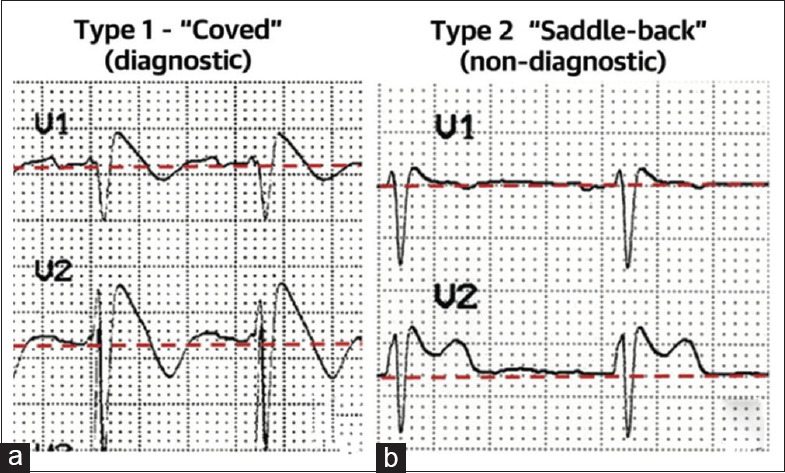
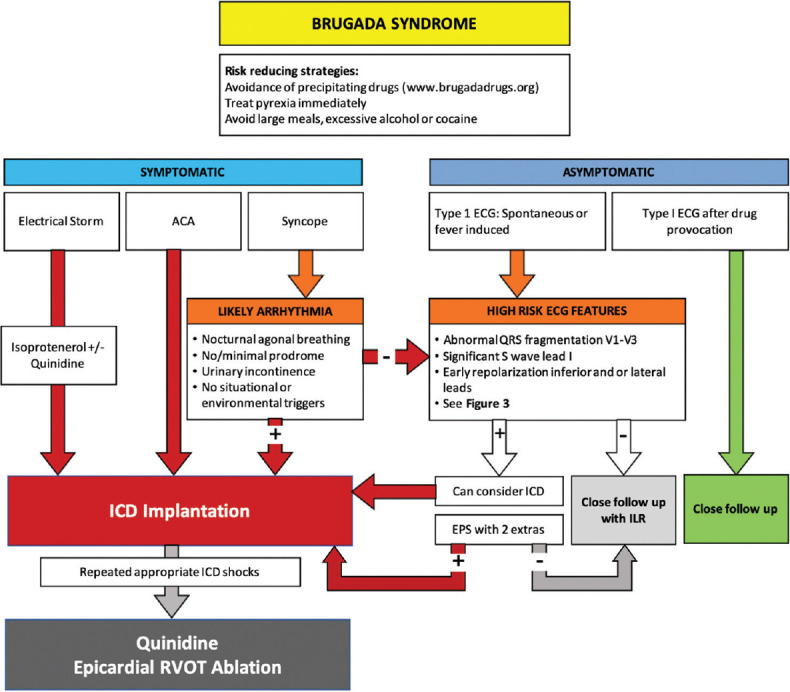
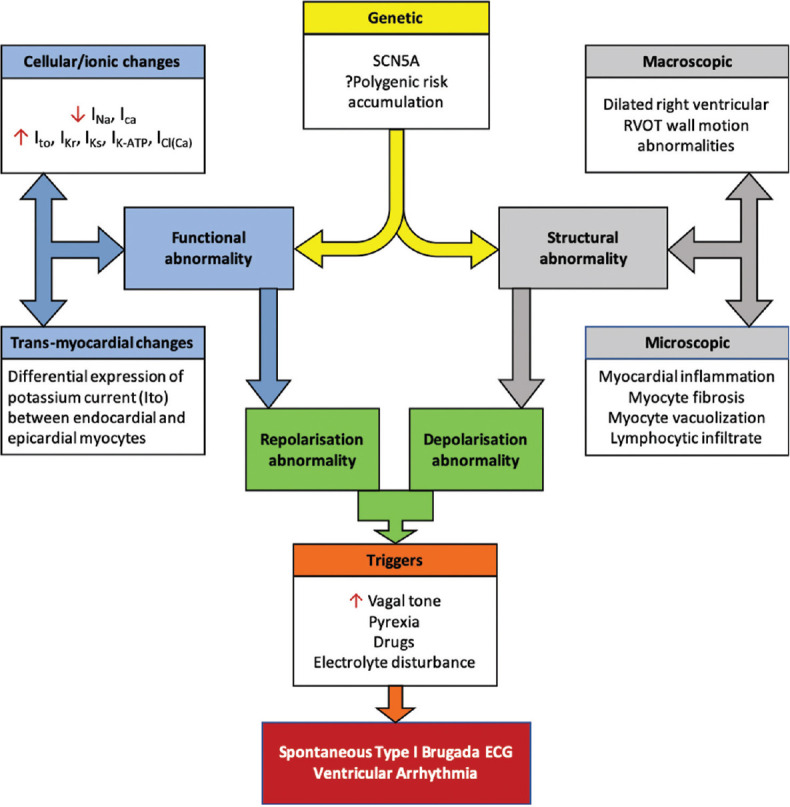
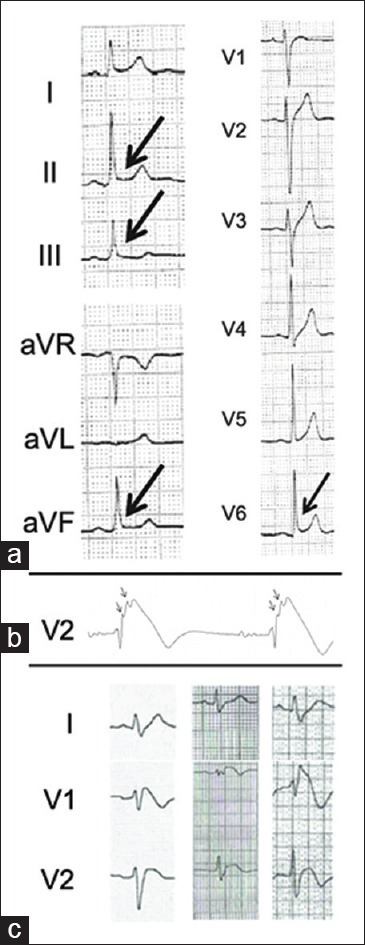
In 1992, the Brugada brothers published a patient series of aborted sudden death, who were successfully resuscitated from ventricular fibrillation (VF). These patients had a characteristic coved ST-segment elevation in the right precordial leads on their 12-lead electrocardiogram with no apparent structural heart abnormality. This disease was referred to as "right bundle branch block, persistent ST-segment elevation, and sudden death syndrome." The term Brugada syndrome (BrS) was first coined for this new arrhythmogenic entity in 1996. BrS is more prevalent in Southeast Asian ethnic groups and was considered a familial disease due to the presence of syncope and/or sudden deaths in several members of the same family, however, the genetic alteration was only noted in 1998. The genetic characterization of BrS has proven to be challenging. The most common and well-established BrS genotype involves loss-of-function mutations in the SCN5A gene, but only represents between 15% and 30% of the diagnosed patients. Patients with BrS can present with a range of symptoms which can include syncope, seizures, and nocturnal agonal breathing due to polymorphic ventricular tachycardia or VF. If these arrhythmias are sustained, sudden cardiac death may result. Despite the significant progress on the understanding of BrS over the last two decades, there remain a number of uncertainties and challenges; we present an update review on the subject.
1992年,布鲁加达兄弟发表了一组室颤后心脏骤停患者的病例系列,这些患者均成功从室颤中复苏。这些患者在12导联心电图上右胸前导联出现特征性的穹窿样ST段抬高,且无明显的结构性心脏异常。这种疾病被称为“右束支传导阻滞、持续性ST段抬高和猝死综合征”。1996年,“布鲁加达综合征(BrS)”这一术语首次被用于命名这种新的致心律失常疾病。BrS在东南亚种族中更为常见,由于同一家族的多名成员出现晕厥和/或猝死,曾被认为是一种家族性疾病,然而,直到1998年才发现其基因改变。BrS的基因特征已被证明具有挑战性。最常见且已明确的BrS基因型涉及SCN5A基因的功能丧失突变,但仅占确诊患者的15%至30%。BrS患者可能出现一系列症状,包括由于多形性室性心动过速或室颤导致的晕厥、癫痫发作和夜间濒死呼吸。如果这些心律失常持续存在,可能会导致心源性猝死。尽管在过去二十年里对BrS的认识取得了重大进展,但仍存在许多不确定性和挑战;我们对该主题进行了最新综述。