Dong Shuang, Luo Chenggang, Hu Xuebo, Zhang Jing, Cai Qian, Qian Yu, Ran Fengming, Ou Wuling, Wang Jun, Huang Qing, Ren Tianhua, Han Guang, Zhang Feng, Wei Wei, Liang Xinjun, Xu Huiting, Wang Sheng, Shi Lulu, Wei Shaozhong, Hu Sheng
Department of Medical Oncology, Hubei Cancer Hospital, Tongji Medical College, Huazhong University of Science and Technology, Wuhan, China.
Hubei Provincial Cancer Center, Wuhan, China.
Front Oncol. 2020 Aug 18;10:1555. doi: 10.3389/fonc.2020.01555. eCollection 2020.
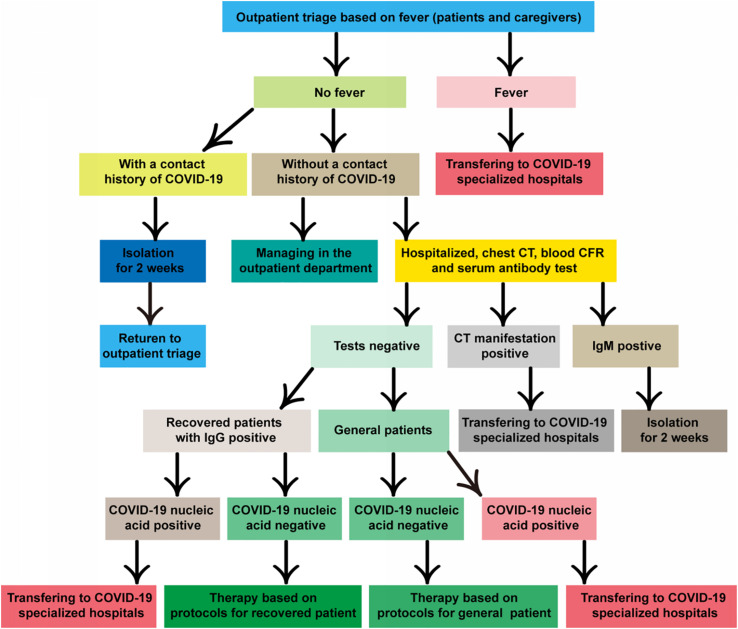
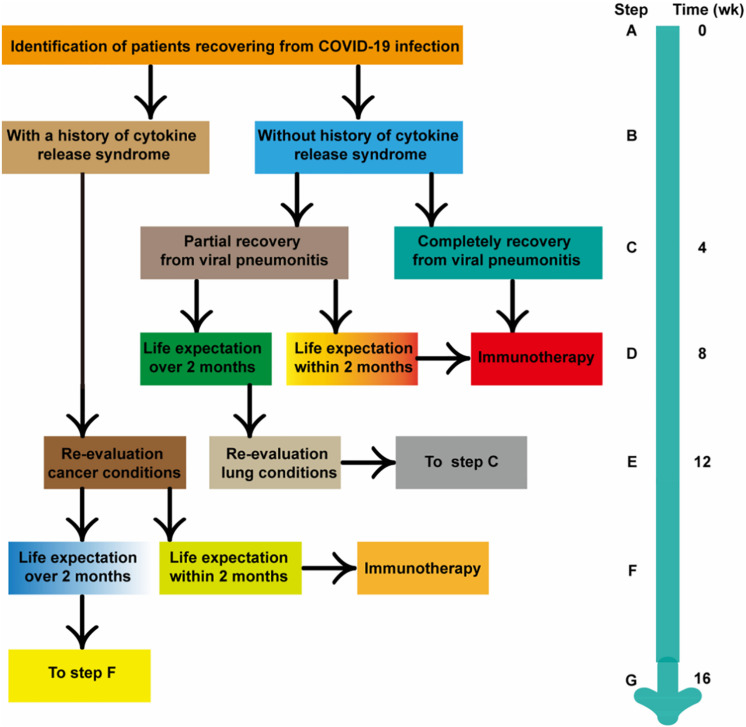
The sudden pandemic of SARS-Cov-2 (also known as novel coronavirus disease 2019, COVID-19) poses a severe threat to hundreds of millions of lives in the world. The complete cure of the virus largely relies on the immune system, which becomes particularly a challenge for the cancer subjects, whose immunity is generally compromised. However, in a constant evolving situation, the clinical data on the prevalence of SARS-Cov-2 for cancer patients is still limited. On top of a wide range of medical references and interim guidelines including CDC, NCI, ASCO, ESMO, NCCN, AACR, ESMO, and the National Health Commission of China, etc., we formed into a guideline based on our experience in our specialized cancer hospital in Wuhan, the originally endemic center of the virus. Furthermore, we formulated an expert consensus which was developed by all contributors from different disciplines after fully discussion based on our understanding and analysis of limited information of COVID-19. The consensus highlighted a multidisciplinary team diagnostic model with assessment of the balance between risks and benefits prior to treatment, individualizing satisfaction of patients' medical needs, and acceptability in ethics and patients' socio-economic conditions.
严重急性呼吸综合征冠状病毒2(SARS-CoV-2,也称为2019新型冠状病毒病,即COVID-19)的突然大流行对全球数亿人的生命构成了严重威胁。病毒的完全治愈在很大程度上依赖于免疫系统,这对癌症患者来说尤其具有挑战性,因为他们的免疫力通常较弱。然而,在不断变化的情况下,关于癌症患者中SARS-CoV-2流行情况的临床数据仍然有限。除了包括美国疾病控制与预防中心(CDC)、美国国立癌症研究所(NCI)、美国临床肿瘤学会(ASCO)、欧洲医学肿瘤学会(ESMO)、美国国立综合癌症网络(NCCN)、美国癌症研究协会(AACR)、欧洲医学肿瘤学会(ESMO)以及中国国家卫生健康委员会等在内的广泛医学参考资料和临时指南外,我们还根据我们在武汉这家最初的病毒流行中心的专业癌症医院的经验形成了一份指南。此外,我们制定了一份专家共识,该共识是由来自不同学科的所有贡献者在对COVID-19有限信息进行充分讨论和理解分析后制定的。该共识强调了一种多学科团队诊断模式,即在治疗前评估风险与收益之间的平衡,个性化满足患者的医疗需求,以及在伦理和患者社会经济状况方面的可接受性。