Boegman Susan, Stellingwerff Trent, Shaw Gregory, Clarke Nick, Graham Kenneth, Cross Rebecca, Siegler Jason C
Canadian Sport Institute Pacific, Victoria, BC, Canada.
Department of Exercise Science, Physical & Health Education, University of Victoria, Victoria, BC, Canada.
Front Nutr. 2020 Sep 9;7:138. doi: 10.3389/fnut.2020.00138. eCollection 2020.
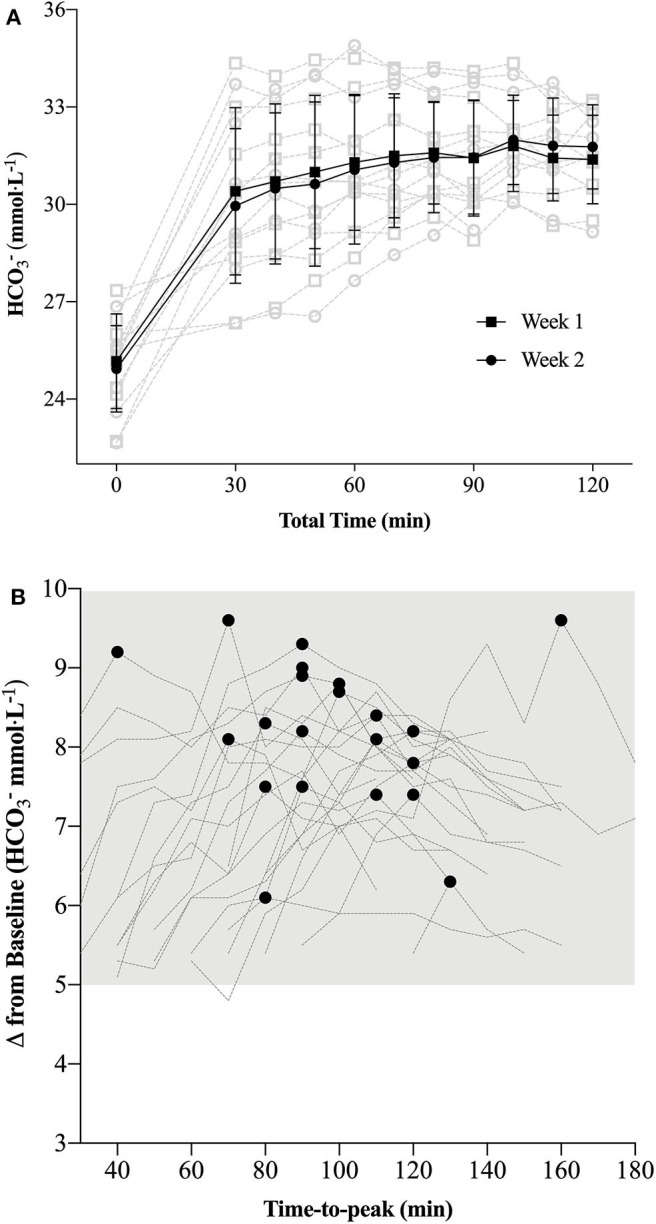
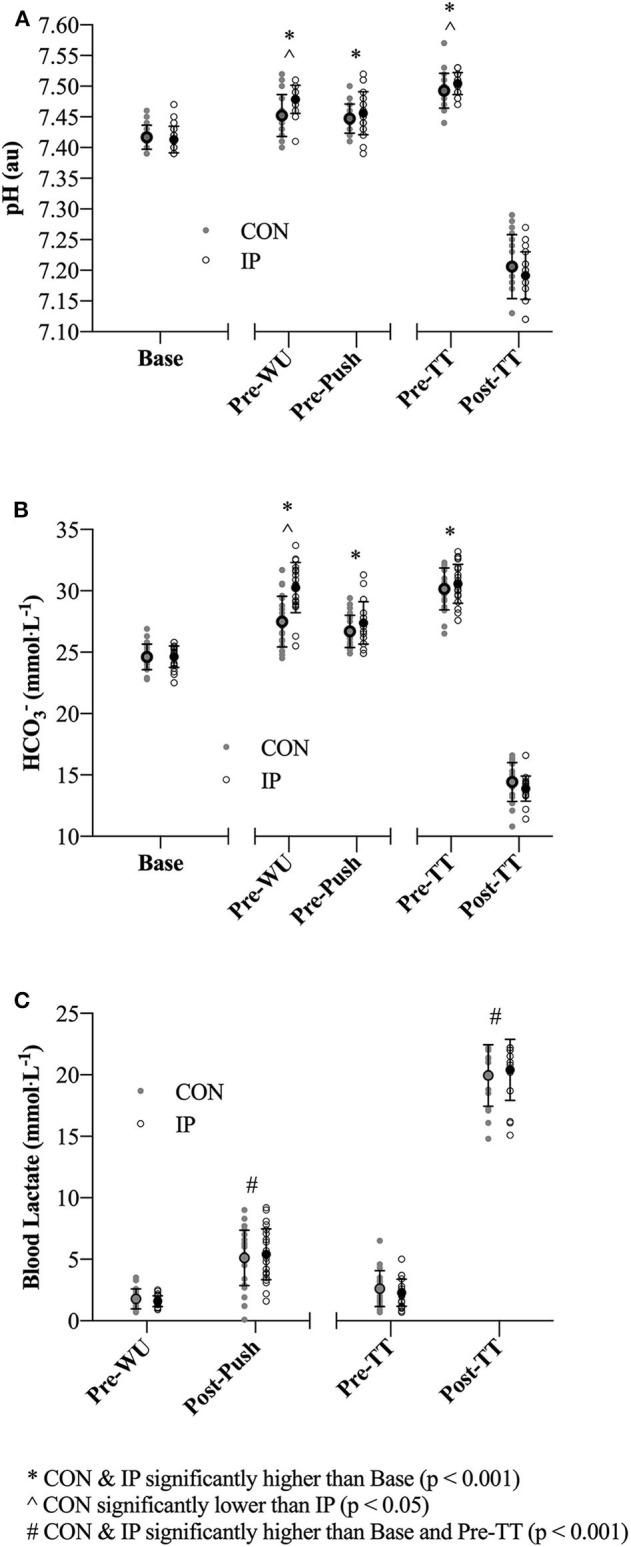
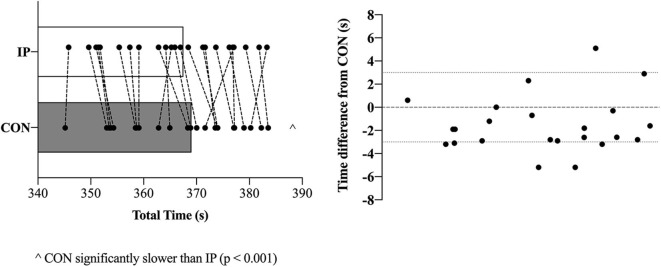
Contemporary meta-analyses have generally demonstrated a positive effect of sodium bicarbonate (NaHCO) supplementation on exercise performance. However, despite these claims, there is limited data on contrasting individualized and standardized of NaHCO ingestion prior to exercise to further enhance performance outcomes. To determine whether NaHCO ingestion timing impacts 2,000-m rowing time-trial (TT) performance in elite-level rowers (Senior National team including Olympic/World Championships level) adhering to their own individualized pre-race strategies (e.g. nutrition, warm-up, etc.). Twenty three ( = 23) rowers across two research centers (using the exact same methods/protocols) completed three trials: NaHCO loading profile at rest to determine the individual's time-to-peak bicarbonate concentration [ ], followed by two randomized 0.3 g·kgBM NaHCO supplementation experimental trials conducted at different time points [consensus timing (CON): TT performed 60 min post-NaHCO ingestion; and individualized peak (IP): TT performed at the rower's individual peak [ ] determined from the profiling trial post-NaHCO ingestion]. There was a significant mean difference of +2.9 [± 0.4 mmol·L for IP vs. CON (95% CI 2.0 to 3.8 mmol·L); = 0.02; = 1.08] at pre warm-up, but not immediately prior to the TT (post warm-up). Performance times were significantly different between IP (367.0 ± 10.5 s) vs. CON (369.0 ± 10.3 s); = 0.007; = 0.15). The present study demonstrated a small but significant performance effect of an individualized NaHCO ingestion strategy. Similarities after warm-up between pre-TT values (CON ~ + 5.5 mmol·L; IP ~ + 6 mmol·L), however, would suggest this effect was not a result of any meaningful differences in blood alkalinity.
当代的荟萃分析普遍表明,补充碳酸氢钠(NaHCO)对运动表现有积极影响。然而,尽管有这些说法,但关于在运动前对比个性化和标准化的NaHCO摄入方式以进一步提高运动表现结果的数据有限。为了确定NaHCO的摄入时间是否会影响精英级赛艇运动员(包括奥运会/世界锦标赛水平的国家高级代表队)在遵循自己个性化的赛前策略(如营养、热身等)的情况下,2000米赛艇计时赛(TT)的表现。来自两个研究中心的23名(n = 23)赛艇运动员(使用完全相同的方法/方案)完成了三项试验:在休息时进行NaHCO负荷测试,以确定个体达到碳酸氢盐峰值浓度的时间[tpeak],随后在不同时间点进行两次随机的0.3 g·kgBM NaHCO补充实验试验[共识时间(CON):在摄入NaHCO后60分钟进行TT;个性化峰值(IP):TT在赛艇运动员从摄入NaHCO后的测试中确定的个体峰值[tpeak]时进行]。在热身前,IP组与CON组之间的平均差异显著为+2.9[±0.4 mmol·L,IP组与CON组相比(95%可信区间为2.0至3.8 mmol·L);P = 0.02;Cohen's d = 1.08],但在TT前(热身后)则不显著。IP组(367.0 ± 10.5秒)与CON组(369.0 ± 10.3秒)的表现时间存在显著差异;P = 0.007;Cohen's d = 0.15)。本研究表明,个性化的NaHCO摄入策略对运动表现有微小但显著的影响。然而,热身前后TT前的[tHCO3–]值相似(CON组约为+5.5 mmol·L;IP组约为+6 mmol·L),这表明这种影响不是由于血液碱度的任何有意义的差异所致。