INBIOMED (CONICET-UBA), Facultad de Medicina, Universidad de Buenos Aires, Buenos Aires, Argentina.
PLoS One. 2020 Oct 5;15(10):e0240245. doi: 10.1371/journal.pone.0240245. eCollection 2020.
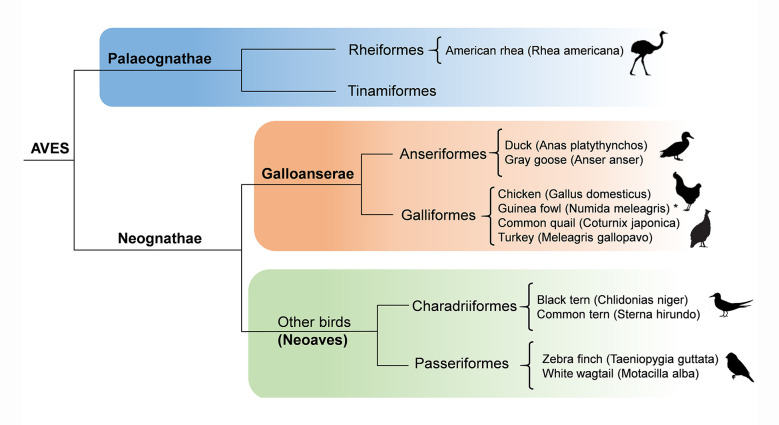
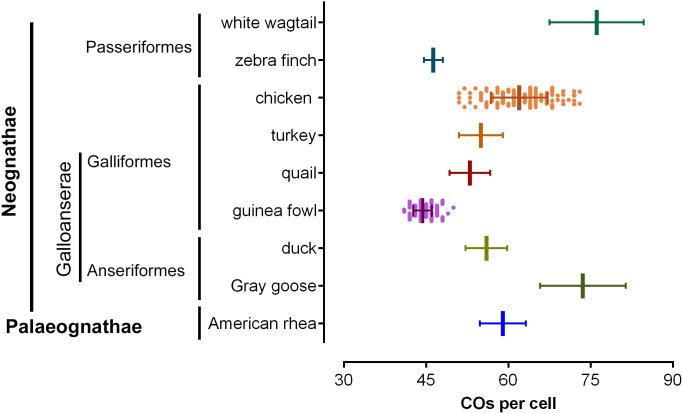
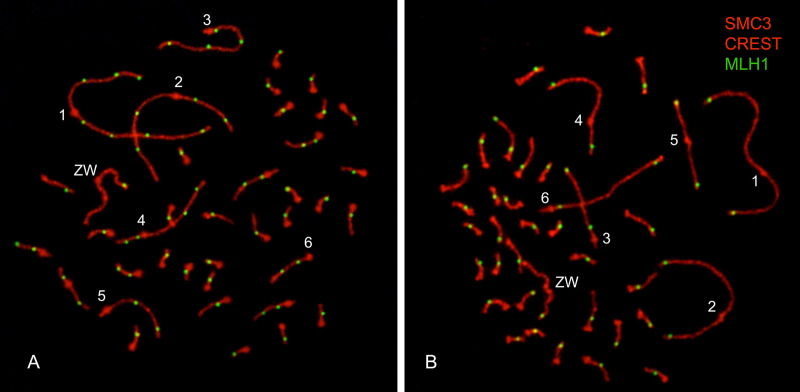
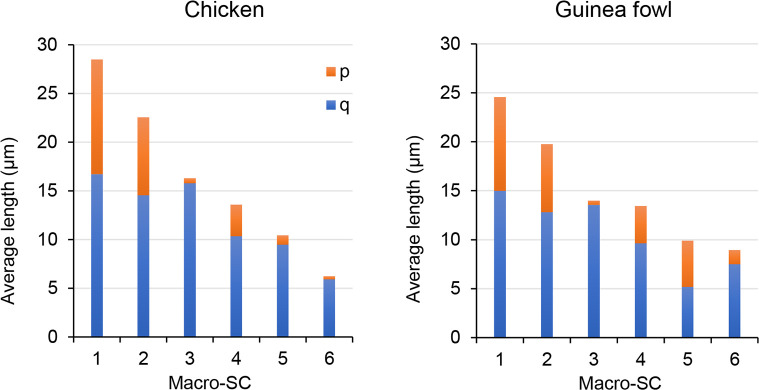
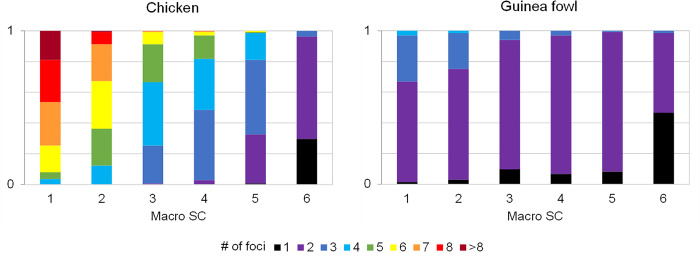
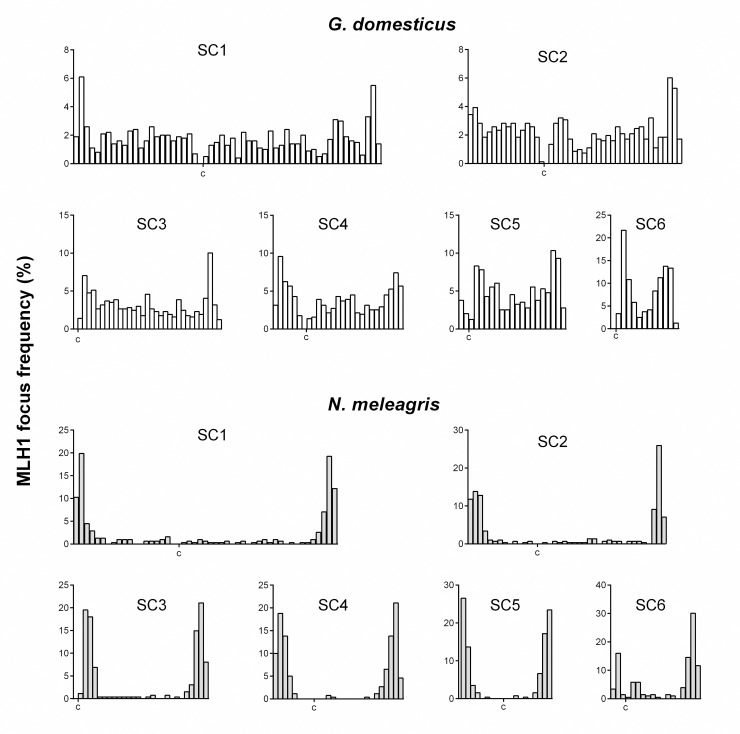
Crossover rates and localization are not homogeneous throughout the genomes. Along the chromosomes of almost all species, domains with high crossover rates alternate with domains where crossover rates are significantly lower than the genome-wide average. The distribution of crossovers along chromosomes constitutes the recombination landscape of a given species and can be analyzed at broadscale using immunostaining of the MLH1 protein, a component of mature recombination nodules found on synaptonemal complexes during pachytene. We scored the MLH1 foci in oocytes of the chicken and the guinea fowl and compared their frequencies in the largest bivalents. The average autosomal number of foci is 62 in the chicken and 44 in the guinea fowl. The lower number in the guinea fowl responds to the occurrence of fewer crossovers in the six largest bivalents, where most MLH1 foci occur within one-fifth of the chromosome length with high polarization towards opposite ends. The skewed distribution of foci in the guinea fowl contrast with the more uniform distribution of numerous foci in the chicken, especially in the four largest bivalents. The crossover distribution observed in the guinea fowl is unusual among Galloanserae and also differs from other, more distantly related birds. We discussed the current evidence showing that the shift towards crossover localization, as observed in the guinea fowl, was not a unique event but also occurred at different moments of bird evolution. A comparative analysis of genome-wide average recombination rates in birds shows variations within narrower limits compared to mammals and the absence of a phylogenetic trend.
交叉互换率和定位在整个基因组中并不均匀。在几乎所有物种的染色体上,高交叉互换率的区域与交叉互换率明显低于全基因组平均值的区域交替出现。沿着染色体的交叉互换分布构成了特定物种的重组景观,可以使用免疫染色 MLH1 蛋白进行广泛分析,MLH1 蛋白是成熟重组结节的一个组成部分,在粗线期的联会复合体上发现。我们对鸡和珍珠鸡的卵母细胞中的 MLH1 焦点进行了评分,并比较了它们在最大二价体中的频率。鸡的常染色体焦点的平均数量为 62,珍珠鸡的焦点的平均数量为 44。珍珠鸡的数量较少是由于六个最大二价体中发生的交叉互换较少,大多数 MLH1 焦点出现在染色体长度的五分之一内,并且向相反端高度极化。珍珠鸡焦点的偏态分布与鸡中大量焦点的更均匀分布形成对比,尤其是在四个最大的二价体中。在珍珠鸡中观察到的交叉互换分布在 Galloanserae 中是不寻常的,也与其他亲缘关系更远的鸟类不同。我们讨论了目前的证据,表明向交叉互换定位的转变,如在珍珠鸡中观察到的那样,不是一个独特的事件,而是也发生在鸟类进化的不同时刻。对鸟类全基因组平均重组率的比较分析显示,与哺乳动物相比,变化范围更窄,并且没有系统发育趋势。