Xiao Fengyan, Gao Feng, Zhou Shengxue, Wang Lina
College of Chinese Medicine, Jilin Agricultural Science and Technology College, Jilin City.
YanBian Han Gong Fang Health Products Limited Company, YanBian City.
Medicine (Baltimore). 2020 Oct 2;99(40):e22249. doi: 10.1097/MD.0000000000022249.
To comprehensively evaluate the treatment efficacy and safety of silymarin for patients with glucose/lipid metabolic dysfunction using a meta-analysis.
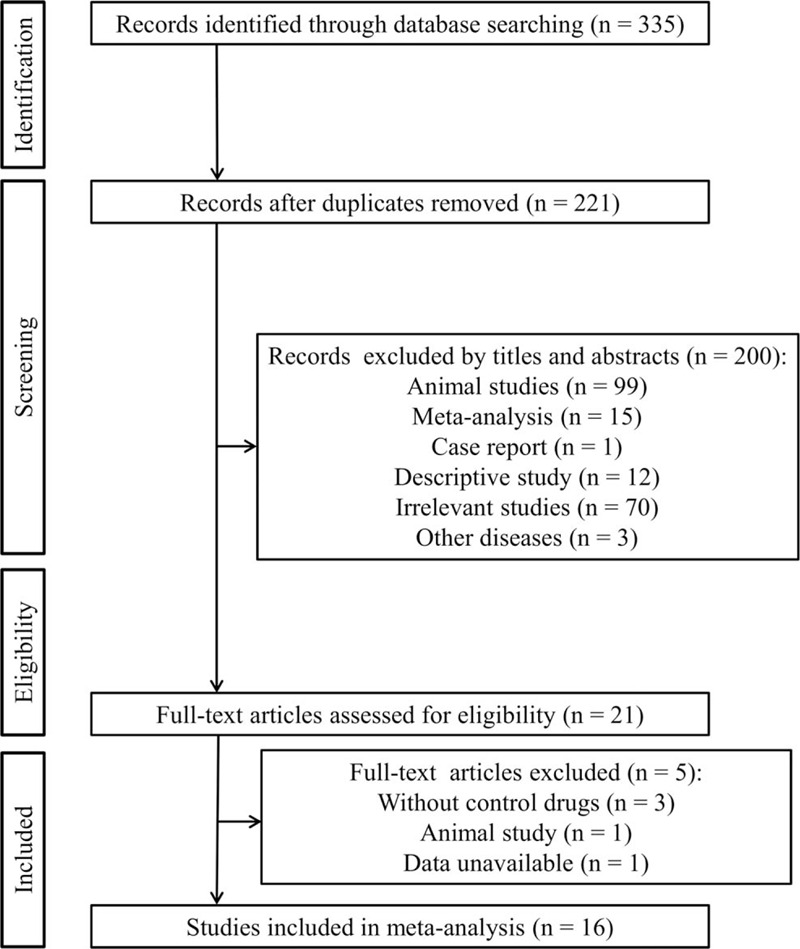
A systematic literature search in PubMed, EMBASE and Cochrane Library databases was performed up to October 1, 2019. STATA 13.0 software was used to estimate pooled standardized mean difference (SMD) and 95% confidence interval (95% CI).
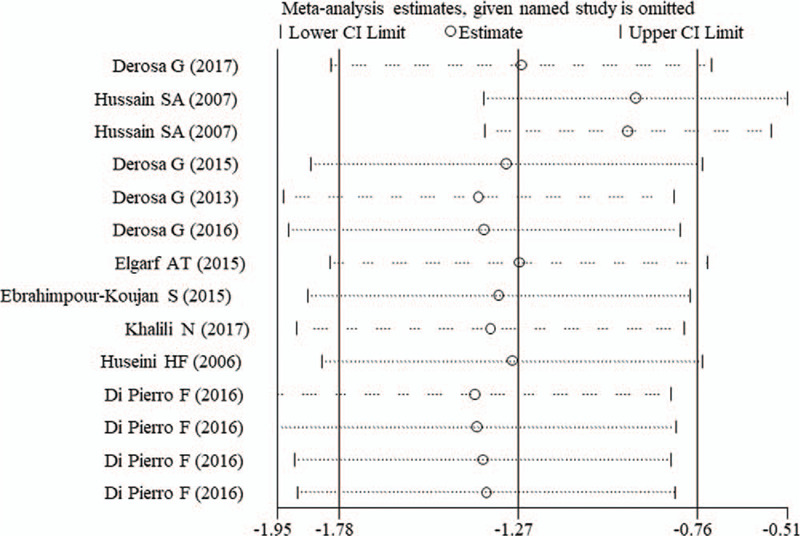
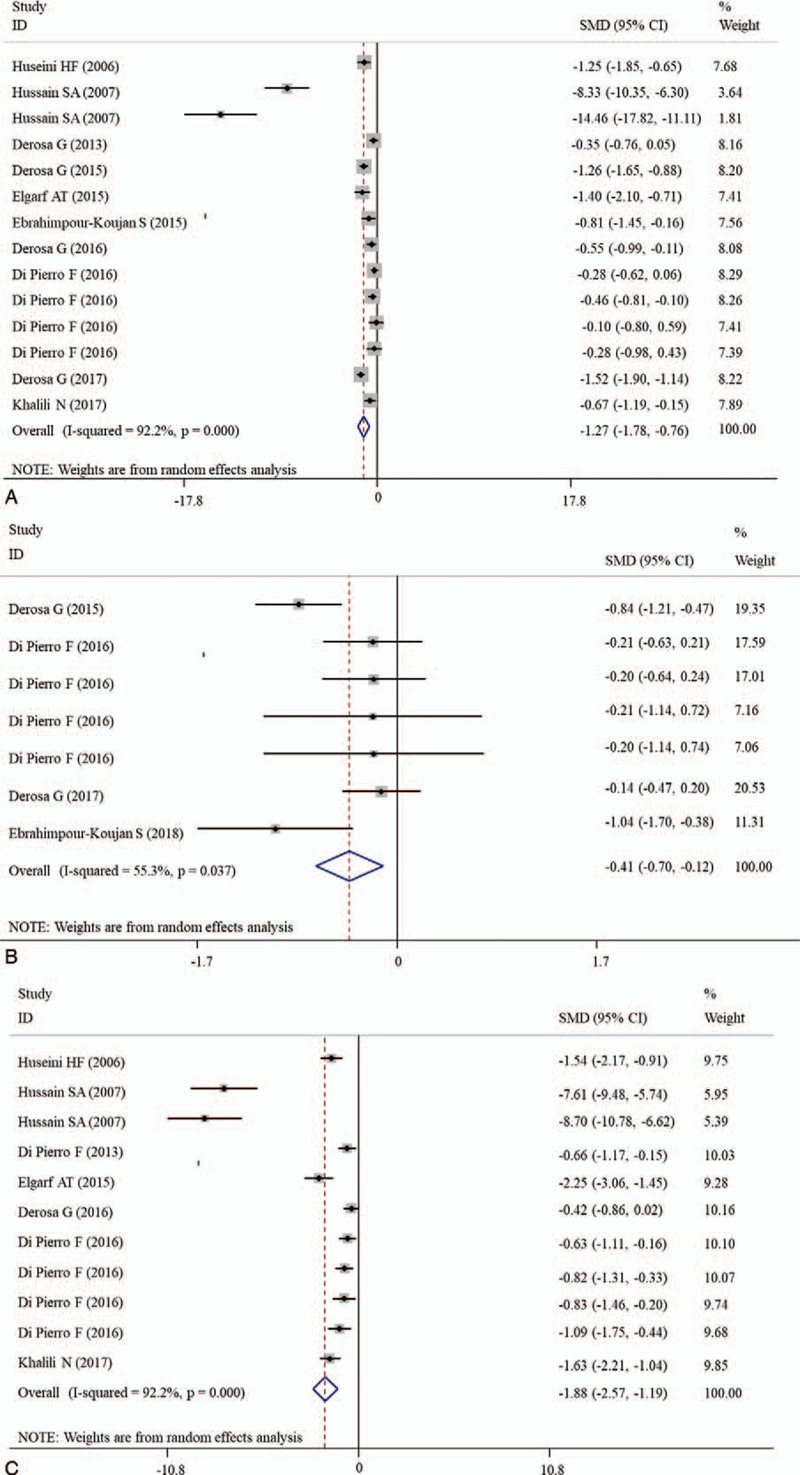
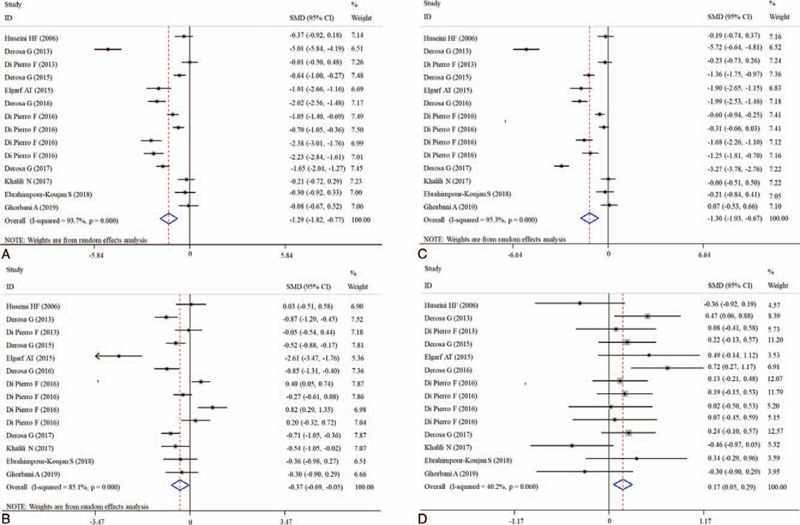
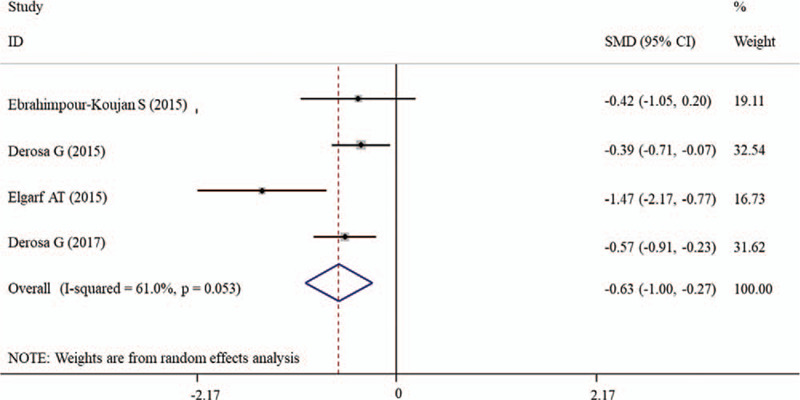
Sixteen studies involving 1358 patients were identified. Overall meta-analysis showed that compared with control, silymarin significantly reduced levels of fasting blood glucose (SMD: -1.27, 95% CI = [-1.78, -0.76]; P < .001), homeostatic model assessment for insulin resistance (SMD: -0.41, 95% CI = [-0.70, -0.12]; P = .005), hemoglobin A1c (SMD: -1.88, 95% CI = [-2.57, -1.20]; P < .001), total cholesterol (SMD: -1.13, 95% CI = [-1.82, -0.77]; P < .001), triglyceride (SMD: -0.37, 95% CI = [-0.69, -0.05]; P = .025), low-density lipoprotein-cholesterol (SMD: -1.30, 95% CI = [-1.93, -0.67]; P < .001), C-reactive protein (SMD: -0.63, 95% CI = [-1.01, -0.27]; P = .001), and increased high-density lipoprotein-cholesterol (SMD: 0.17, 95% CI = [0.05, 0.29]; P = .005), but had no impacts on function indicators of liver and kidney (alanine transaminase, aspartate aminotransferase, creatinine phosphokinase, creatinine) and the complication rate. Subgroup analyses indicated that insulin (which was negative in overall analysis) was significantly decreased in patients undergoing silymarin monotherapy (SMD: -2.03, 95% CI = [-3.03, -1.04]; P = .044) for more than 3 months (SMD: -0.01, 95% CI = [-0.25, -0.24]; P = .035).
Supplementation of silymarin may be effective and safe for the management of diabetes mellitus and hyperlipidemia.
采用荟萃分析全面评估水飞蓟宾对糖脂代谢功能障碍患者的治疗效果及安全性。
截至2019年10月1日,在PubMed、EMBASE和Cochrane图书馆数据库中进行系统的文献检索。使用STATA 13.0软件估计合并标准化均数差(SMD)和95%置信区间(95%CI)。
共纳入16项研究,涉及1358例患者。总体荟萃分析显示,与对照组相比,水飞蓟宾显著降低空腹血糖水平(SMD:-1.27,95%CI=[-1.78,-0.76];P<.001)、胰岛素抵抗稳态模型评估值(SMD:-0.41,95%CI=[-0.70,-0.12];P=.005)、糖化血红蛋白(SMD:-1.88,95%CI=[-2.57,-1.20];P<.001)、总胆固醇(SMD:-1.13,95%CI=[-1.82,-0.77];P<.001)、甘油三酯(SMD:-0.37,95%CI=[-0.69,-0.05];P=.025)、低密度脂蛋白胆固醇(SMD:-1.30,95%CI=[-1.93,-0.67];P<.001)、C反应蛋白(SMD:-0.63,95%CI=[-1.01,-0.27];P=.001),并升高高密度脂蛋白胆固醇(SMD:0.17,95%CI=[0.05,0.29];P=.005),但对肝肾功能指标(丙氨酸转氨酶、天冬氨酸转氨酶、肌酸磷酸激酶、肌酐)及并发症发生率无影响。亚组分析表明,接受水飞蓟宾单药治疗超过3个月的患者胰岛素水平(在总体分析中为阴性)显著降低(SMD:-2.03,95%CI=[-3.03,-1.04];P=.044)。
补充水飞蓟宾可能对糖尿病和高脂血症的治疗有效且安全。