Section for Translational Research in Retinal and Macular Degeneration.
Neurobiology-Neurodegeneration and Repair Laboratory, and.
Hum Gene Ther. 2021 Jul;32(13-14):667-681. doi: 10.1089/hum.2020.213. Epub 2020 Dec 14.
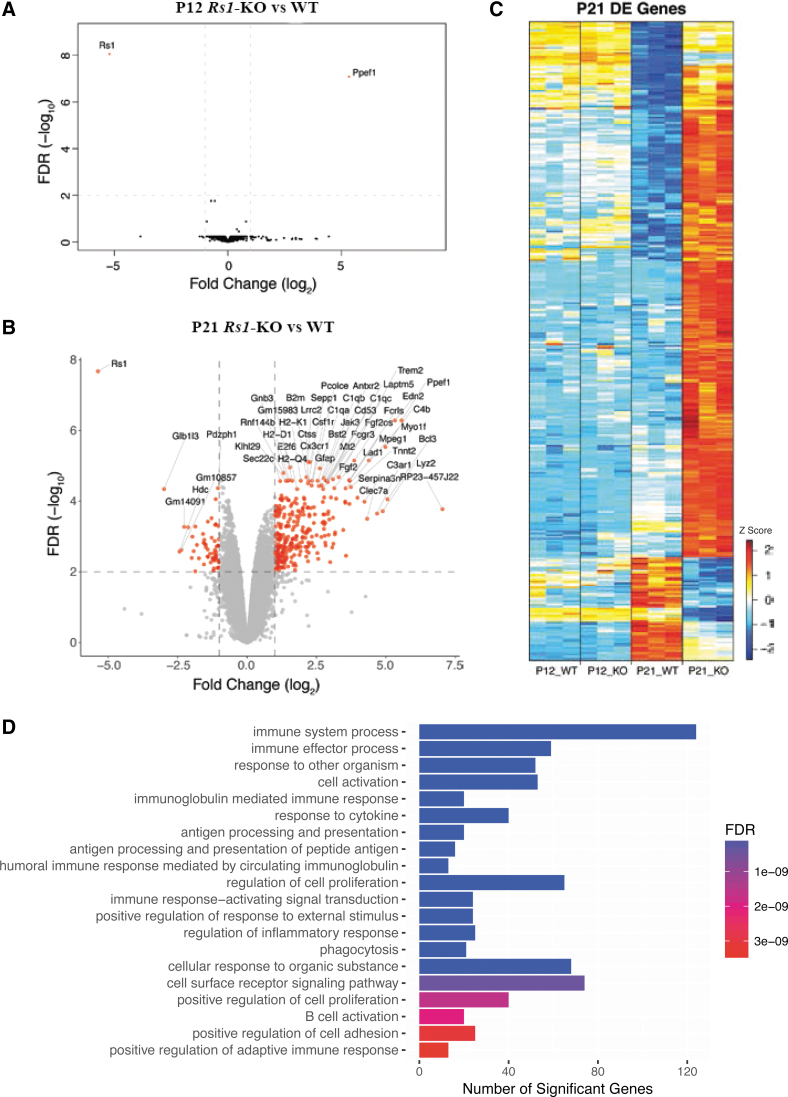
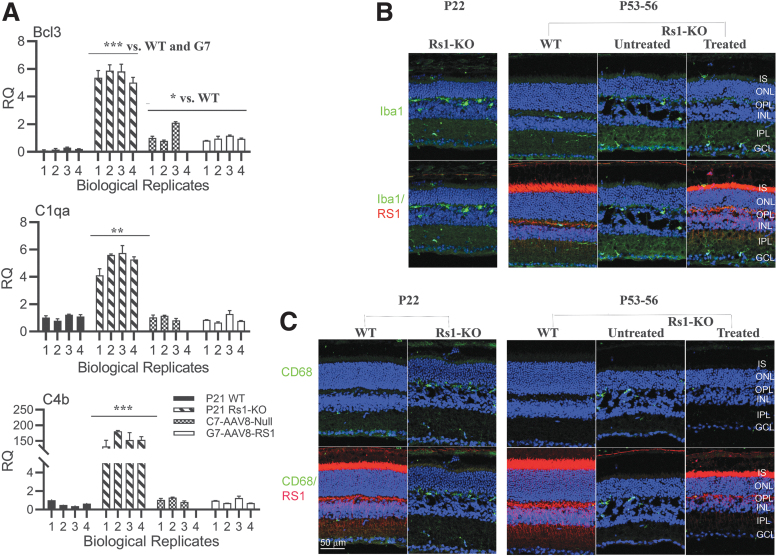
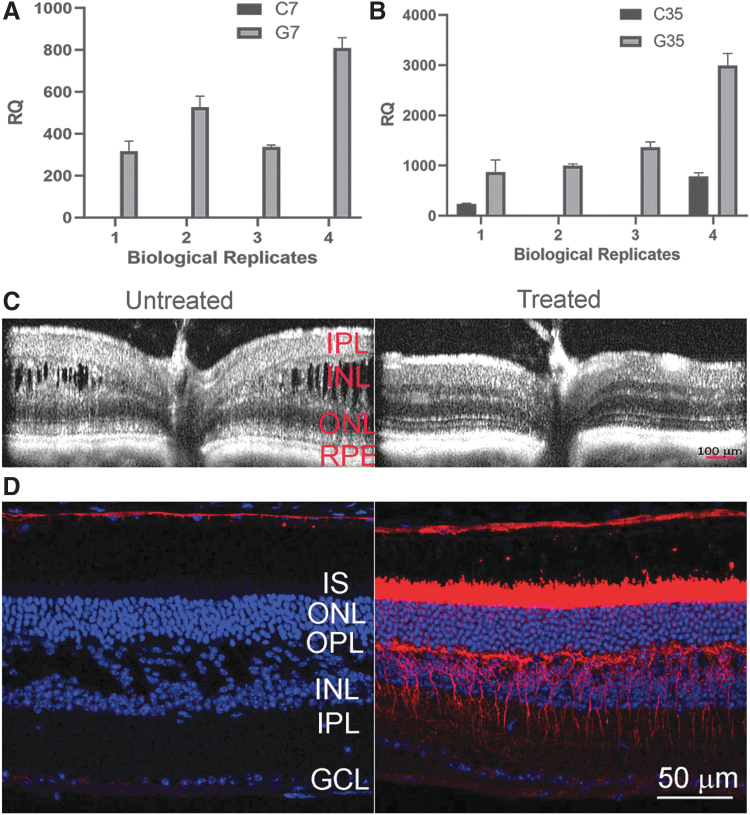
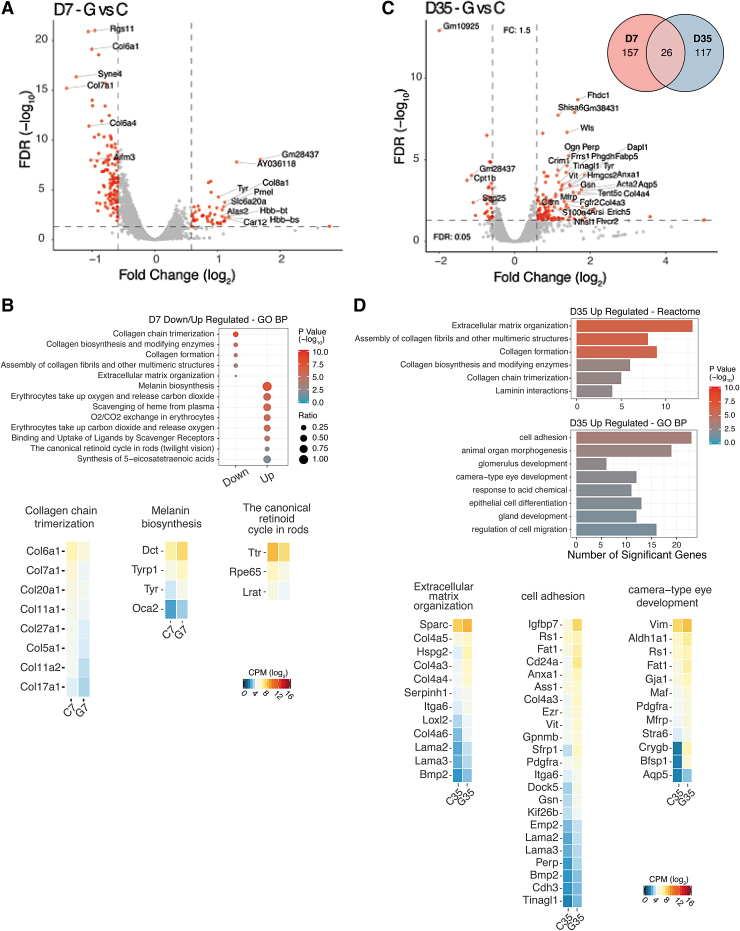
To understand gene interaction networks in the X-linked retinoschisis (XLRS) mouse retina (), we analyzed the transcriptome by RNA sequencing before and after expression of exogenous retinoschisin () gene delivered by AAV8. RS1 is a secreted cell adhesion protein that is critical for maintaining structural lamination and synaptic integrity of the neural retina. loss-of-function mutations cause XLRS disease in young boys and men, with splitting ("schisis") of retinal layers and synaptic dysfunction that cause progressive vision loss with age. Analysis of differential gene expression profiles and pathway enrichment analysis of -KO () retina identified cell surface receptor signaling and positive regulation of cell adhesion as potential gene interaction networks. Most importantly, it also showed massive dysregulation of immune response genes at early age, with characteristics of a microglia-driven proinflammatory state. Delivery of AAV8- primed the -KO retina toward structural and functional recovery. The disease transcriptome transitioned toward a recovery phase with upregulation of genes implicated in wound healing, anatomical structure (camera type eye) development, metabolic pathways, and collagen IV networks that provide mechanical stability to basement membrane. AAV8- expression also attenuated the microglia gene signatures to low levels toward immune quiescence. This study is among the first to identify gene interaction networks that underlie retinal structural and functional recovery after gene therapy. Significantly, it also shows that providing wild-type gene function caused the retina immune status to transition from a degenerative inflammatory phenotype toward immune quiescence, even though the transgene is not directly linked to microglia function. This study indicates that inhibition of microglial proinflammatory responses is an integral part of therapeutic rescue in XLRS gene therapy, and gene therapy might realize its full potential if delivered before microglia activation and photoreceptor cell death. Clinical Trials. gov Identifier NTC 02317887.
为了理解 X 连锁性视网膜劈裂症(XLRS)小鼠视网膜中的基因交互网络(),我们在通过 AAV8 递送外源性视蛋白基因表达前后通过 RNA 测序分析了转录组。RS1 是一种分泌型细胞黏附蛋白,对于维持神经视网膜的结构分层和突触完整性至关重要。功能丧失突变导致年轻男孩和男性的 XLRS 疾病,视网膜层分裂(“劈裂”)和突触功能障碍导致随着年龄的增长进行性视力丧失。对- KO()视网膜的差异基因表达谱和通路富集分析的分析确定了细胞表面受体信号和细胞黏附的正调节作为潜在的基因交互网络。最重要的是,它还显示出在早期大量免疫反应基因失调,具有小胶质细胞驱动的促炎状态的特征。AAV8-的递送促使 -KO 视网膜向结构和功能恢复。疾病转录组向恢复阶段过渡,上调与伤口愈合、解剖结构(相机型眼)发育、代谢途径和提供基底膜机械稳定性的 IV 型胶原网络相关的基因。AAV8-的表达还将小胶质细胞基因特征下调至低水平,以达到免疫静止状态。这项研究是首批鉴定基因交互网络的研究之一,这些网络是基因治疗后视网膜结构和功能恢复的基础。重要的是,它还表明,提供野生型基因功能会导致视网膜免疫状态从退行性炎症表型向免疫静止状态转变,即使转基因与小胶质细胞功能没有直接联系。这项研究表明,抑制小胶质细胞的促炎反应是 XLRS 基因治疗中治疗性挽救的一个组成部分,如果在小胶质细胞激活和光感受器细胞死亡之前进行基因治疗,基因治疗可能会发挥其全部潜力。临床试验。gov 标识符 NTC 02317887。