Astorkia Maider, Liu Yang, Pedrosa Erika M, Lachman Herbert M, Zheng Deyou
Department of Genetics, Albert Einstein College of Medicine, Bronx, NY, USA.
Department of Psychiatry and Behavioral Science, Albert Einstein College of Medicine, Bronx, NY, USA.
Heliyon. 2024 Jul 18;10(14):e34862. doi: 10.1016/j.heliyon.2024.e34862. eCollection 2024 Jul 30.
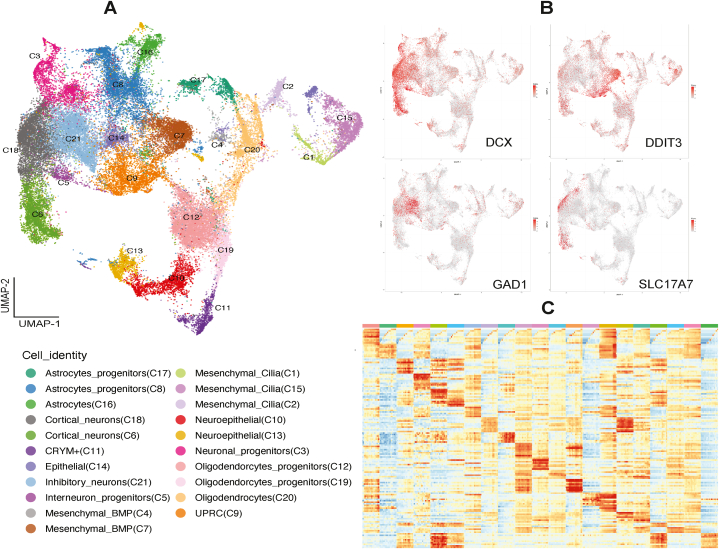
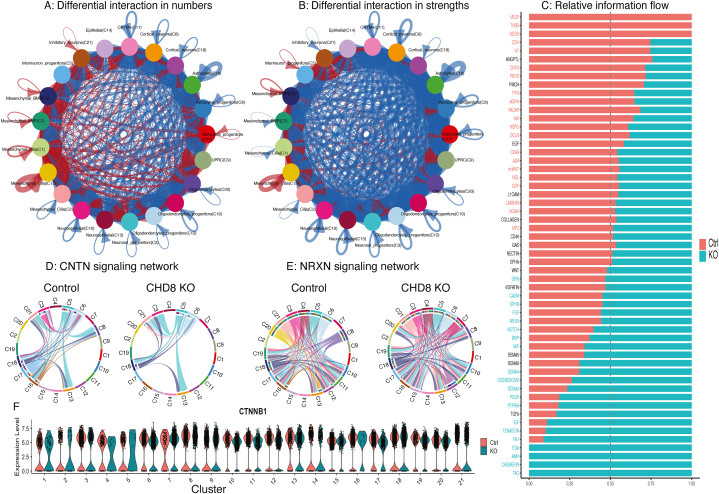
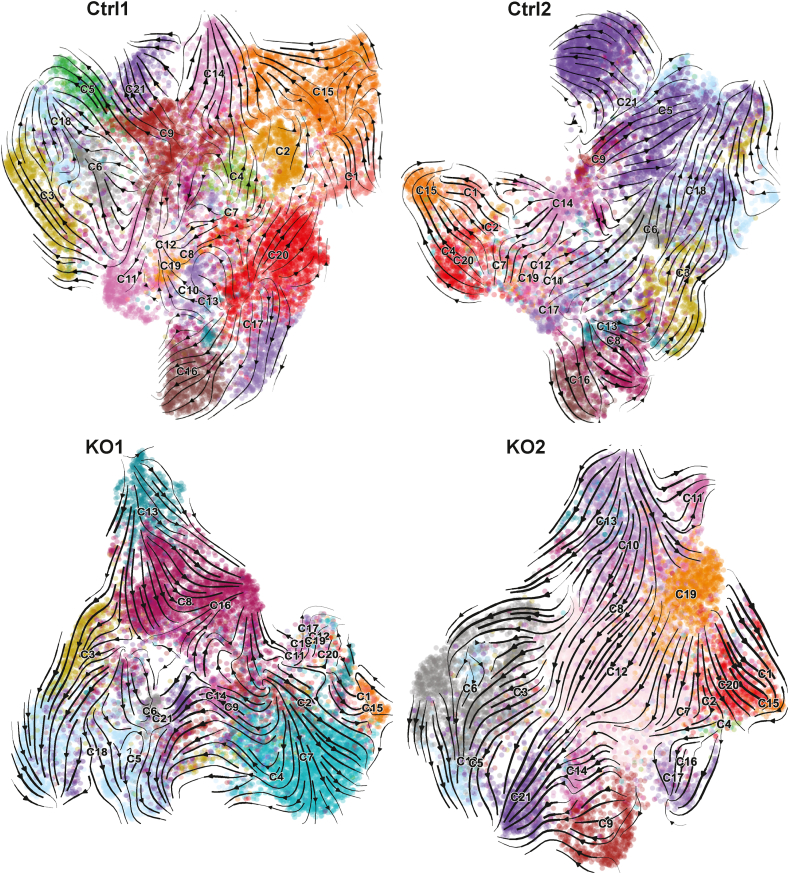
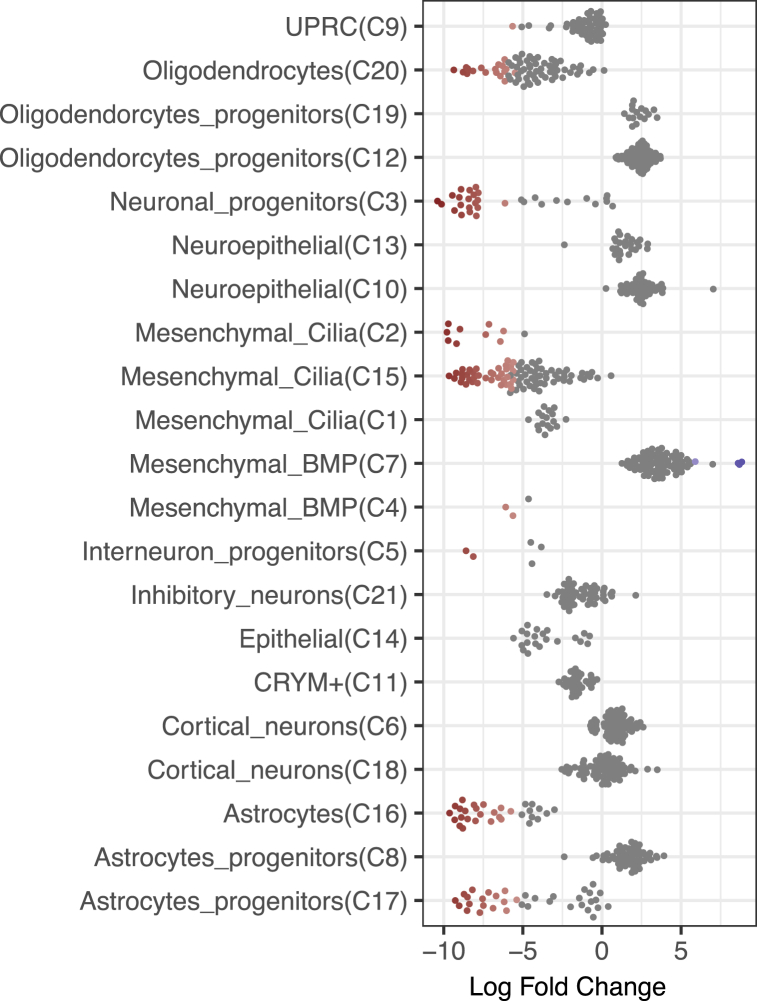
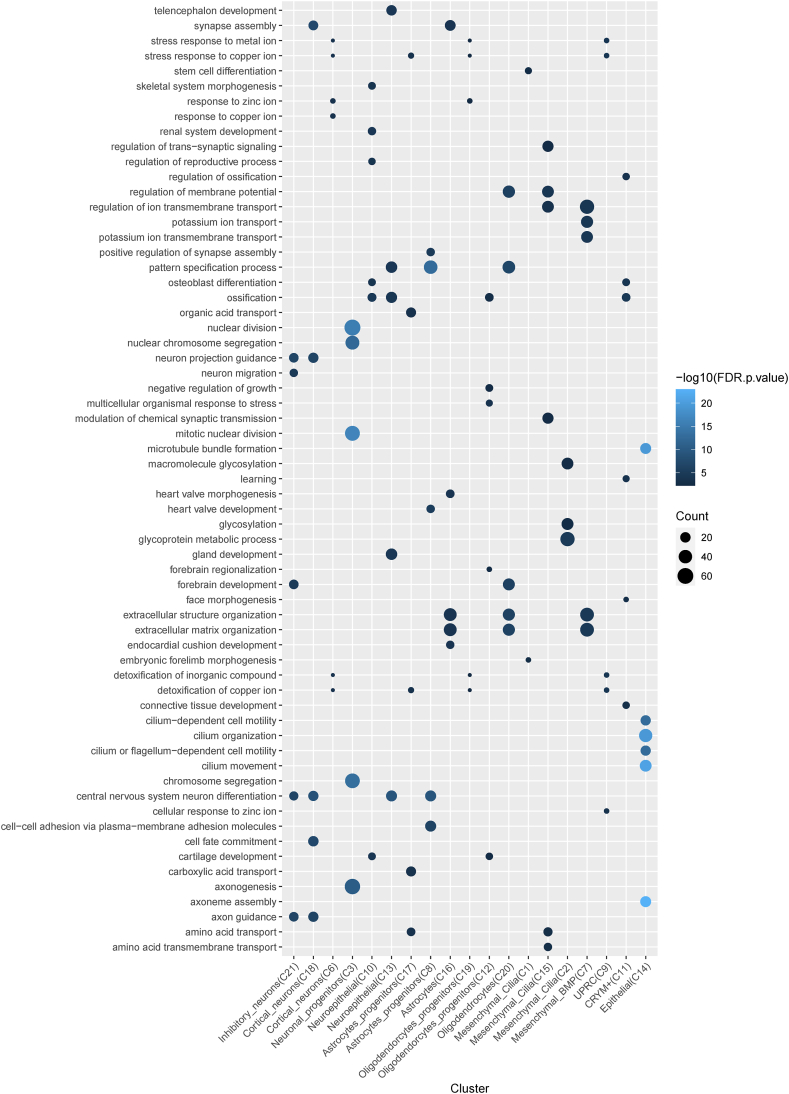
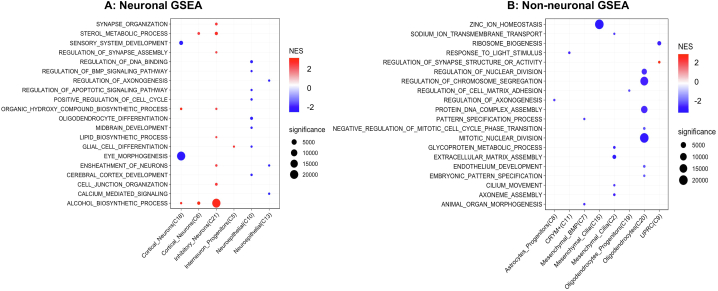
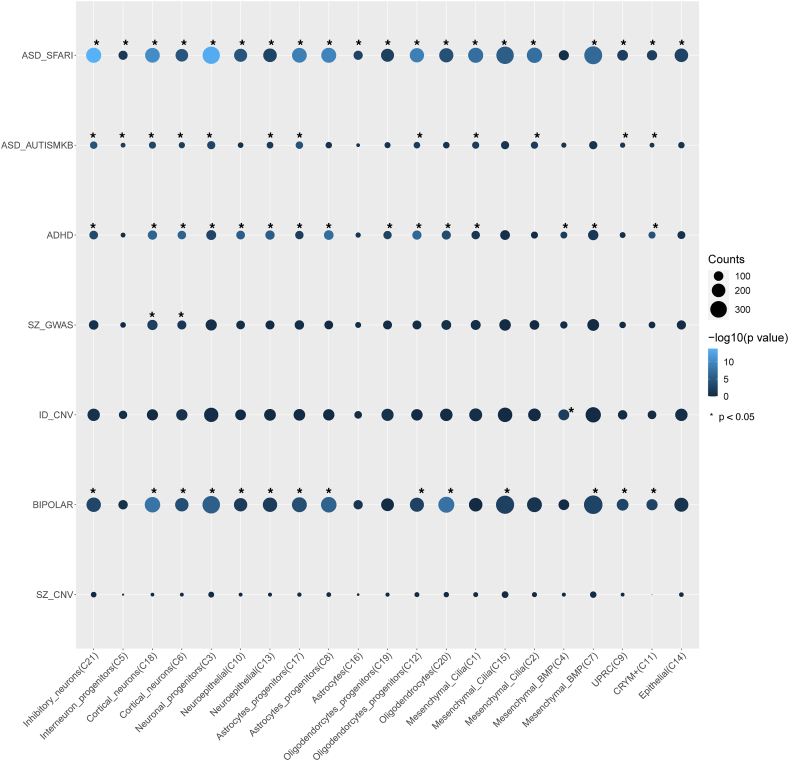
More than 100 genes have been associated with significantly increased risks of autism spectrum disorders (ASD) with an estimate of ∼1000 genes that may contribute. The new challenge is to investigate the molecular and cellular functions of these genes during neural and brain development, and then even more challenging, to link the altered molecular and cellular phenotypes to the ASD clinical manifestations. In this study, we used single-cell RNA-seq analysis to study one of the top risk genes, , in cerebral organoids, which models early neural development. We identified 21 cell clusters in the organoid samples, representing non-neuronal cells, neural progenitors, and early differentiating neurons at the start of neural cell fate commitment. Comparisons of the cells with one copy of a knockout allele, generated by CRISPR/Cas9 editing, and their isogenic controls uncovered thousands of differentially expressed genes, which were enriched with functions related to neural and brain development, cilium organization, and extracellular matrix organization. The affected genes were also enriched with genes and pathways previously implicated in ASD, but surprisingly not for schizophrenia and intellectual disability risk genes. The comparisons also uncovered cell composition changes, indicating potentially altered neural differential trajectories upon reduction. Moreover, we found that cell-cell communications were affected in the knockout organoids, including the interactions between neural and glial cells. Taken together, our results provide new data and information for understanding CHD8 functions in the early stages of neural lineage development and interaction.
超过100个基因与自闭症谱系障碍(ASD)风险显著增加相关,估计可能有1000个基因起作用。新的挑战是研究这些基因在神经和大脑发育过程中的分子和细胞功能,更具挑战性的是,将改变的分子和细胞表型与ASD临床表现联系起来。在本研究中,我们使用单细胞RNA测序分析来研究大脑类器官中一个最主要的风险基因,大脑类器官可模拟早期神经发育。我们在类器官样本中鉴定出21个细胞簇,代表神经细胞命运决定开始时的非神经元细胞、神经祖细胞和早期分化神经元。通过CRISPR/Cas9编辑产生的带有一个拷贝敲除等位基因的细胞与其同基因对照的比较,发现了数千个差异表达基因,这些基因富集了与神经和大脑发育、纤毛组织和细胞外基质组织相关的功能。受影响的基因还富集了先前与ASD相关的基因和通路,但令人惊讶的是,与精神分裂症和智力残疾风险基因无关。这些比较还发现了细胞组成的变化,表明基因敲除后神经分化轨迹可能发生改变。此外,我们发现基因敲除的类器官中细胞间通讯受到影响,包括神经细胞和神经胶质细胞之间的相互作用。总之,我们的结果为理解CHD8在神经谱系发育和相互作用早期阶段的功能提供了新的数据和信息。