School of Life Sciences, College of Agriculture, Engineering and Sciences, University of KwaZulu-Natal, Westville Campus, Durban, South Africa.
One Health Center for Zoonoses and Tropical Veterinary Medicine, Ross University School of Veterinary Medicine, Basseterre, West Indies, Saint Kitts and Nevis.
Exp Appl Acarol. 2020 Dec;82(4):529-541. doi: 10.1007/s10493-020-00555-6. Epub 2020 Oct 6.
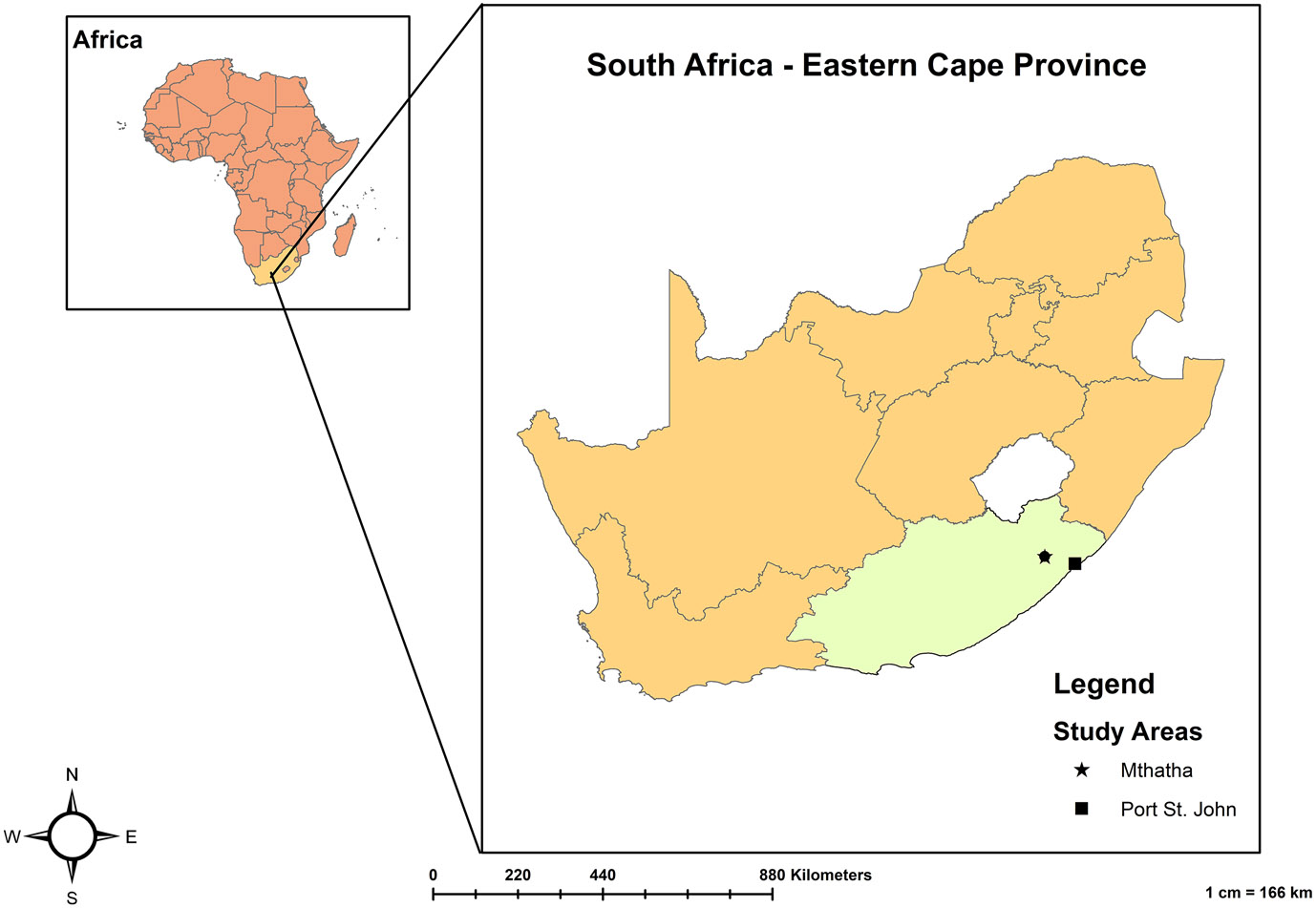
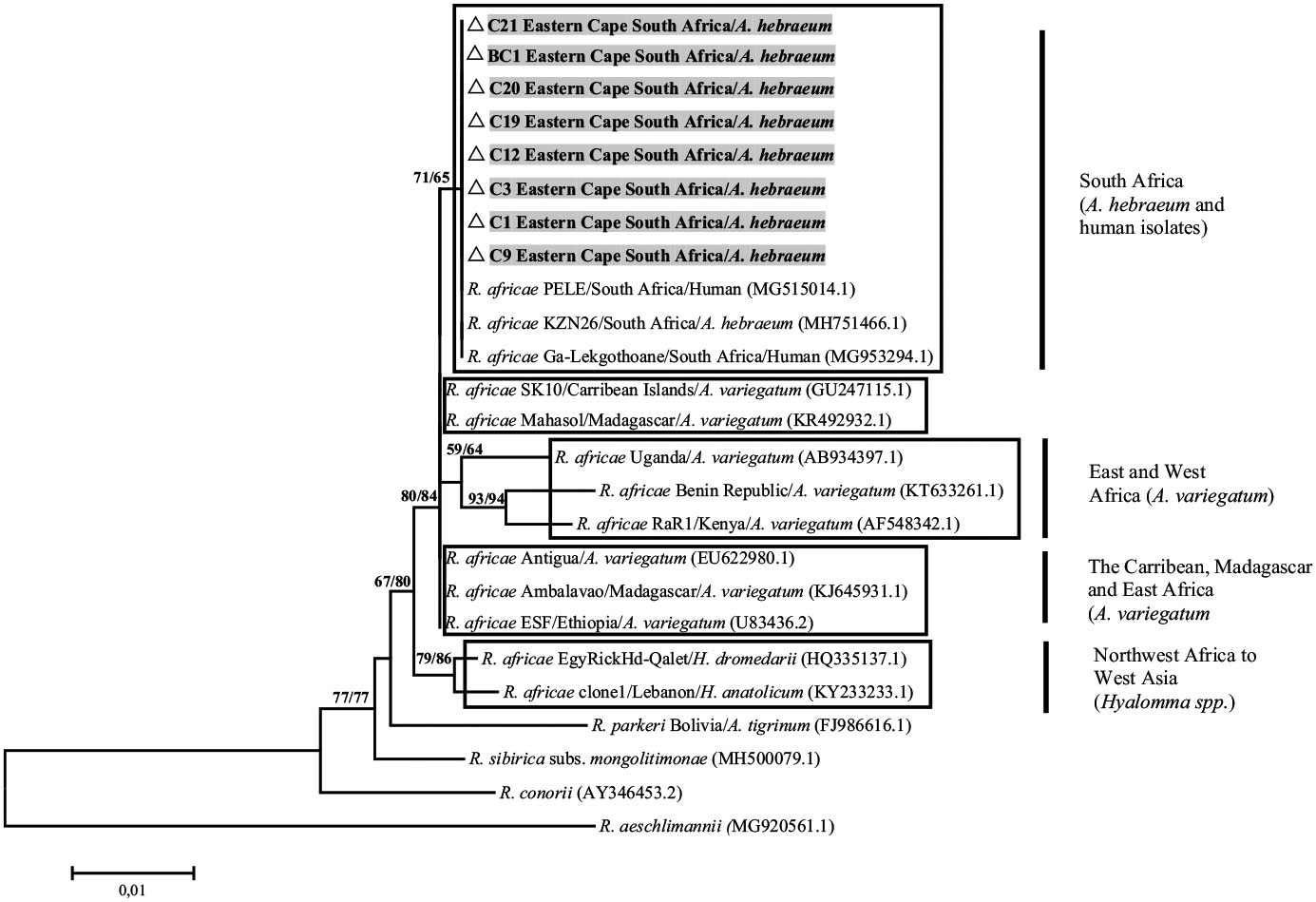
Rickettsia africae is a re-emerging tick-borne pathogen causing African tick bite fever (ATBF) in humans. Amblyomma variegatum is the principal vector in most sub-Sahara African countries, whereas in South Africa it is A. hebraeum. Reports of high genetic heterogeneity among R. africae isolates in southern Africa have prompted the need for molecular investigations of isolates form South Africa. Therefore, this study aimed to determine the prevalence and genetic diversity of R. africae in A. hebraeum collected from cattle, grazing pasture, as well as from blood of cattle in the Eastern Cape Province of South Africa. Amblyomma hebraeum and blood from cattle were screened by PCR and the gltA, ompA, ompB, sca4, and 17kDa genes were sequenced for R. africae from samples collected from Caquba in Port St. Johns along the coastal region in the Eastern Cape province of South Africa. The overall proportion of adult A. hebraeum that were positive for the gltA and ompA genes was 0.63 (108/180). The overall proportion of nymphs positive for the gltA and ompA genes was 0.62 (23/37) and 0.22 (20/90) from cattle blood. A positive R. africae infection was inferred by analysis of 26 sequences of the ompA, gltA, ompB, 17kDa and sca4 genes. Neighbour-joining and Maximum Likelihood analysis revealed that the study isolates were closely related to R. africae isolates from South Africa deposited in GenBank, forming a clade that was separate from north, east and west African strains. This study provides new information on the epidemiology and phylogeny of R. africae isolated from A. hebraeum ticks in the Eastern Cape province of South Africa. The heterogeneity observed between R. africae isolates from South Africa deposited in GenBank and R. africae isolates from Africa retrieved from Genbank highlight the importance of differentiation and tracking of the genetic movement among R. africae isolates in southern Africa for the better characterisation of ATBF cases, especially in rural communities and travellers visiting the region.
非洲立克次体是一种重新出现的蜱传病原体,可导致人类感染非洲蜱咬热(ATBF)。在大多数撒哈拉以南非洲国家,主要的传播媒介是变色革蜱(Amblyomma variegatum),而在南非则是希伯革蜱(A. hebraeum)。南部非洲的立克次体分离株存在高度遗传异质性的报道促使人们需要对立克次体分离株进行分子研究。因此,本研究旨在确定南非东开普省牛群中的希伯革蜱(A. hebraeum)以及放牧牧场中的蜱和牛血中分离的立克次体的流行情况和遗传多样性。在南非东开普省沿海地区的圣约翰港(Port St. Johns)的卡夸巴(Caquba),采用 PCR 方法对采集的蜱和牛血样本进行了筛查,并对来自样本的 gltA、ompA、ompB、sca4 和 17kDa 基因进行了测序。结果显示,gltA 和 ompA 基因阳性的成蜱比例为 0.63(108/180),gltA 和 ompA 基因阳性的若蜱比例为 0.62(23/37)和 0.22(20/90)。根据 ompA、gltA、ompB、17kDa 和 sca4 基因的 26 个序列分析,推断出立克次体的阳性感染。邻接法和最大似然法分析显示,本研究的分离株与保存在 GenBank 中的南非立克次体分离株密切相关,形成了一个与北非、东非和西非分离株分开的分支。本研究为南非东开普省希伯革蜱(A. hebraeum)携带的立克次体的流行病学和系统发育提供了新信息。在 GenBank 中保存的南非立克次体分离株和从 Genbank 中检索到的非洲立克次体分离株之间观察到的异质性突出了区分和跟踪南非立克次体分离株之间遗传运动的重要性,这有助于更好地描述 ATBF 病例,尤其是在农村社区和前往该地区的旅行者中。