Bagratuni Tina, Patseas Dimitrios, Mavrianou-Koutsoukou Nefeli, Liacos Christine Ivy, Sklirou Aimilia D, Rousakis Pantelis, Gavriatopoulou Maria, Terpos Evangelos, Tsitsilonis Ourania E, Trougakos Ioannis P, Kastritis Efstathios, Dimopoulos Meletios A
Department of Clinical Therapeutics, School of Medicine, National and Kapodistrian University of Athens, 11528 Athens, Greece.
Department of Cell Biology and Biophysics, Faculty of Biology, National and Kapodistrian University of Athens, 15784 Athens, Greece.
Cancers (Basel). 2020 Oct 5;12(10):2864. doi: 10.3390/cancers12102864.
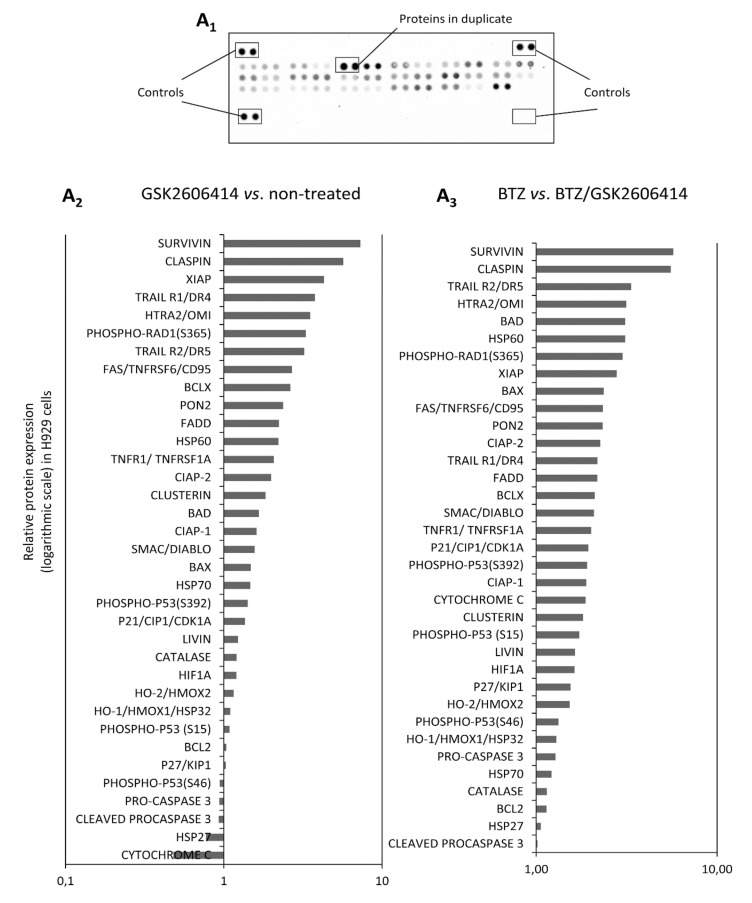
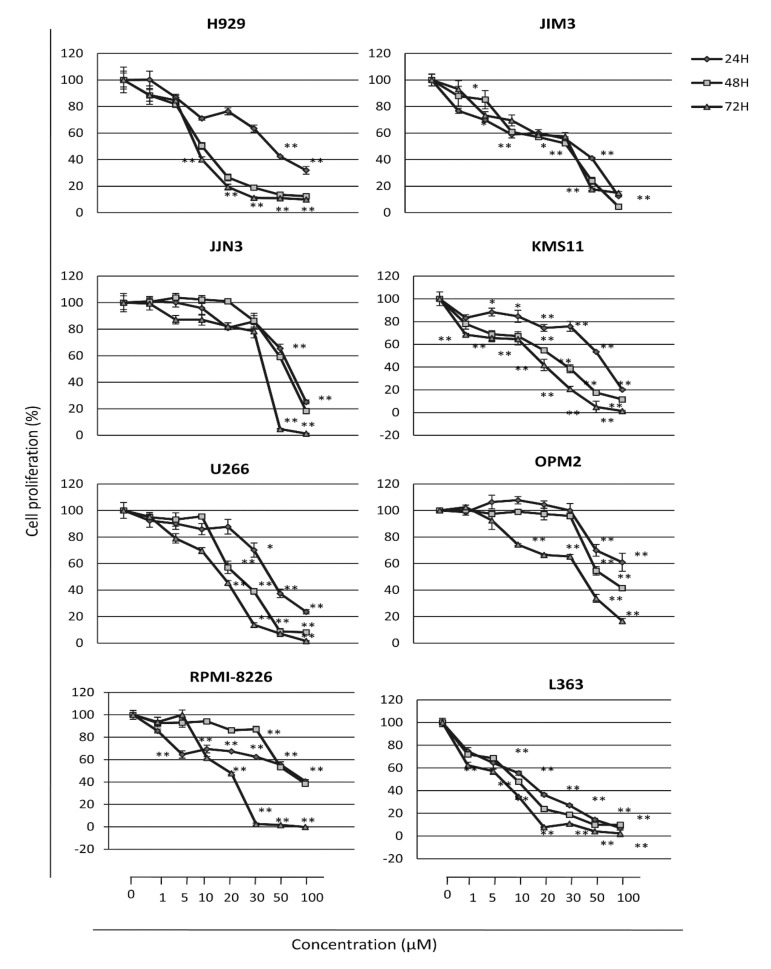
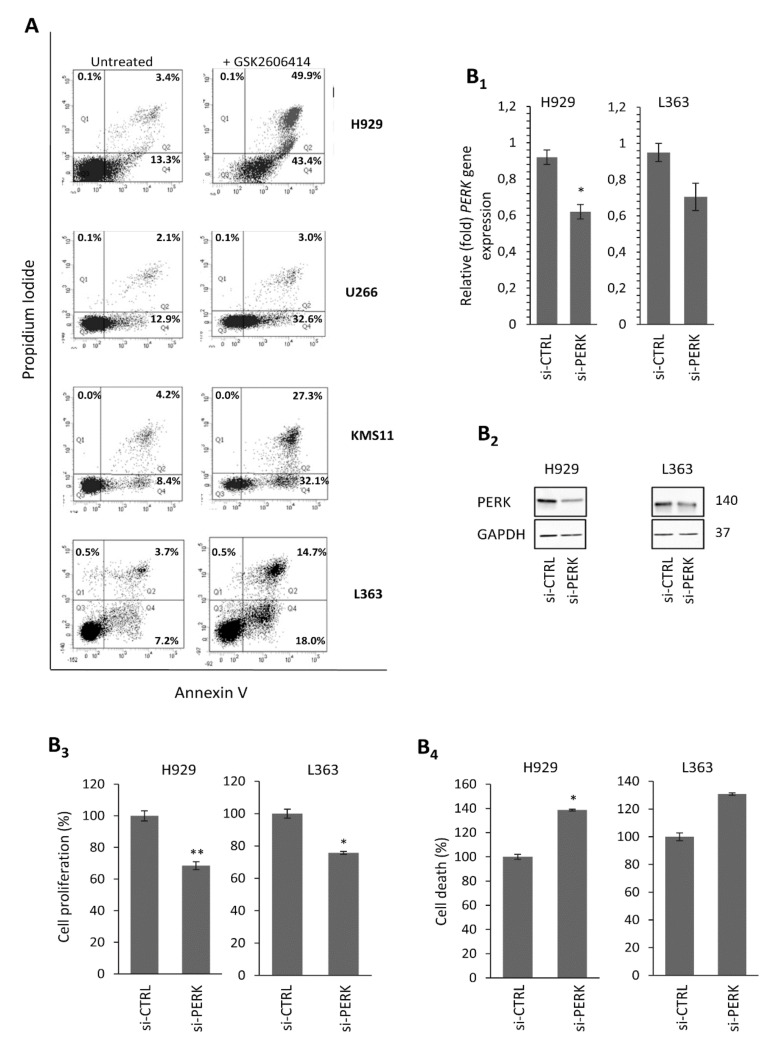
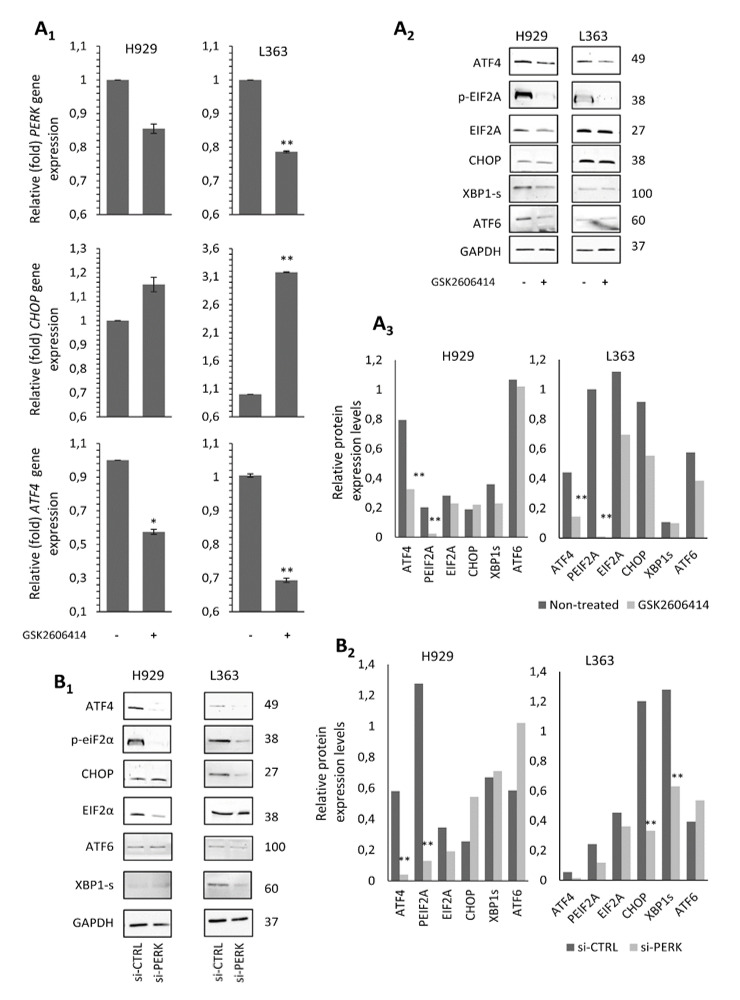
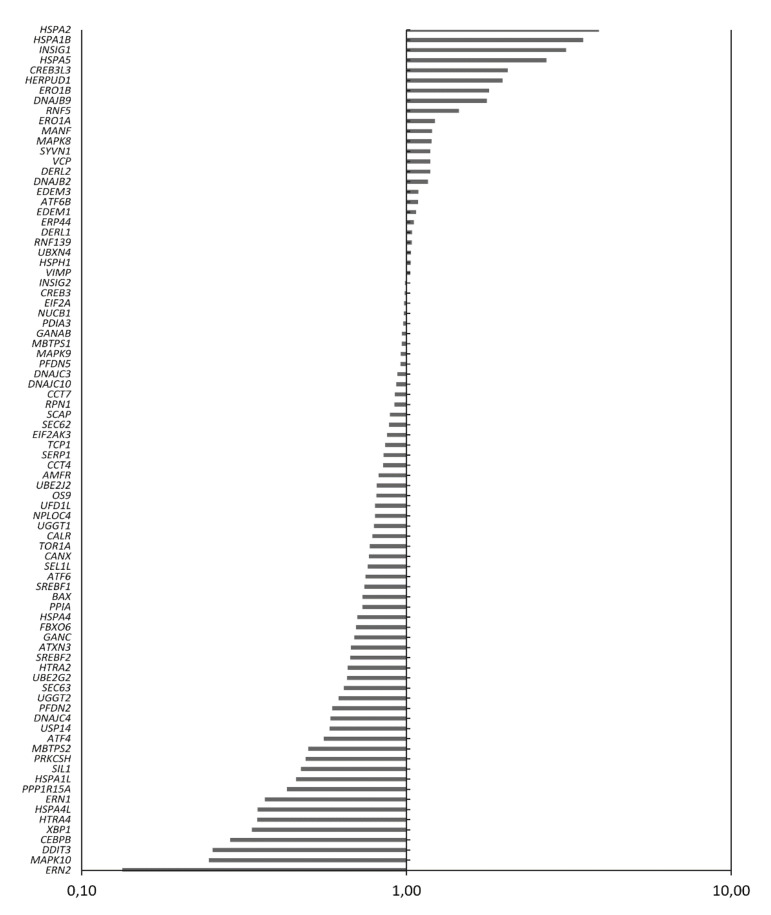
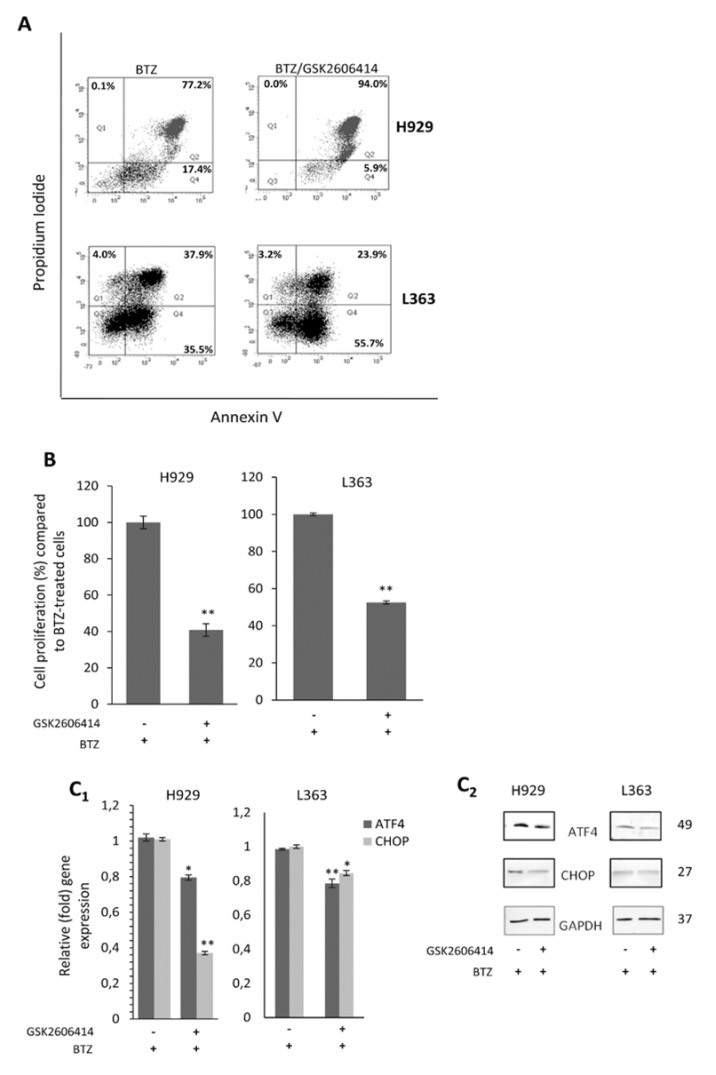
Due to increased immunoglobulin production and uncontrolled proliferation, multiple myeloma (MM) plasma cells develop a phenotype of deregulated unfolded protein response (UPR). The eIF2-alpha kinase 3 [EIF2αK3, protein kinase R (PKR)-like ER kinase (PERK)], the third known sensor of endoplasmic reticulum (ER) stress, is a serine-threonine kinase and, like the other two UPR-related proteins, i.e., IRE1 and ATF6, it is bound to the ER membrane. MM, like other tumors showing uncontrolled protein secretion, is highly dependent to UPR for survival; thus, inhibition of PERK can be an effective strategy to suppress growth of malignant plasma cells. Here, we have used GSK2606414, an ATP-competitive potent PERK inhibitor, and found significant anti-proliferative and apoptotic effects in a panel of MM cell lines. These effects were accompanied by the downregulation of key components of the PERK pathway as well as of other UPR elements. Consistently, gene expression silencing significantly increased cell death in MM cells, highlighting the importance of PERK signaling in MM biology. Moreover, GSK2606414, in combination with the proteasome inhibitor bortezomib, exerted an additive toxic effect in MM cells. Overall, our data suggest that PERK inhibition could represent a novel combinatorial therapeutic approach in MM.
由于免疫球蛋白产生增加和不受控制的增殖,多发性骨髓瘤(MM)浆细胞形成了未折叠蛋白反应(UPR)失调的表型。真核生物翻译起始因子2α激酶3 [EIF2αK3,蛋白激酶R(PKR)样内质网激酶(PERK)]是内质网(ER)应激的第三个已知感受器,它是一种丝氨酸 - 苏氨酸激酶,与其他两个UPR相关蛋白即IRE1和ATF6一样,它与内质网膜结合。与其他显示不受控制的蛋白质分泌的肿瘤一样,MM高度依赖UPR来维持生存;因此,抑制PERK可能是抑制恶性浆细胞生长的有效策略。在这里,我们使用了ATP竞争性强效PERK抑制剂GSK2606414,并在一组MM细胞系中发现了显著的抗增殖和凋亡作用。这些作用伴随着PERK途径关键成分以及其他UPR元件的下调。一致地,基因表达沉默显著增加了MM细胞的死亡,突出了PERK信号在MM生物学中的重要性。此外,GSK2606414与蛋白酶体抑制剂硼替佐米联合使用,在MM细胞中发挥了相加毒性作用。总体而言,我们的数据表明PERK抑制可能代表MM中的一种新型联合治疗方法。