Industrial and Systems Engineering, Texas A&M University, College Station, Texas, USA
Center for Outcomes Research, Houston Methodist Hospital, Houston, Texas, USA.
BMJ Qual Saf. 2021 Sep;30(9):715-721. doi: 10.1136/bmjqs-2020-011604. Epub 2020 Oct 7.
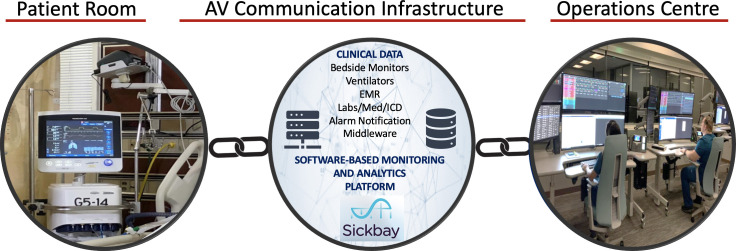
When the COVID-19 pandemic restricted visitation between intensive care unit patients and their families, the virtual intensive care unit (vICU) in our large tertiary hospital was adapted to facilitate virtual family visitation. The objective of this paper is to document findings from interviews conducted with family members on three categories: (1) feelings experienced during the visit, (2) barriers, challenges or concerns faced using this service, and (3) opportunities for improvements.
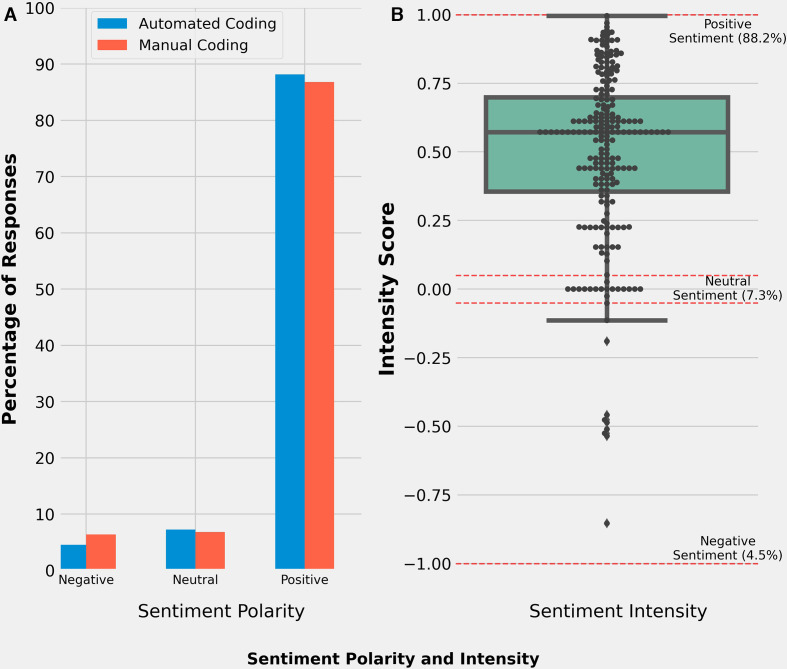
Family members were interviewed postvisit via phone. For category 1 (feelings), automated analysis in Python using the Valence Aware Dictionary for sentiment Reasoner package produced weighted valence (extent of positive, negative or neutral emotive connotations) of the interviewees' word choices. Outputs were compared with a manual coder's valence ratings to assess reliability. Two raters conducted inductive thematic analysis on the notes from these interviews to analyse categories 2 (barriers) and 3 (opportunities).
Valence-based and manual sentiment analysis of 230 comments received on feelings showed over 86% positive sentiments (88.2% and 86.8%, respectively) with some neutral (7.3% and 6.8%) and negative (4.5% and 6.4%) sentiments. The qualitative analysis of data from 57 participants who commented on barriers showed four primary concerns: inability to communicate due to patient status (44% of respondents); technical difficulties (35%); lack of touch and physical presence (11%); and frequency and clarity of communications with the care team (11%). Suggested improvements from 59 participants included: on demand access (51%); improved communication with the care team (17%); improved scheduling processes (10%); and improved system feedback and technical capabilities (17%).
Use of vICU for remote family visitations evoked happiness, joy, gratitude and relief and a sense of closure for those who lost loved ones. Identified areas for concern and improvement should be addressed in future implementations of telecritical care for this purpose.
在 COVID-19 大流行限制重症监护病房患者及其家属探访期间,我们的大型三级医院的虚拟重症监护病房(vICU)被调整以方便虚拟家庭探访。本文的目的是记录对三类家属进行访谈的结果:(1)探访期间的感受,(2)使用该服务面临的障碍、挑战或问题,以及(3)改进的机会。
探访后,通过电话对家属进行访谈。类别 1(感受)使用 Python 中的自动分析,使用情感推理的情感意识词典包对受访者的用词产生加权情感(积极、消极或中性情感内涵的程度)。输出结果与手动编码员的情感评分进行比较,以评估可靠性。两位评审员对这些访谈的笔记进行了归纳主题分析,以分析类别 2(障碍)和 3(机会)。
对 230 条关于感受的评论进行基于情感的分析和手动情感分析,结果显示超过 86%的积极情感(分别为 88.2%和 86.8%),有些中性(7.3%和 6.8%)和消极(4.5%和 6.4%)的情感。对 57 名对障碍发表评论的参与者进行的数据定性分析显示了四个主要问题:由于患者状况导致无法沟通(44%的受访者);技术困难(35%);缺乏触摸和身体存在(11%);以及与护理团队的沟通频率和清晰度(11%)。59 名参与者提出的改进建议包括:按需访问(51%);改善与护理团队的沟通(17%);改善调度流程(10%);以及改善系统反馈和技术能力(17%)。
使用 vICU 进行远程家庭探访为那些失去亲人的人带来了幸福、喜悦、感激和安慰,也带来了一种解脱感。对于这种远程重症监护的目的,应在未来的远程重症监护实施中解决所关注的问题和改进的领域。