Park Clara Yongjoo, Jo Garam, Lee Juhee, Singh Gitanjali M, Lee Jong-Tae, Shin Min-Jeong
Department of Food and Nutrition, Human Ecology Research Institute, Chonnam National University, Gwangju 61186, Korea.
Department of Public Health Sciences, BK21PLUS Program in Embodiment: Health-Society Interaction, Graduate School, Korea University, Seoul 02841, Korea.
Nutr Res Pract. 2020 Oct;14(5):501-518. doi: 10.4162/nrp.2020.14.5.501. Epub 2020 May 4.
BACKGROUND/OBJECTIVES: Sodium intake is positively associated with blood pressure, which may increase the risk for cardiovascular disease (CVD). Therefore, we assessed the disease burden of CVD attributable to sodium intakes above 2,000 mg/day and prospectively investigated the association between dietary/urinary sodium levels and the risk of all-cause and CVD-mortality using the Korea National Health and Nutrition Examination Survey (KNHNES).
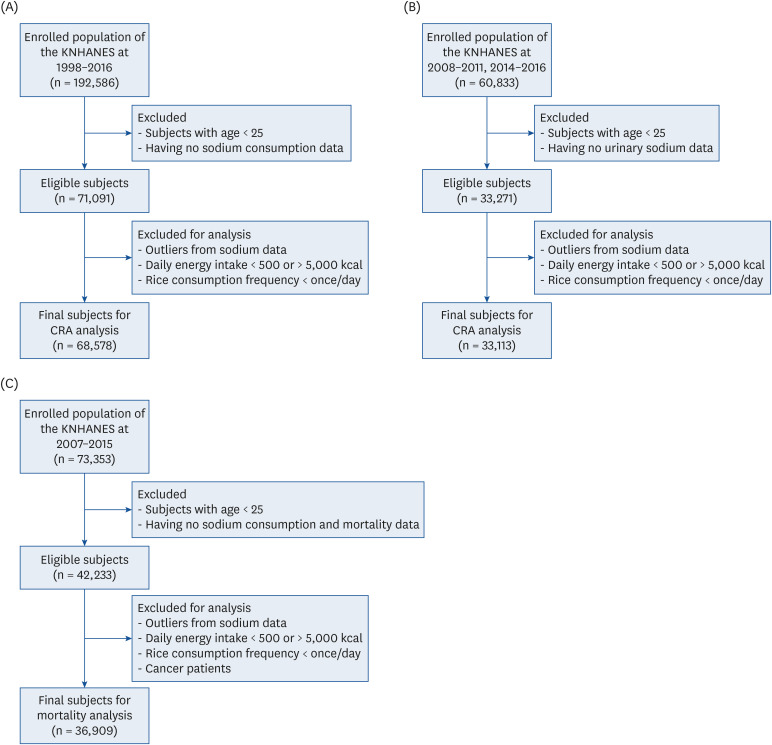
SUBJECTS/METHODS: A total of 68,578 and 33,113 participants were included for comparative risk assessment (CRA) analysis and mortality analysis, respectively, and mean follow-up time for mortality was 5.4 years. CRA analysis was used to quantify attributable incidences of stroke, ischemic heart disease (IHD), and deaths attributable to sodium intake between 1998 and 2016. Cox proportional hazard regression model was used to determine the association between sodium intake and all-cause and CVD-mortality.
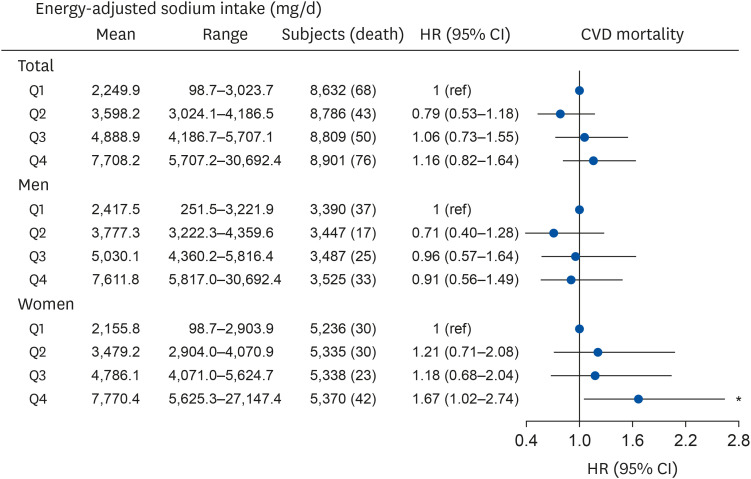
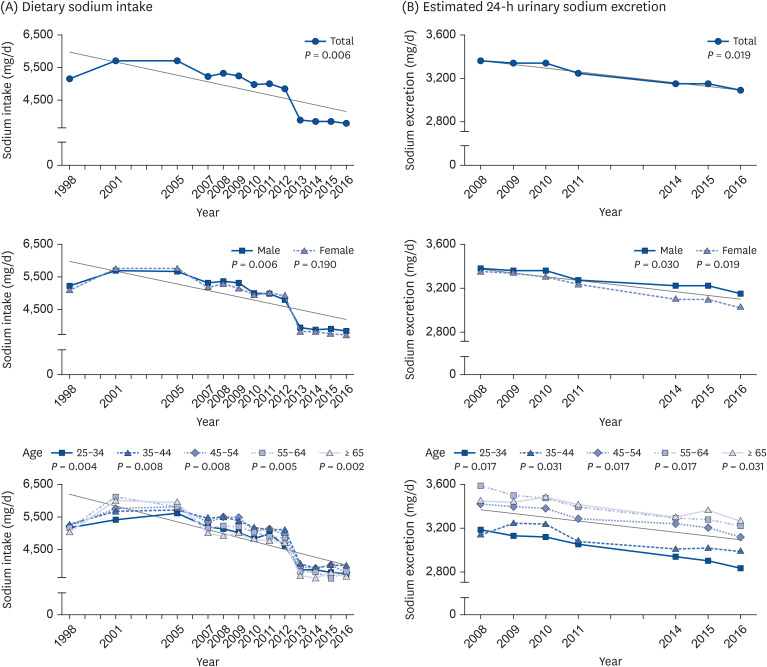
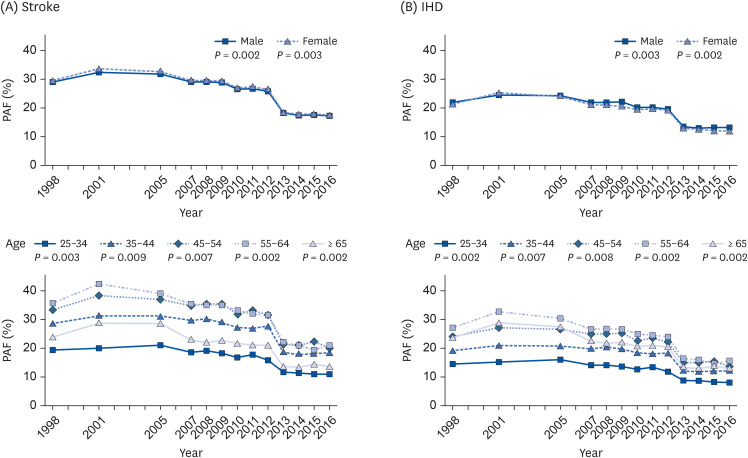
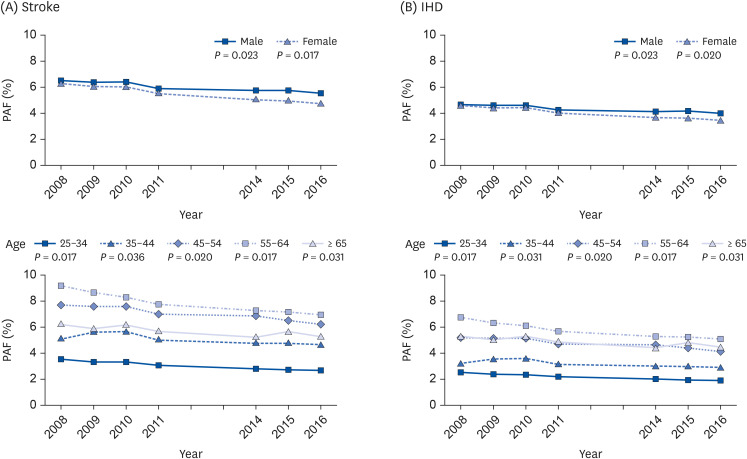
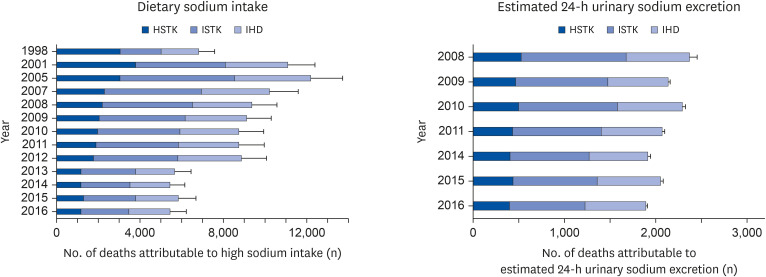
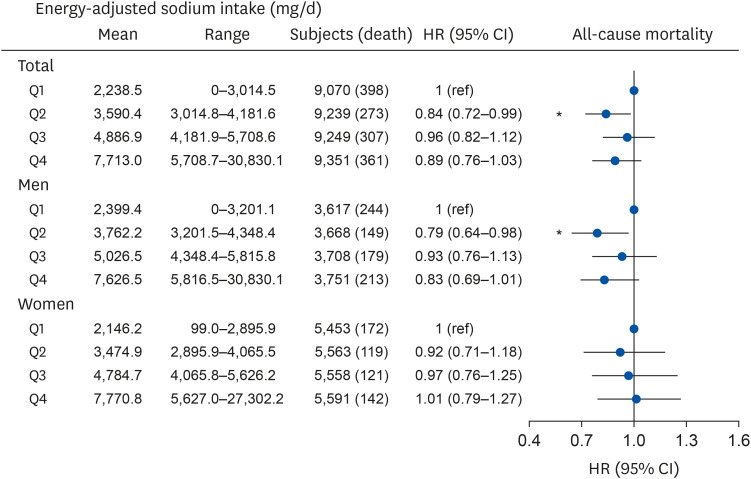
Mean dietary sodium intake decreased over time, reaching 3,647 mg/day in 2016. Similarly, the population attributable fractions of stroke and IHD, and the number of CVD-associated deaths attributable to high sodium intake/excretion also decreased. In terms of association with mortality, when participants were grouped into quartiles (Q) by energy-adjusted sodium intake, those in Q2 had a lower risk of all-cause mortality than those in Q1 with lower intakes. The risk of CVD-associated mortality was higher only in females with high sodium intake in Q4 than those in Q1.
This nationwide data indicates that, in line with previous studies of multiple cohorts, both low and high sodium intakes may be associated with an increased risk of mortality; therefore, the optimal sodium intake for Koreans needs to be revised.
背景/目的:钠摄入量与血压呈正相关,这可能会增加心血管疾病(CVD)的风险。因此,我们评估了每日钠摄入量超过2000毫克所导致的CVD疾病负担,并利用韩国国家健康与营养检查调查(KNHNES)前瞻性地研究了饮食/尿钠水平与全因死亡率和CVD死亡率之间的关联。
对象/方法:分别有68578名和33113名参与者纳入比较风险评估(CRA)分析和死亡率分析,死亡率分析的平均随访时间为5.4年。CRA分析用于量化1998年至2016年期间中风、缺血性心脏病(IHD)的归因发病率以及钠摄入导致的死亡人数。采用Cox比例风险回归模型确定钠摄入量与全因死亡率和CVD死亡率之间的关联。
平均饮食钠摄入量随时间下降,2016年降至3647毫克/天。同样,中风和IHD的人群归因分数以及高钠摄入/排泄导致的CVD相关死亡人数也有所下降。在与死亡率的关联方面,当参与者按能量调整后的钠摄入量分为四分位数(Q)时,Q2组的全因死亡率风险低于摄入量较低的Q1组。仅在Q4中钠摄入量高的女性中,CVD相关死亡率风险高于Q1组。
这项全国性数据表明,与先前多个队列的研究一致,低钠和高钠摄入都可能与死亡率增加有关;因此,韩国人的最佳钠摄入量需要重新修订。