Simamora Adelina, Santoso Adit W, Timotius Kris H, Rahayu Ika
Department of Biochemistry, Faculty of Medicine and Health Sciences, Krida Wacana Christian University, West Jakarta 11510, Indonesia.
Centre for Enzyme in Health and Diseases, Krida Wacana Christian University, West Jakarta 11510, Indonesia.
Int J Food Sci. 2020 Sep 24;2020:3436940. doi: 10.1155/2020/3436940. eCollection 2020.
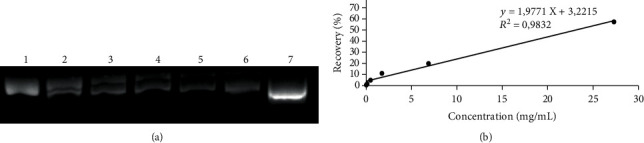
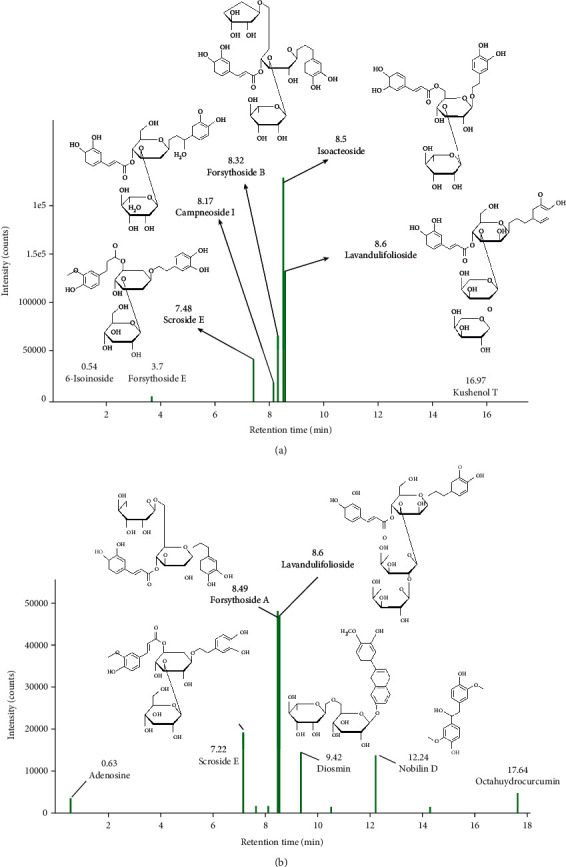
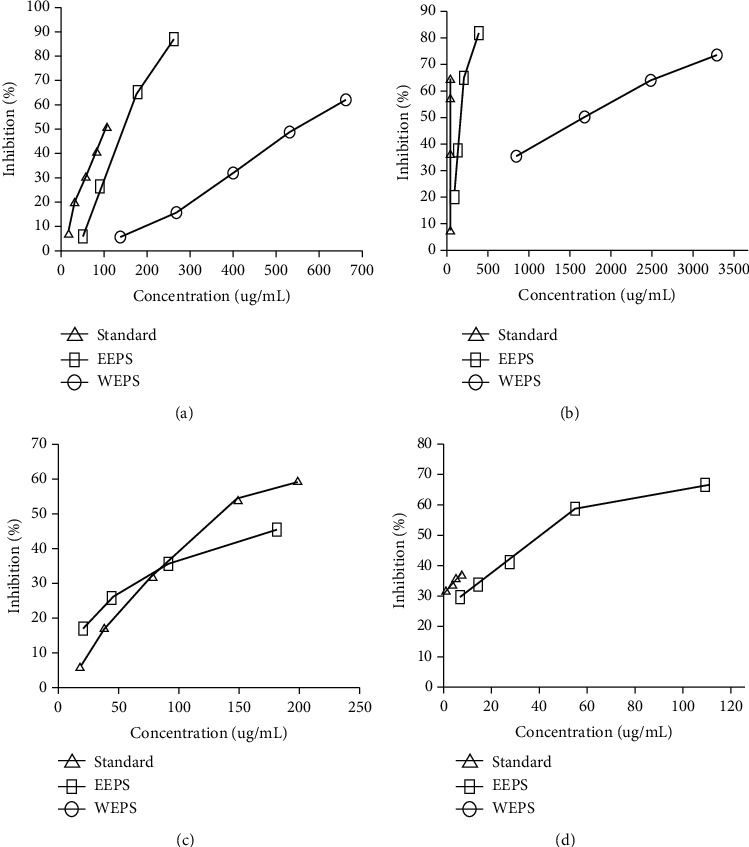
, commonly known as Arogo in Tentena-Sulawesi, is a popular vegetable. As a promising herbal tea and food ingredient, further investigation is required to find the best knowledge for medicinal use of leaves. This research investigated the antioxidant activity of the ethanol (EEPS) and water (WEPS) extracts of leaves, based on their scavenging activities on DPPH radicals and their reducing capacities (CuPRAC, total antioxidant/phosphomolybdenum, and ferric thiocyanate reducing power assays). The DNA-protecting effect by EEPS was tested using pBR322 plasmid DNA against •OH radical-induced damage. The inhibition potentials of both extracts against several enzymes related to metabolic diseases (-glucosidase, -amylase, xanthine oxidase, and protease) were evaluated. The phytochemical analysis was conducted by an LC-QTOF-MS/MS technique. EEPS proved to be a better antioxidant and had higher phenolic content compared to WEPS. EEPS demonstrated a protective effect on DNA with recovery percentage linearly correlated with EEPS concentrations. Strong inhibition on -glucosidase and -amylase was observed for EEPS; however, EEPS and WEPS showed weak inhibitions on xanthine oxidase and protease. LC-QTOF-MS/MS analysis identified seven main components in EEPS, namely scroside E, forsythoside A and forsythoside B, lavandulifolioside, diosmin, nobilin D, campneoside I, and isoacteoside. These components may be responsible for the observed enzymes inhibitions and antioxidant properties. leaves can be an appropriate choice for the development of nutraceutical and drug preparations.
在南苏拉威西省滕特纳被称为阿罗戈,是一种受欢迎的蔬菜。作为一种有前景的草药茶和食品成分,需要进一步研究以找到其叶子药用的最佳知识。本研究基于其对DPPH自由基的清除活性及其还原能力(铜离子还原抗氧化能力、总抗氧化/磷钼酸法和硫氰酸铁还原能力测定),研究了其叶子乙醇提取物(EEPS)和水提取物(WEPS)的抗氧化活性。使用pBR322质粒DNA测试EEPS对•OH自由基诱导损伤的DNA保护作用。评估了两种提取物对几种与代谢疾病相关的酶(α-葡萄糖苷酶、α-淀粉酶、黄嘌呤氧化酶和蛋白酶)的抑制潜力。通过液相色谱-四极杆飞行时间串联质谱(LC-QTOF-MS/MS)技术进行植物化学分析。与WEPS相比,EEPS被证明是更好的抗氧化剂且酚类含量更高。EEPS对DNA表现出保护作用,恢复百分比与EEPS浓度呈线性相关。观察到EEPS对α-葡萄糖苷酶和α-淀粉酶有强烈抑制作用;然而,EEPS和WEPS对黄嘌呤氧化酶和蛋白酶的抑制作用较弱。LC-QTOF-MS/MS分析确定了EEPS中的七种主要成分,即连翘苷E、连翘苷A和连翘苷B、薰衣草叶苷、香叶木素、诺比林D、樟烯苷I和异绿原酸。这些成分可能是观察到的酶抑制作用和抗氧化特性的原因。其叶子可成为开发营养保健品和药物制剂的合适选择。