Ecole de Sante Publique, Département de Médecine Sociale et Préventive, Université de Montréal, 7101, Avenue du Parc, Montréal, Qc, H3N 1X9, Canada; Centre de Recherche du Centre Hospitalier de l'Université de Montréal, Axe de Recherche Santé des Populations, Pavillon S, 900 Rue Saint-Denis, Montréal, QC H2X 0A9, Canada; Universite de Strasbourg, CNRS, IPHC UMR 7178, 23 Rue du Loess, 67200, Strasbourg, France.
Universite de Strasbourg, CNRS, IPHC UMR 7178, 23 Rue du Loess, 67200, Strasbourg, France; Institut Universitaire de France, Ministère de l'Enseignement Supérieur, de la Recherche et de l'Innovation, 1 Rue Descartes, 75231 PARIS CEDEX 05, France.
Health Place. 2020 Nov;66:102454. doi: 10.1016/j.healthplace.2020.102454. Epub 2020 Oct 5.
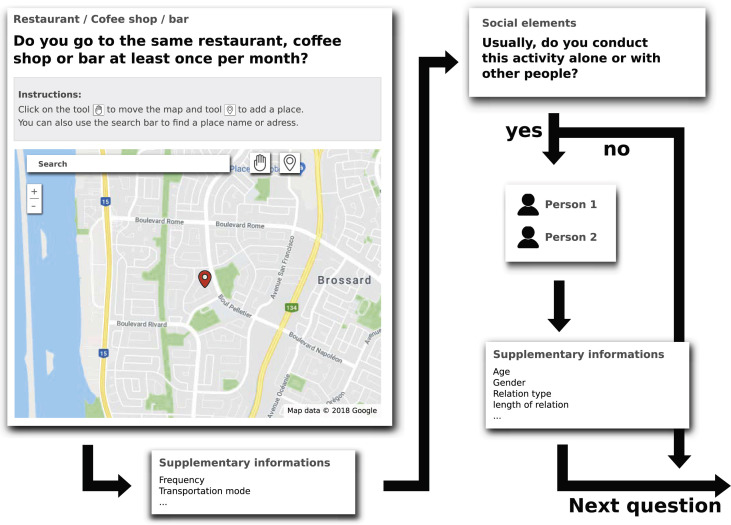
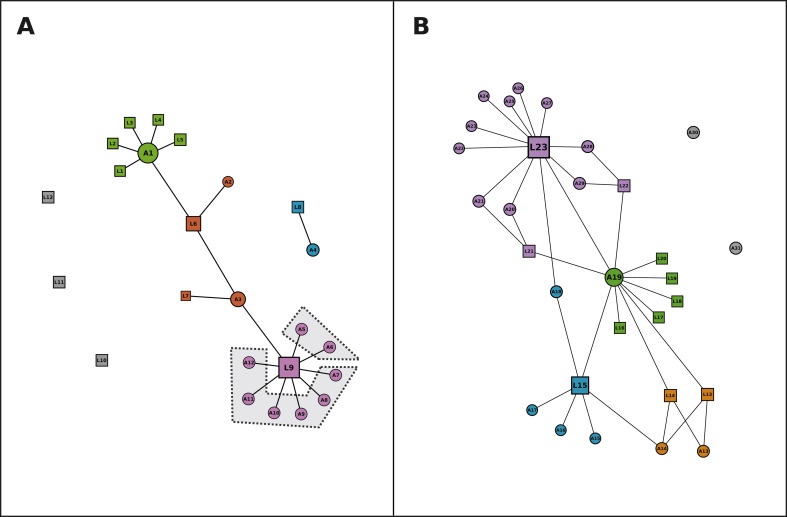
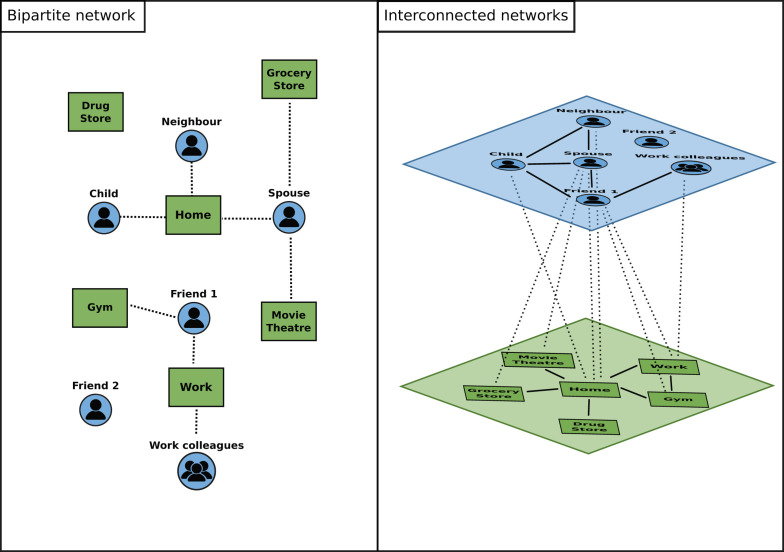
Contextual factors influencing population health have received substantial attention, especially with regard to people's social networks and the roles of built environments in their activity spaces. Yet little health research has considered spatial and social contexts simultaneously, often because of a lack of existing data. This paper presents a tool for collecting relational data on social network and activity space that extends an existing map-based questionnaire with the addition of a name generator. We then illustrate how network analysis provides a useful framework for studying connections between social and spatial contexts using data collected in the Contrasted Urban settings for Healthy Aging research project.
影响人口健康的情境因素受到了广泛关注,尤其是人们的社交网络以及居住环境在其活动空间中的作用。然而,很少有健康研究同时考虑空间和社会背景,这通常是因为缺乏现有数据。本文介绍了一种用于收集社交网络和活动空间关系数据的工具,该工具扩展了现有的基于地图的问卷,并增加了一个名称生成器。然后,我们将展示如何使用在“健康老龄化对比城市环境研究项目”中收集的数据,通过网络分析为研究社会和空间背景之间的联系提供有用的框架。