Choi Jeehye, Suh Jin-Young, Kim Do-Hee, Na Hye-Kyung, Surh Young-Joon
Department of Molecular Medicine and Biopharmaceutical Science, Graduate School of Convergence Science and Technology, Seoul National University, Seoul, Korea.
Tumor Microenvironment Global Core Research Center, College of Pharmacy, Seoul National University, Seoul, Korea.
J Cancer Prev. 2020 Sep 30;25(3):152-163. doi: 10.15430/JCP.2020.25.3.152.
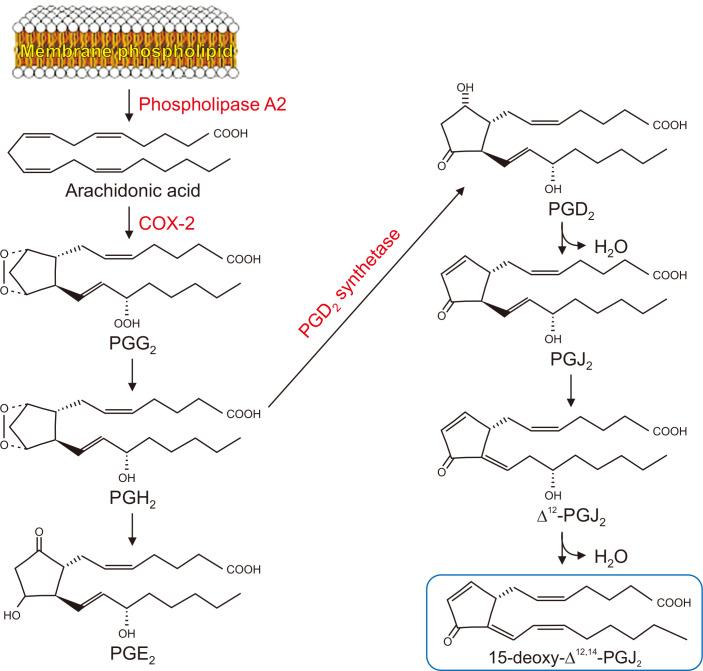
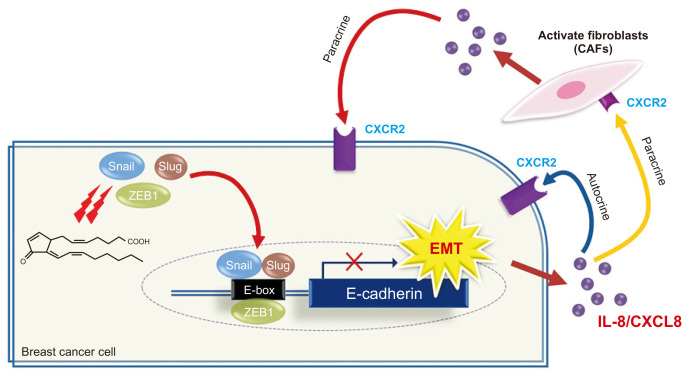
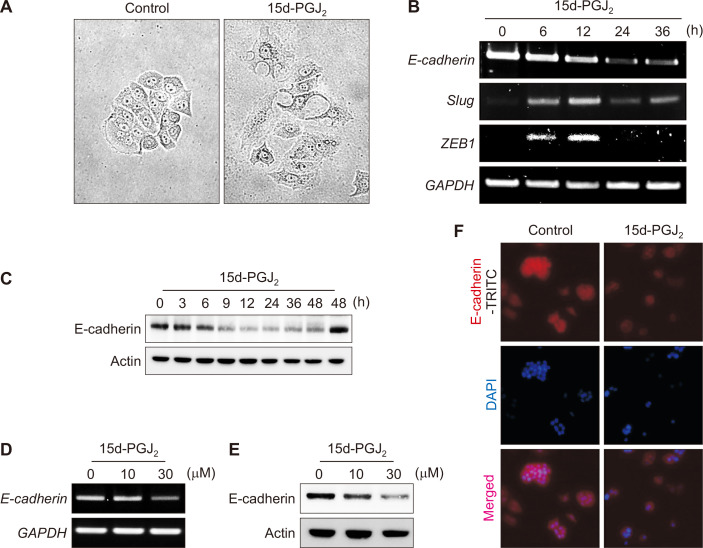
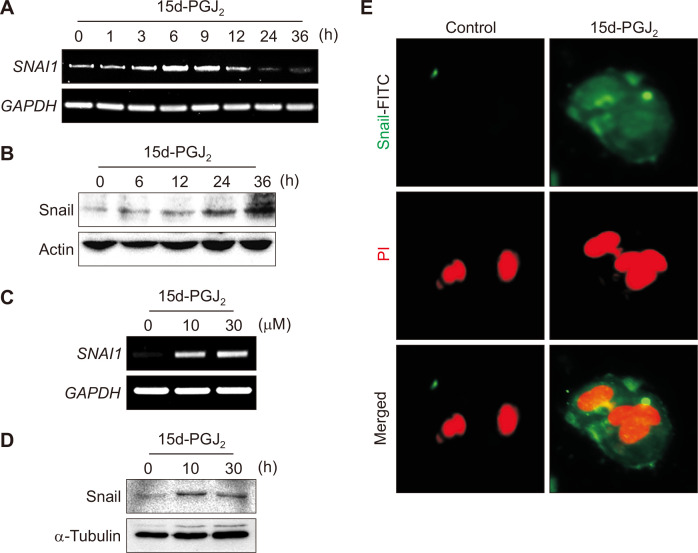
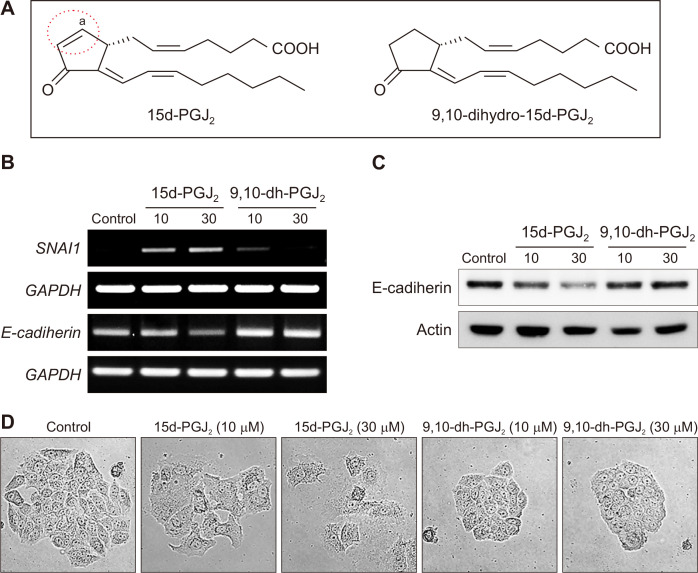
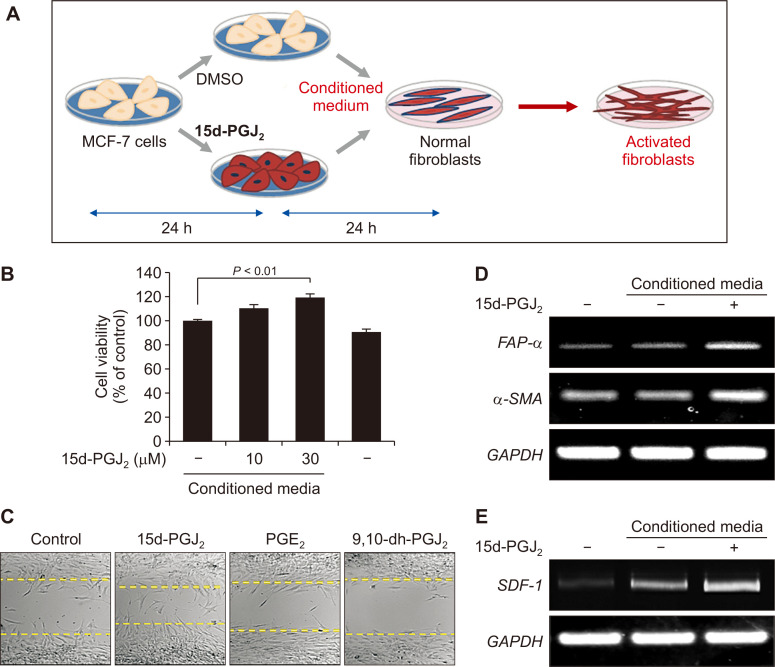
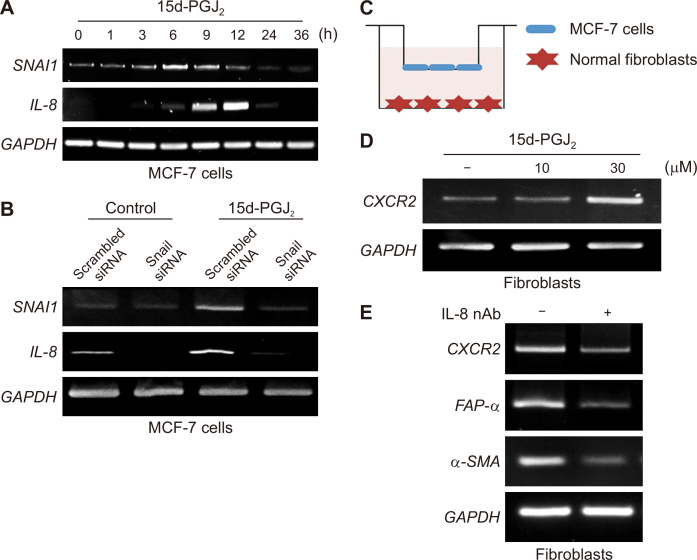
In inflammation-associated carcinogenesis, COX-2 is markedly overexpressed, resulting in accumulation of various prostaglandins. 15-deoxy-Δ-prostaglandin J (15d-PGJ) is one of the terminal products of COX-2-catalyzed arachidonic acid catabolism with oncogenic potential. Epithelial-to-mesenchymal transition (EMT) is a process by which epithelial cells lose their polarity and adhesiveness, and thereby gain migratory and invasive properties. Treatment of human breast cancer MCF-7 cells with 15d-PGJ induced EMT as evidenced by increased expression of Snail and ZEB1, with concurrent down-regulation of E-cadherin. Nuclear extract from 15d-PGJ-treated MCF-7 cells showed the binding of Snail and ZEB1 to E-box sequences present in the E-cadherin promoter, which accounts for repression of E-catherin expression. Unlike 15d-PGJ, its non-electrophilic analogue 9,10-dihydro-15d-PGJ failed to induce EMT, suggesting that the α,β-unsaturated carbonyl group located in the cyclopentenone ring of 15d-PGJ is essential for its oncogenic function. Notably, the mRNA level of interleukin-8 (IL-8)/CXCL8 was highly elevated in 15d-PGJ-stimulated MCF-7 cells. 15d-PGJ-induced up-regulation of IL-8/CXCL8 expression was abrogated by silencing of Snail short interfering RNA. Treatment of normal fibroblast with conditioned medium obtained from cultures of MCF-7 cells undergoing EMT induced the expression of activated fibroblast marker proteins, α-smooth muscle actin and fibroblasts activation protein-α. Co-culture of normal fibroblasts with 15d-PGJ-stimulated MCF-7 cells also activated normal fibroblast cells to cancer associated fibroblasts. Taken together, above findings suggest that 15d-PGJ induces EMT through up-regulation of Snail expression and subsequent production of CXCL8 as a putative activator of fibroblasts, which may contribute to tumor-stroma interaction in inflammatory breast cancer microenvironment.
在炎症相关的致癌过程中,COX-2明显过度表达,导致多种前列腺素的积累。15-脱氧-Δ-前列腺素J(15d-PGJ)是COX-2催化的花生四烯酸分解代谢的终产物之一,具有致癌潜力。上皮-间质转化(EMT)是上皮细胞失去极性和黏附性,从而获得迁移和侵袭特性的过程。用15d-PGJ处理人乳腺癌MCF-7细胞可诱导EMT,Snail和ZEB1表达增加以及E-钙黏蛋白同时下调证明了这一点。来自15d-PGJ处理的MCF-7细胞的核提取物显示Snail和ZEB1与E-钙黏蛋白启动子中存在的E-box序列结合,这解释了E-钙黏蛋白表达的抑制。与15d-PGJ不同,其非亲电类似物9,10-二氢-15d-PGJ未能诱导EMT,表明位于15d-PGJ环戊烯酮环中的α,β-不饱和羰基对其致癌功能至关重要。值得注意的是,在15d-PGJ刺激的MCF-7细胞中白细胞介素-8(IL-8)/CXCL8的mRNA水平高度升高。通过沉默Snail小干扰RNA可消除15d-PGJ诱导的IL-8/CXCL8表达上调。用从经历EMT的MCF-7细胞培养物中获得的条件培养基处理正常成纤维细胞可诱导活化的成纤维细胞标志物蛋白α-平滑肌肌动蛋白和成纤维细胞活化蛋白-α的表达。将正常成纤维细胞与15d-PGJ刺激的MCF-7细胞共培养也可将正常成纤维细胞激活为癌症相关成纤维细胞。综上所述,上述发现表明15d-PGJ通过上调Snail表达并随后产生CXCL8作为成纤维细胞的假定激活剂来诱导EMT,这可能有助于炎症性乳腺癌微环境中的肿瘤-基质相互作用。