Karagiannidis Ioannis, de Santana Van Vilet Eliane, Said Abu Egal Erika, Phinney Brandon, Jacenik Damian, Prossnitz Eric R, Beswick Ellen J
Division of Gastroenterology, Department of Internal Medicine, University of Utah, Salt Lake City, UT 84132, USA.
Division of Molecular Medicine, Department of Internal Medicine; Autophagy, Inflammation and Metabolism Center of Biomedical Research Excellence, University of New Mexico Comprehensive Cancer Center; University of New Mexico Health Sciences Center, Albuquerque, NM 87131, USA.
Cancers (Basel). 2020 Oct 6;12(10):2868. doi: 10.3390/cancers12102868.
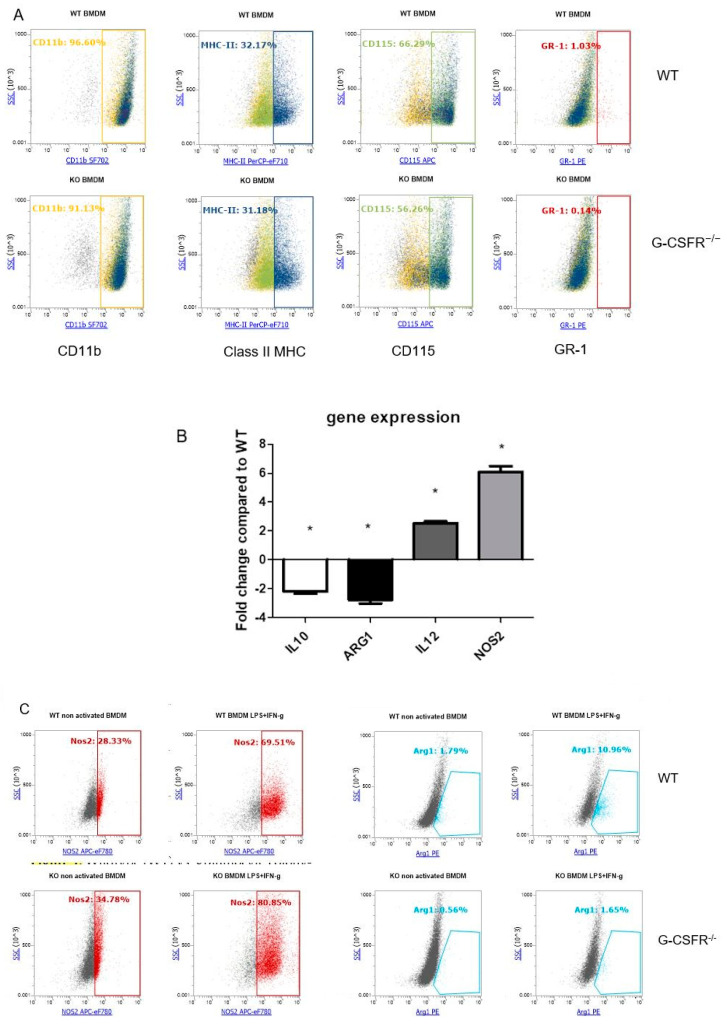
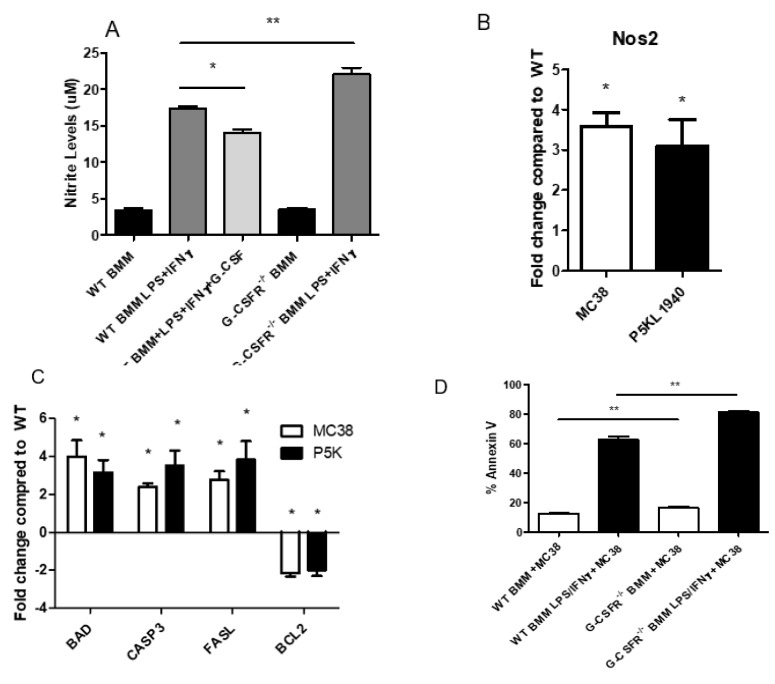
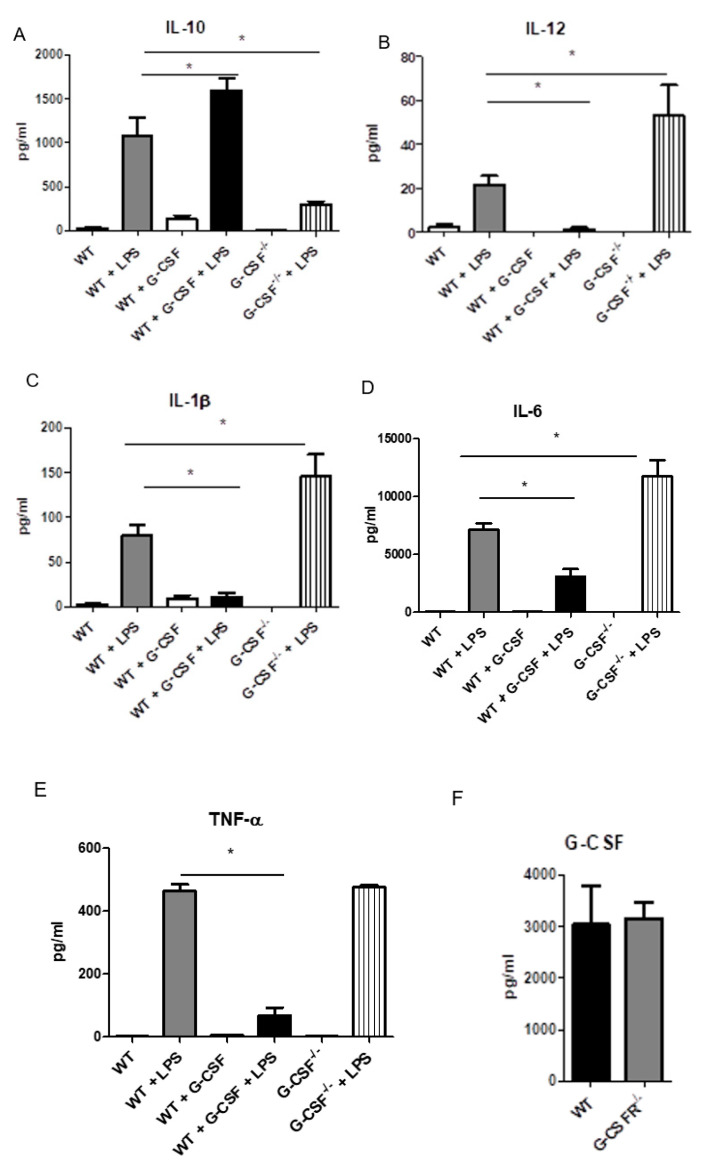
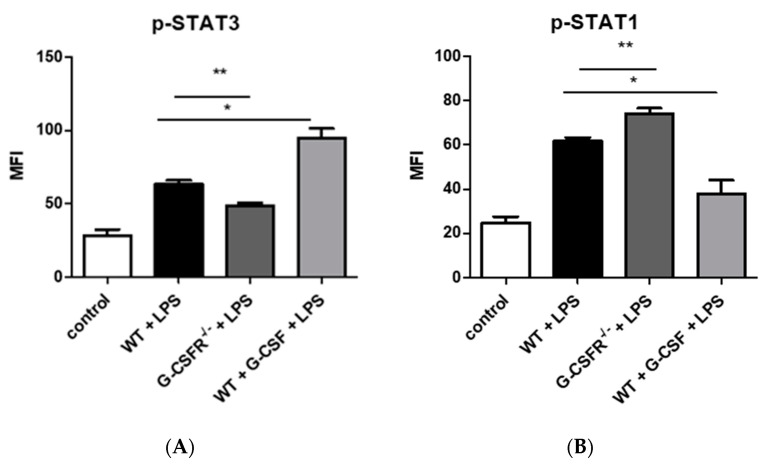
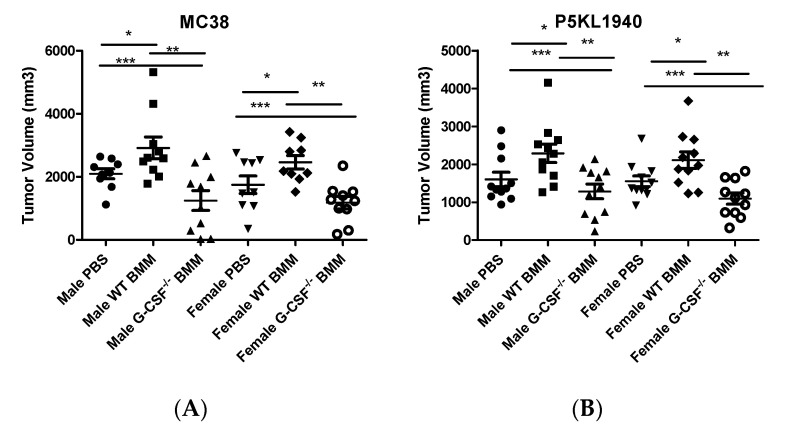
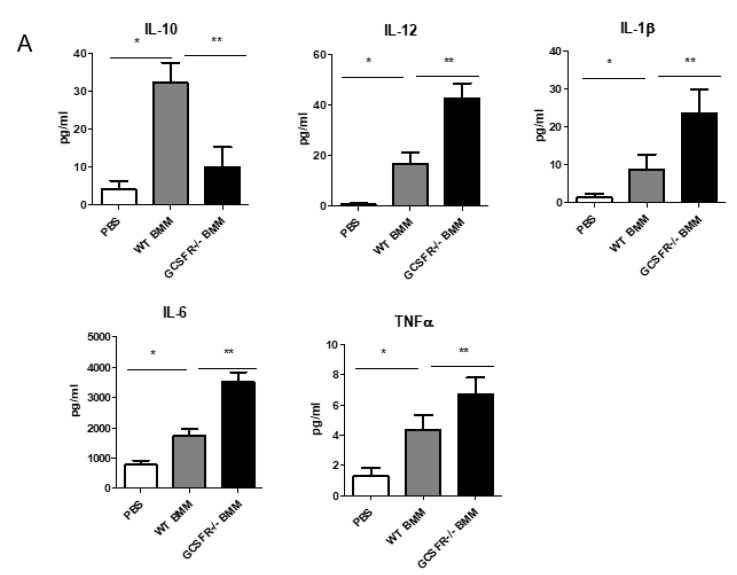
Tumor-associated macrophages (TAMs) in the gastrointestinal tumor microenvironment (TME) are known to polarize into populations exhibiting pro- or anti-tumoral activity in response to stimuli such as growth factors and cytokines. Our previous work has recognized granulocyte colony-stimulating factor (G-CSF) as a cytokine capable of influencing immune cells of the TME exhibiting pro-tumoral activity. Here, we aimed to focus on how G-CSF regulates TAM phenotype and function and the effects on gastrointestinal (GI) tumor progression. Thus, wildtype (WT) and G-CSFR macrophages were examined for cytokine production, gene expression, and transcription factor activity. Adoptive transfer of WT or G-CSFR macrophages into tumor-bearing mice was performed to study their influence in the progression of colon (MC38) and pancreatic (PK5L1940) tumor mouse models. Finally, the difference in cytotoxic potential between WT and G-CSFR macrophages was examined both in vitro and in vivo. Our results indicate that G-CSF promotes increased IL-10 production and decreased IL-12 production, which was reversed in G-CSFR macrophages for a pro-inflammatory phenotype. Furthermore, G-CSFR macrophages were characterized by higher levels of NOS2 expression and NO production, which led to greater tumor related cytotoxicity both in vitro and in vivo. Our results suggest that in the absence of G-CSFR, macrophage-related tumor cytotoxicity was amplified. These findings, along with our previous reports, pinpoint G-CSF /G-CSFR as a prominent target for possible clinical applications that aim to control the TME and the GI tumor progression.
已知胃肠道肿瘤微环境(TME)中的肿瘤相关巨噬细胞(TAM)会响应生长因子和细胞因子等刺激,极化为表现出促肿瘤或抗肿瘤活性的细胞群体。我们之前的研究已将粒细胞集落刺激因子(G-CSF)识别为一种能够影响TME中具有促肿瘤活性的免疫细胞的细胞因子。在此,我们旨在聚焦于G-CSF如何调节TAM的表型和功能以及对胃肠道(GI)肿瘤进展的影响。因此,我们检测了野生型(WT)和G-CSFR巨噬细胞的细胞因子产生、基因表达和转录因子活性。将WT或G-CSFR巨噬细胞过继转移到荷瘤小鼠体内,以研究它们对结肠癌(MC38)和胰腺癌(PK5L1940)小鼠模型进展的影响。最后,我们在体外和体内检测了WT和G-CSFR巨噬细胞之间细胞毒性潜力的差异。我们的结果表明,G-CSF促进IL-10产生增加和IL-12产生减少,而在G-CSFR巨噬细胞中这种情况发生逆转,表现为促炎表型。此外,G-CSFR巨噬细胞的特征是NOS2表达水平和NO产生更高,这导致其在体外和体内均具有更强的肿瘤相关细胞毒性。我们的结果表明,在缺乏G-CSFR的情况下,巨噬细胞相关的肿瘤细胞毒性会增强。这些发现,连同我们之前的报告,指出G-CSF /G-CSFR是旨在控制TME和GI肿瘤进展的可能临床应用的一个突出靶点。