Castracani Cristina, Spotti Fiorenza Augusta, Schifani Enrico, Giannetti Daniele, Ghizzoni Martina, Grasso Donato Antonio, Mori Alessandra
Department of Chemistry, Life Sciences & Environmental Sustainability, University of Parma, Parco Area delle Scienze, 11/a, 43124 Parma, Italy.
Insects. 2020 Oct 7;11(10):678. doi: 10.3390/insects11100678.
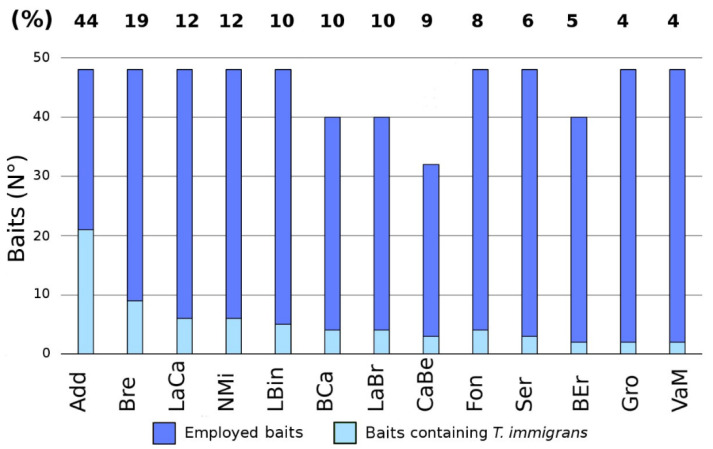
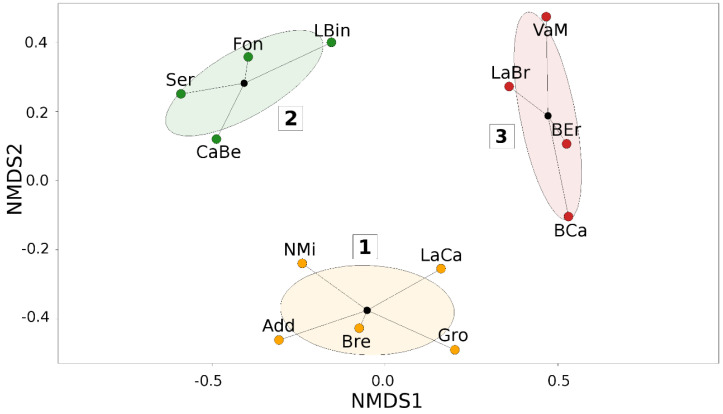
Ants are considered a useful model for biodiversity monitoring and several of their characteristics make them promising for citizen science (CS) projects. Involving a wide range of public figures into collecting valuable data on the effect of human impact on ant biodiversity, the School of Ants (SoA) project represents one of the very few attempts to explore the potential of these insects in CS. Through the collaboration with the "BioBlitz Lombardia" project, we tested the SoA protocol on 12 Northern Italy parks, ranging from urban green to subalpine protected sites. As a result, we obtained some of the very first quantitative data characterizing the ants of this region, recording 30 species and highlighting some interesting ecological patterns. These data revealed the ubiquitous presence of the recently taxonomically defined cryptic species which appears to be probably introduced in the region. We also discuss advantages and criticisms encountered applying the SoA protocol, originally intended for schools, to new categories of volunteers, from BioBlitz participants to park operators, suggesting best practices based on our experience.
蚂蚁被认为是生物多样性监测的有用模型,它们的一些特性使其在公民科学(CS)项目中具有潜力。“蚂蚁学校”(SoA)项目让众多公众参与收集有关人类活动对蚂蚁生物多样性影响的宝贵数据,这是探索这些昆虫在公民科学中潜力的极少数尝试之一。通过与“伦巴第生物闪电战”项目合作,我们在意大利北部的12个公园(从城市绿地到亚高山保护区)测试了SoA方案。结果,我们获得了该地区蚂蚁的首批定量数据,记录了30个物种,并突出了一些有趣的生态模式。这些数据揭示了最近在分类学上定义的隐性物种无处不在,该物种似乎可能是引入到该地区的。我们还讨论了将原本针对学校的SoA方案应用于新志愿者群体(从生物闪电战参与者到公园经营者)时遇到的优点和批评,并根据我们的经验提出了最佳实践方法。