Department of Medicine, University of Massachusetts Medical School, Worcester, MA, USA.
Department of Medicine, Division of Gastroenterology, Beth Israel Deaconess Medical Center, Harvard Medical School, 330 Brookline Avenue, ST-214B, Boston, MA, 02215, USA.
J Neuroinflammation. 2020 Oct 9;17(1):296. doi: 10.1186/s12974-020-01972-5.
Chronic alcohol consumption is associated with neuroinflammation, neuronal damage, and behavioral alterations including addiction. Alcohol-induced neuroinflammation is characterized by increased expression of proinflammatory cytokines (including TNFα, IL-1β, and CCL2) and microglial activation. We hypothesized chronic alcohol consumption results in peripheral immune cell infiltration to the CNS. Since chemotaxis through the CCL2-CCR2 signaling axis is critical for macrophage recruitment peripherally and centrally, we further hypothesized that blockade of CCL2 signaling using the dual CCR2/5 inhibitor cenicriviroc (CVC) would prevent alcohol-induced CNS infiltration of peripheral macrophages and alter the neuroinflammatory state in the brain after chronic alcohol consumption.
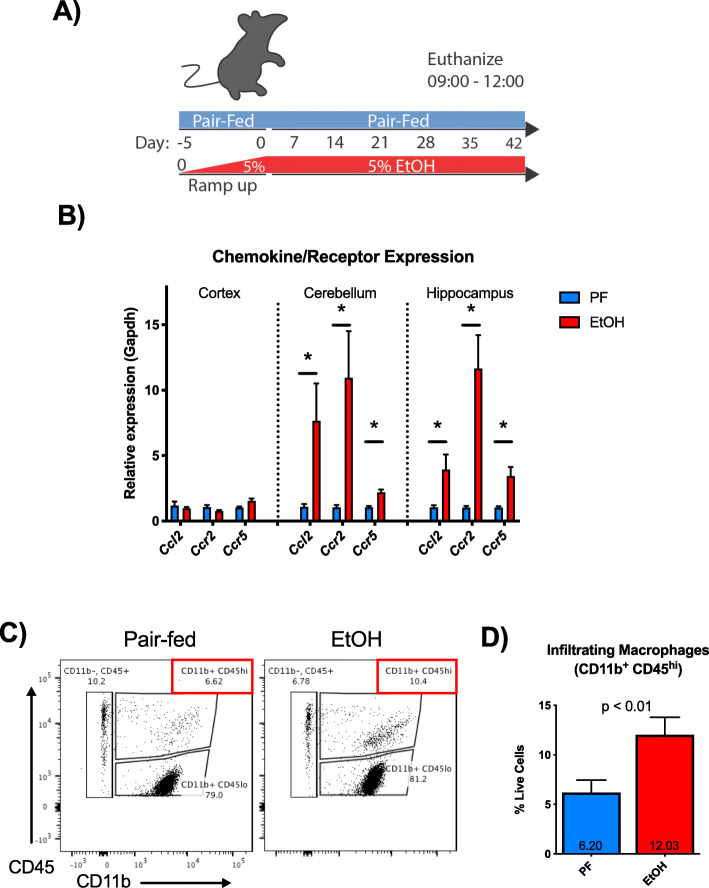
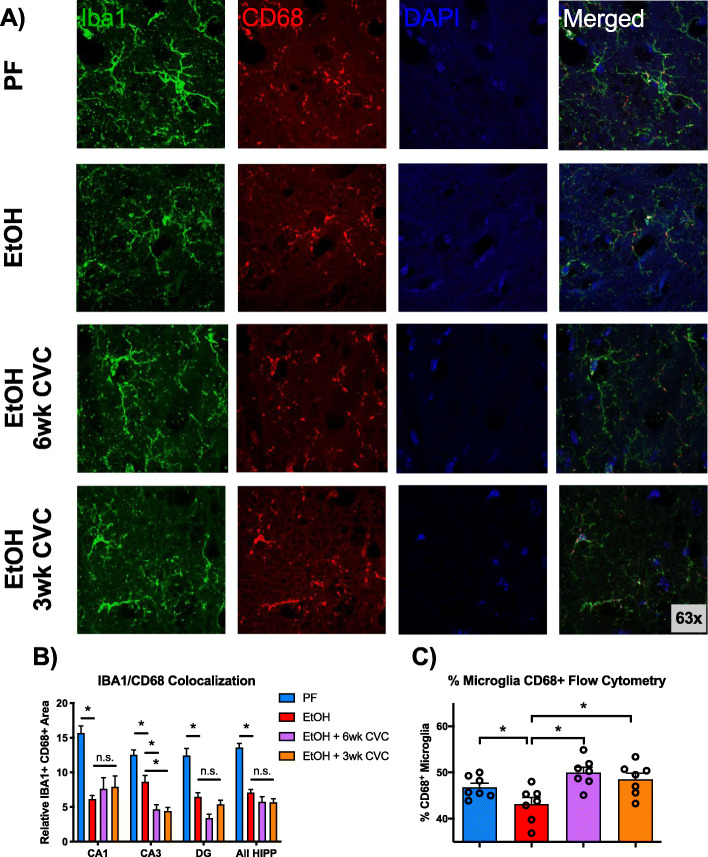
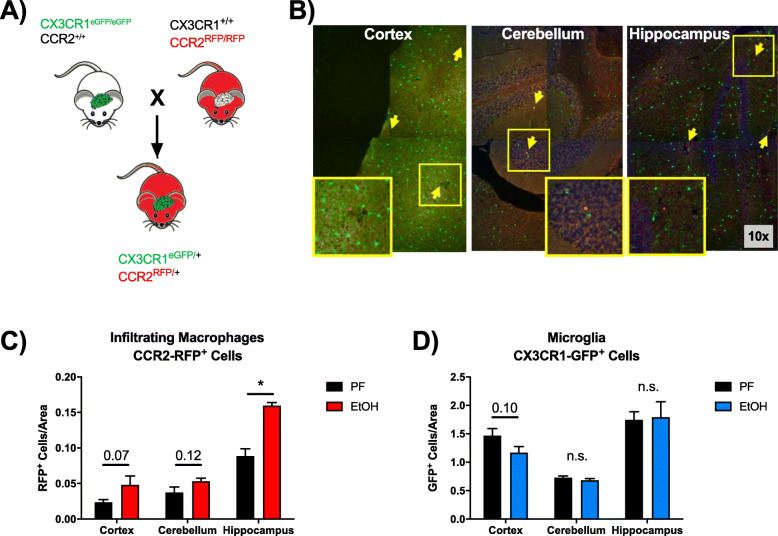
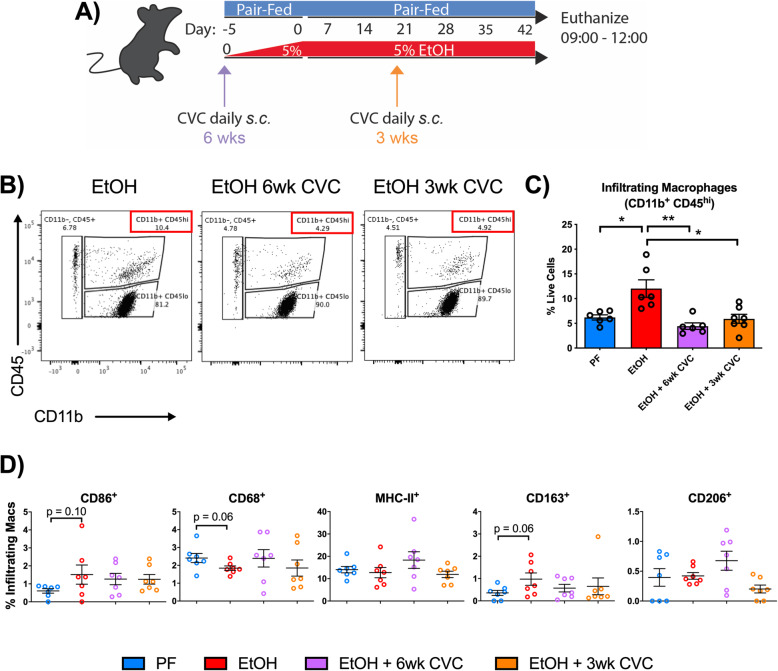
C57BL/6J female mice were fed an isocaloric or 5% (v/v) ethanol Lieber DeCarli diet for 6 weeks. Some mice received daily injections of CVC. Microglia and infiltrating macrophages were characterized and quantified by flow cytometry and visualized using CX3CR1 CCR2 reporter mice. The effect of ethanol and CVC treatment on the expression of inflammatory genes was evaluated in various regions of the brain, using a Nanostring nCounter inflammation panel. Microglia activation was analyzed by immunofluorescence. CVC-treated and untreated mice were presented with the two-bottle choice test.
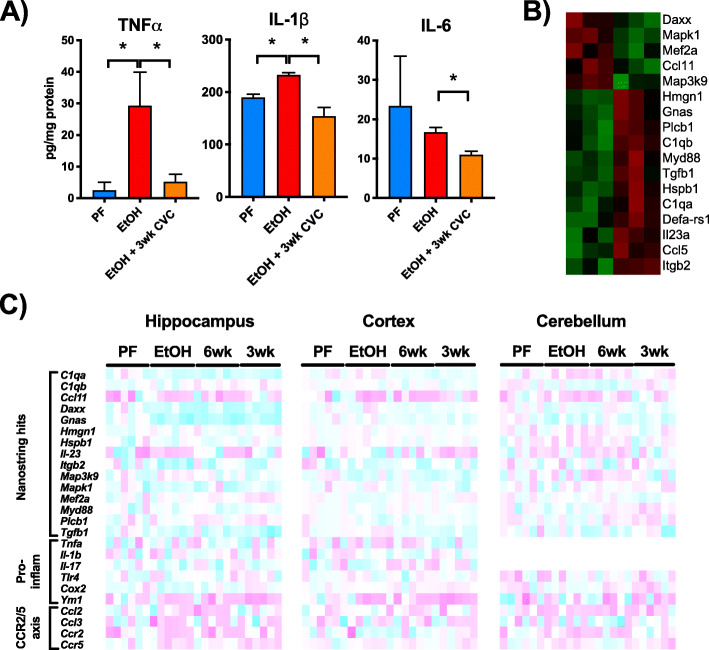
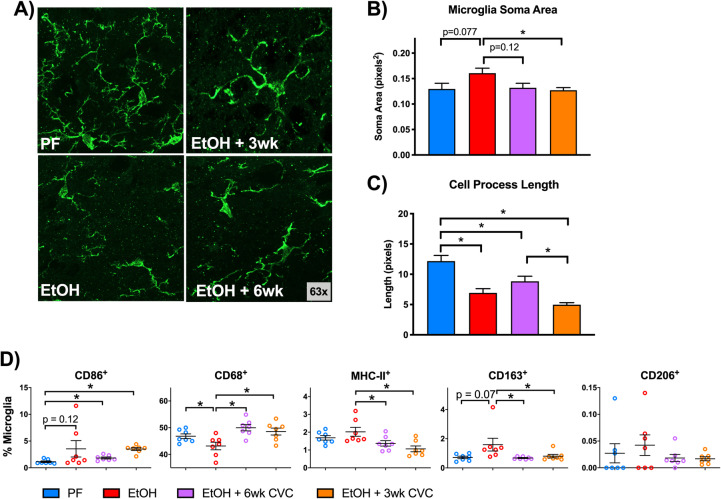
Chronic alcohol consumption induced microglia activation and peripheral macrophage infiltration in the CNS, particularly in the hippocampus. Treatment with CVC abrogated ethanol-induced recruitment of peripheral macrophages and partially reversed microglia activation. Furthermore, the expression of proinflammatory markers was upregulated by chronic alcohol consumption in various regions of the brain, including the cortex, hippocampus, and cerebellum. Inhibition of CCR2/5 decreased alcohol-mediated expression of inflammatory markers. Finally, microglia function was impaired by chronic alcohol consumption and restored by CVC treatment. CVC treatment did not change the ethanol consumption or preference of mice in the two-bottle choice test.
Together, our data establish that chronic alcohol consumption promotes the recruitment of peripheral macrophages into the CNS and microglia alterations through the CCR2/5 axis. Therefore, further exploration of the CCR2/5 axis as a modulator of neuroinflammation may offer a potential therapeutic approach for the treatment of alcohol-associated neuroinflammation.
慢性酒精摄入与神经炎症、神经元损伤以及包括成瘾在内的行为改变有关。酒精引起的神经炎症表现为促炎细胞因子(包括 TNFα、IL-1β 和 CCL2)表达增加和小胶质细胞激活。我们假设慢性酒精摄入导致外周免疫细胞浸润中枢神经系统。由于通过 CCL2-CCR2 信号轴趋化对于外周和中枢巨噬细胞的募集至关重要,我们进一步假设使用双重 CCR2/5 抑制剂 cenicriviroc(CVC)阻断 CCL2 信号会阻止酒精诱导的外周巨噬细胞浸润中枢神经系统,并改变慢性酒精摄入后大脑的神经炎症状态。
C57BL/6J 雌性小鼠喂食等热量或 5%(v/v)乙醇 Lieber DeCarli 饮食 6 周。一些小鼠接受每日 CVC 注射。通过流式细胞术对小胶质细胞和浸润巨噬细胞进行特征分析和定量,并使用 CX3CR1 CCR2 报告小鼠进行可视化。使用 Nanostring nCounter 炎症面板评估乙醇和 CVC 处理对大脑各区域炎症基因表达的影响。通过免疫荧光分析小胶质细胞激活。用 CVC 处理和未处理的小鼠进行双瓶选择测试。
慢性酒精摄入诱导中枢神经系统中小胶质细胞激活和外周巨噬细胞浸润,特别是在海马体中。CVC 治疗阻断了乙醇诱导的外周巨噬细胞募集,并部分逆转了小胶质细胞激活。此外,慢性酒精摄入使大脑各区域(包括皮质、海马体和小脑)的促炎标志物表达上调。抑制 CCR2/5 降低了酒精介导的炎症标志物表达。最后,慢性酒精摄入损害了小胶质细胞功能,而 CVC 治疗则恢复了其功能。CVC 治疗并未改变小鼠在双瓶选择测试中的酒精消耗或偏好。
总之,我们的数据表明,慢性酒精摄入通过 CCR2/5 轴促进外周巨噬细胞向中枢神经系统的募集和小胶质细胞改变。因此,进一步探索 CCR2/5 轴作为神经炎症调节剂可能为治疗酒精相关神经炎症提供一种潜在的治疗方法。