State Key Laboratory of Crop Stress Biology for Arid Areas/Shaanxi Key Laboratory of Apple, College of Horticulture, Northwest A&F University , Yangling, PR China.
Plant Signal Behav. 2020 Dec 1;15(12):1827782. doi: 10.1080/15592324.2020.1827782. Epub 2020 Oct 11.
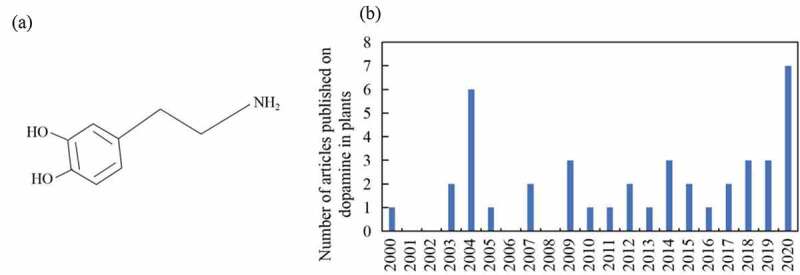
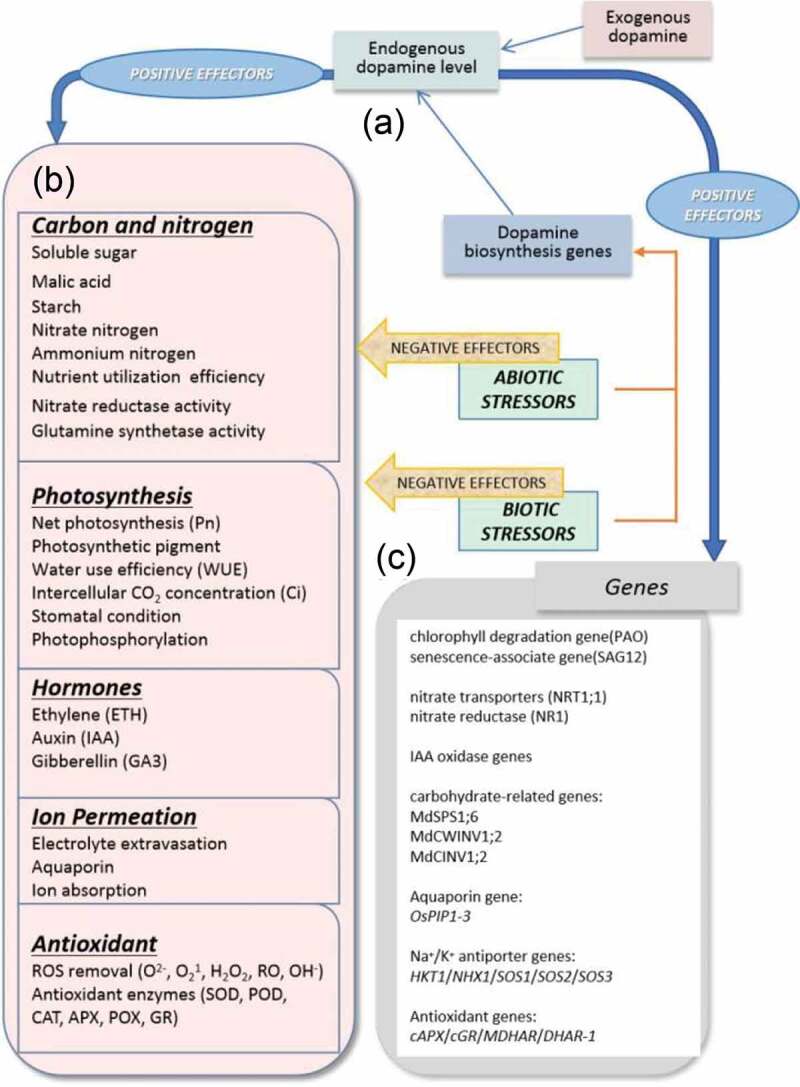
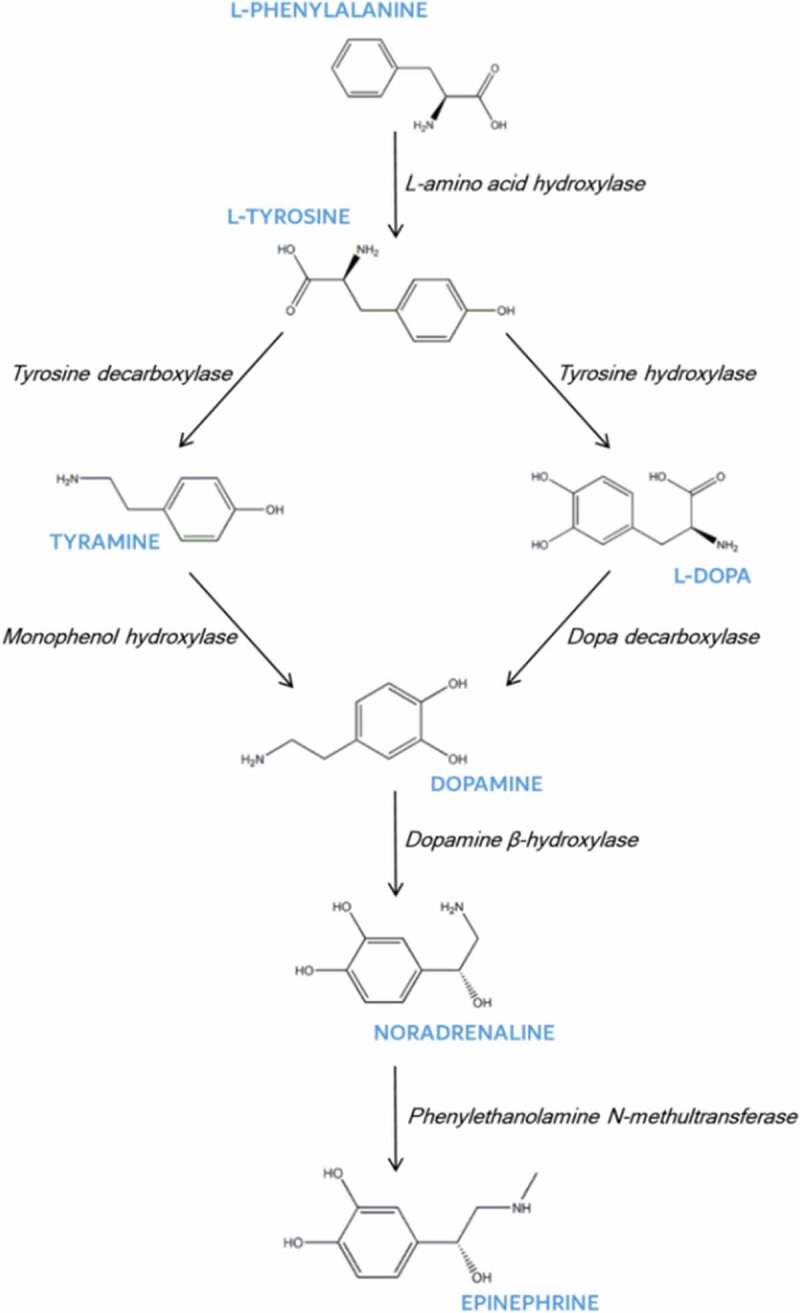
Dopamine (3-hydroxytyramine or 3,4-dihydroxyphenethylamine) has many functions in animals, but also shows several other functions in plants. Since the discovery of dopamine in plants in 1968, many studies have provided insight into physiological and biochemical functions, and stress responses of this molecule. In this review, we describe the biosynthesis of dopamine, as well as its role in plant growth and development. In addition, endogenous or exogenously applied dopamine improved the tolerance against several abiotic stresses, such as drought, salt, and nutrient stress. There are also several studies that dopamine contributes to the plant immune response against plant disease. Dopamine affects the expression of many abiotic stresses related genes, which highlights its role as a multi-regulatory molecule and can coordinate many aspects of plant development. Our review emphasized the effects of dopamine against environmental stresses along with future research directions, which will help improve the yield of eco-friendly crops and ensure food security.
多巴胺(3-羟酪胺或 3,4-二羟苯乙胺)在动物中有许多功能,但在植物中也表现出其他几种功能。自 1968 年在植物中发现多巴胺以来,许多研究提供了对这种分子的生理和生化功能以及应激反应的深入了解。在这篇综述中,我们描述了多巴胺的生物合成,以及它在植物生长和发育中的作用。此外,内源性或外源性多巴胺提高了对几种非生物胁迫的耐受性,如干旱、盐和养分胁迫。还有一些研究表明,多巴胺有助于植物对植物病害的免疫反应。多巴胺影响许多与非生物胁迫相关的基因的表达,这突出了它作为一种多调控分子的作用,并能协调植物发育的许多方面。我们的综述强调了多巴胺对环境胁迫的影响以及未来的研究方向,这将有助于提高环保作物的产量,确保粮食安全。