College of Biological Engineering, Henan University of Technology, Zhengzhou 450001, P.R. China.
J Microbiol Biotechnol. 2020 Dec 28;30(12):1876-1884. doi: 10.4014/jmb.2004.04073.
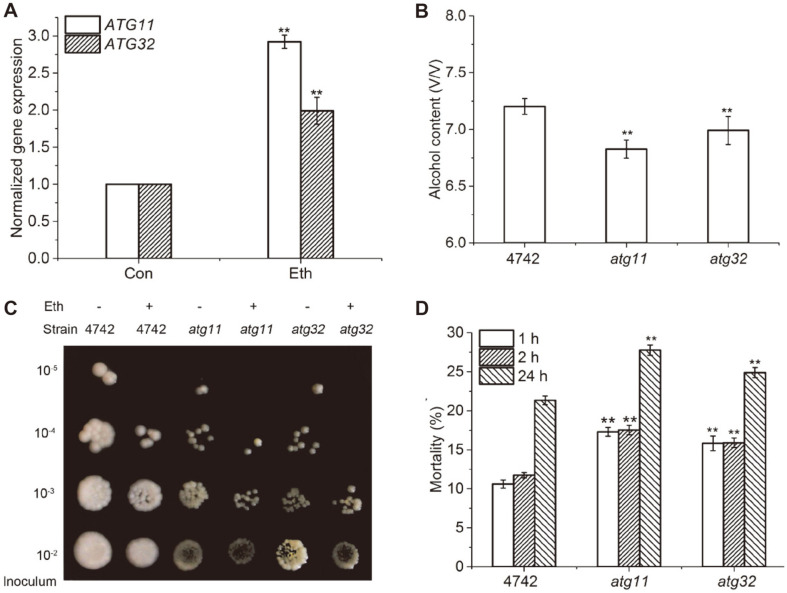
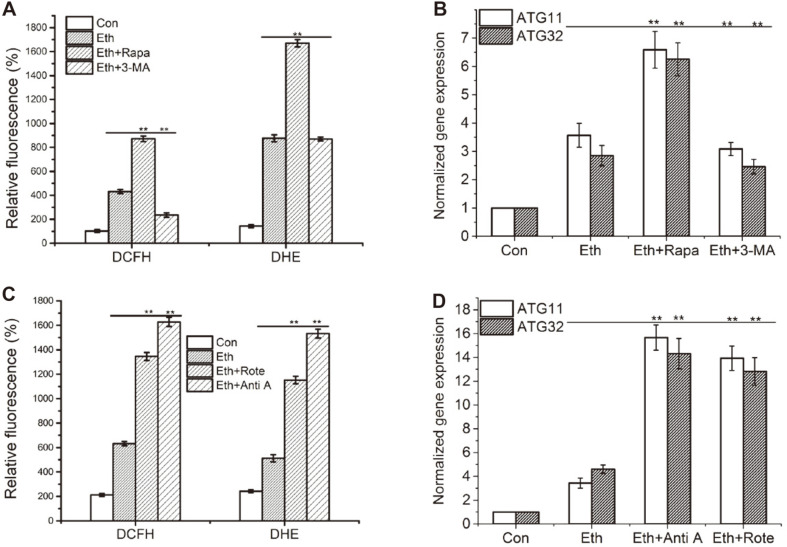
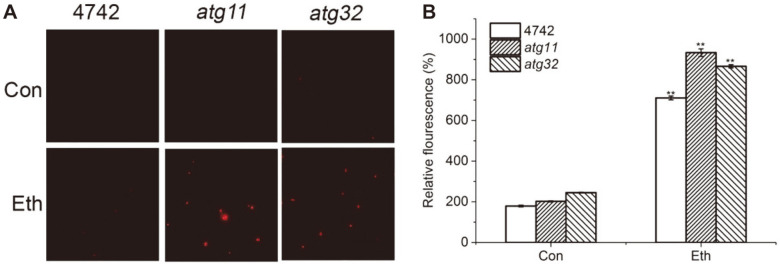
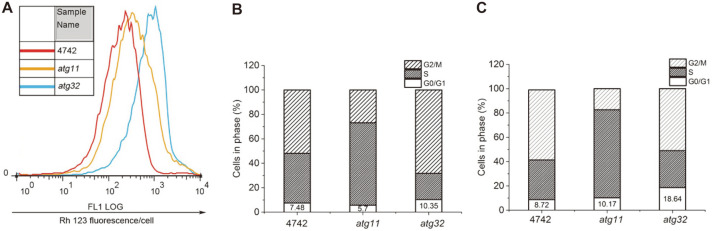
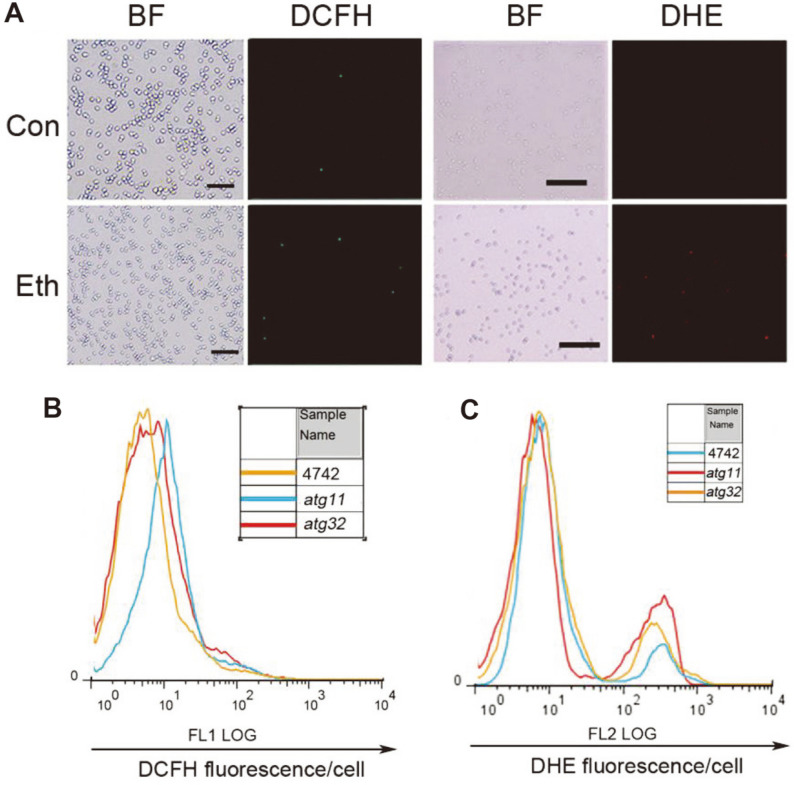
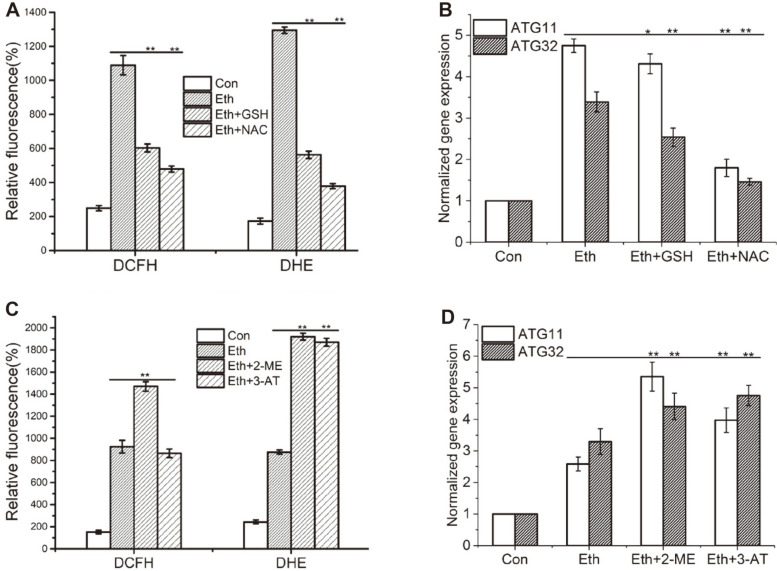
Ethanol often accumulates during the process of wine fermentation, and mitophagy has critical role in ethanol output. However, the relationship between mitophagy and ethanol stress is still unclear. In this study, the expression of and genes exposed to ethanol stress was accessed by real-time quantitative reverse transcription polymerase chain reaction (qRT-PCR). The result indicated that ethanol stress induced expression of the and genes. The colony sizes and the alcohol yield of and were also smaller and lower than those of wild type strain under ethanol whereas the mortality of mutants is higher. Furthermore, compared with wild type, the membrane integrity and the mitochondrial membrane potential of and exhibited greater damage following ethanol stress. In addition, a greater proportion of mutant cells were arrested at the G1/G0 cell cycle. There was more aggregation of peroxide hydrogen (HO) and superoxide anion (O) in mutants. These changes in HO and O in yeasts were altered by reductants or inhibitors of scavenging enzyme by means of regulating the expression of ATG11 and ATG32 genes. Inhibitors of the mitochondrial electron transport chain (mtETC) also increased production of HO and O by enhancing expression of the and genes. Further results showed that activator or inhibitor of autophagy also activated or inhibited mitophagy by altering production of HO and O. Therefore, ethanol stress induces mitophagy which improves yeast the tolerance to ethanol and the level of mitophagy during ethanol stress is regulated by ROS derived from mtETC.
乙醇在葡萄酒发酵过程中经常积累,而细胞自噬在乙醇产量中起着关键作用。然而,细胞自噬与乙醇胁迫之间的关系尚不清楚。在本研究中,通过实时定量逆转录聚合酶链反应 (qRT-PCR) 检测了暴露于乙醇胁迫下的 和 基因的表达。结果表明,乙醇胁迫诱导了 和 基因的表达。与野生型菌株相比, 和 的菌落大小和酒精产量在乙醇胁迫下更小、更低,而突变体的死亡率更高。此外,与野生型相比,乙醇胁迫后 和 的膜完整性和线粒体膜电位显示出更大的损伤。此外,与野生型相比,更多的突变细胞在 G1/G0 细胞周期中被阻滞。突变体中过氧化物氢 (HO) 和超氧阴离子 (O) 的聚集更多。通过调节 ATG11 和 ATG32 基因的表达,还原剂或清除酶抑制剂改变了酵母中 HO 和 O 的这些变化。线粒体电子传递链 (mtETC) 的抑制剂也通过增强 和 基因的表达增加了 HO 和 O 的产生。进一步的结果表明,自噬的激活剂或抑制剂也通过改变 HO 和 O 的产生来激活或抑制细胞自噬。因此,乙醇胁迫诱导细胞自噬,提高了酵母对乙醇的耐受性,并且乙醇胁迫期间的细胞自噬水平通过来自 mtETC 的 ROS 来调节。