Civil Engineering, Indian Institute of Technology (IIT) Gandhinagar, Palaj, Gujarat, 382355, India.
Earth Sciences, Indian Institute of Technology (IIT) Gandhinagar, Palaj, Gujarat, 382355, India.
Sci Data. 2020 Oct 12;7(1):338. doi: 10.1038/s41597-020-00681-1.
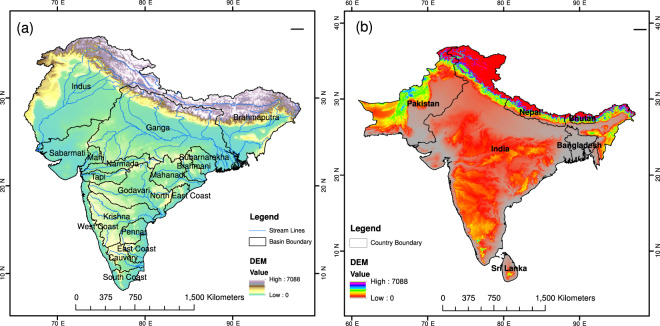
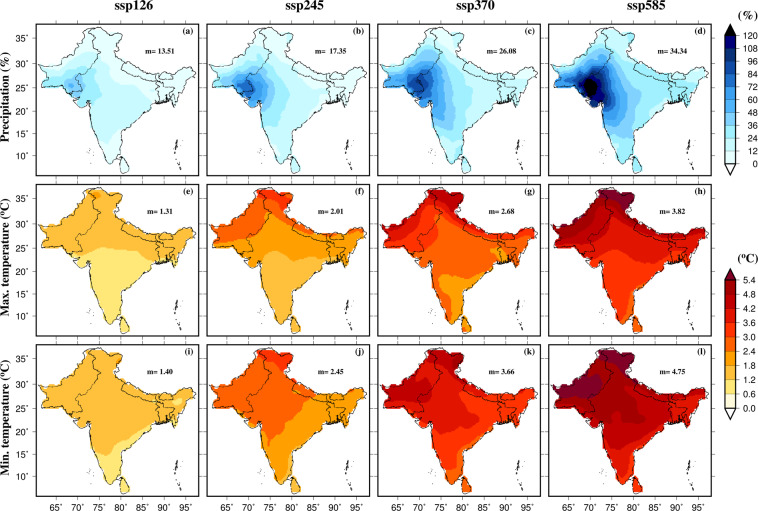
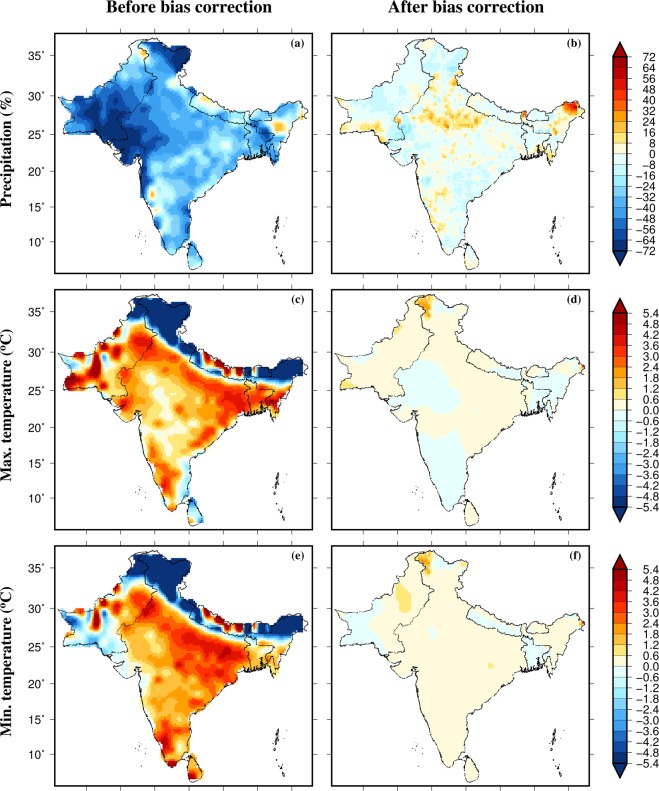
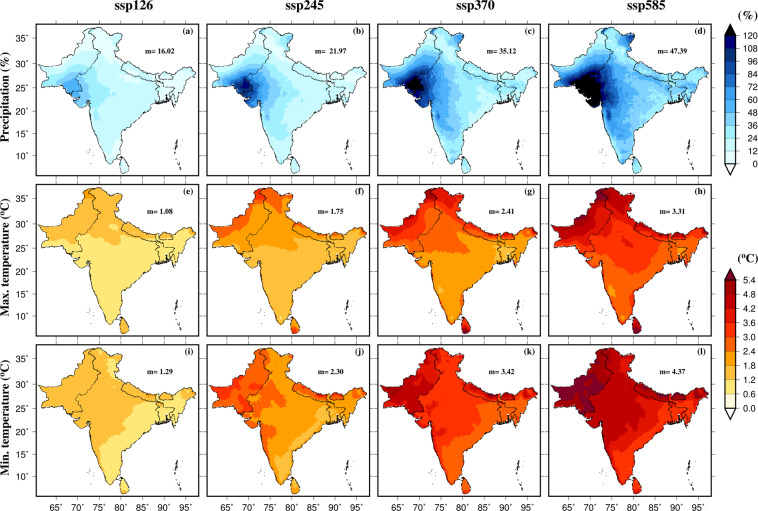
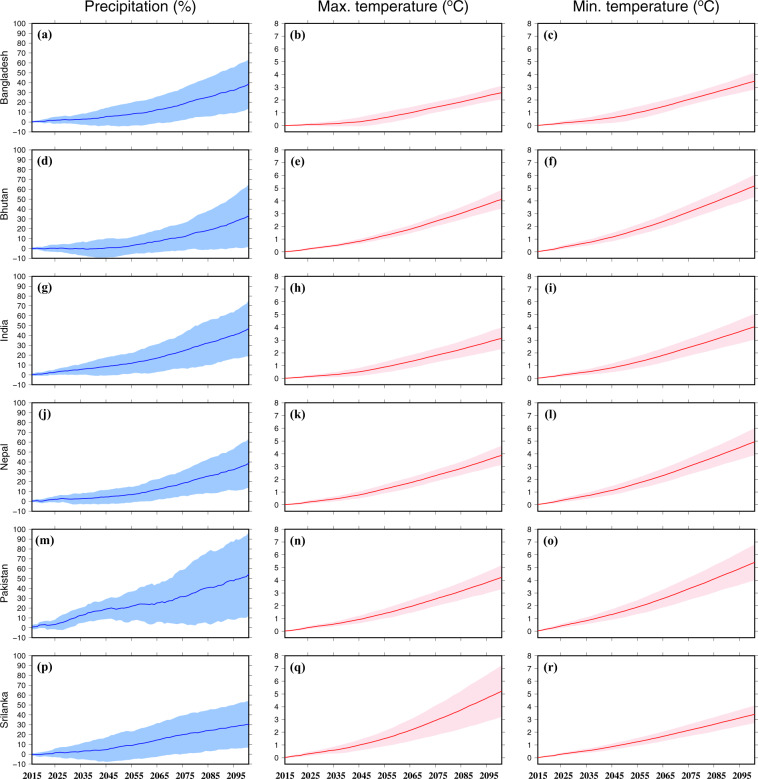
Climate change is likely to pose enormous challenges for agriculture, water resources, infrastructure, and livelihood of millions of people living in South Asia. Here, we develop daily bias-corrected data of precipitation, maximum and minimum temperatures at 0.25° spatial resolution for South Asia (India, Pakistan, Bangladesh, Nepal, Bhutan, and Sri Lanka) and 18 river basins located in the Indian sub-continent. The bias-corrected dataset is developed using Empirical Quantile Mapping (EQM) for the historic (1951-2014) and projected (2015-2100) climate for the four scenarios (SSP126, SSP245, SSP370, SSP585) using output from 13 General Circulation Models (GCMs) from Coupled Model Intercomparison Project-6 (CMIP6). The bias-corrected dataset was evaluated against the observations for both mean and extremes of precipitation, maximum and minimum temperatures. Bias corrected projections from 13 CMIP6-GCMs project a warmer (3-5°C) and wetter (13-30%) climate in South Asia in the 21 century. The bias-corrected projections from CMIP6-GCMs can be used for climate change impact assessment in South Asia and hydrologic impact assessment in the sub-continental river basins.
气候变化可能给生活在南亚的数百万人的农业、水资源、基础设施和生计带来巨大挑战。在这里,我们为南亚(印度、巴基斯坦、孟加拉国、尼泊尔、不丹和斯里兰卡)和位于印度次大陆的 18 个河流流域开发了每日的、经过偏差校正的 0.25°空间分辨率的降水、最高和最低温度数据。该偏差校正数据集是使用经验分位数映射(EQM)方法,针对四个情景(SSP126、SSP245、SSP370、SSP585)的历史(1951-2014 年)和预测(2015-2100 年)气候数据,从耦合模式比较计划第六阶段(CMIP6)的 13 个全球气候模型(GCM)中得出的。该偏差校正数据集是针对降水、最高和最低温度的平均值和极值观测值进行评估的。来自 13 个 CMIP6-GCM 的校正后预测结果显示,在 21 世纪,南亚的气候将更加温暖(3-5°C)和湿润(13-30%)。CMIP6-GCM 的偏差校正预测结果可用于南亚的气候变化影响评估以及次大陆河流流域的水文影响评估。